

From Drone Delivery to Healthcare of the Future: How Freedom Is Building Its Lifestyle Ecosystem
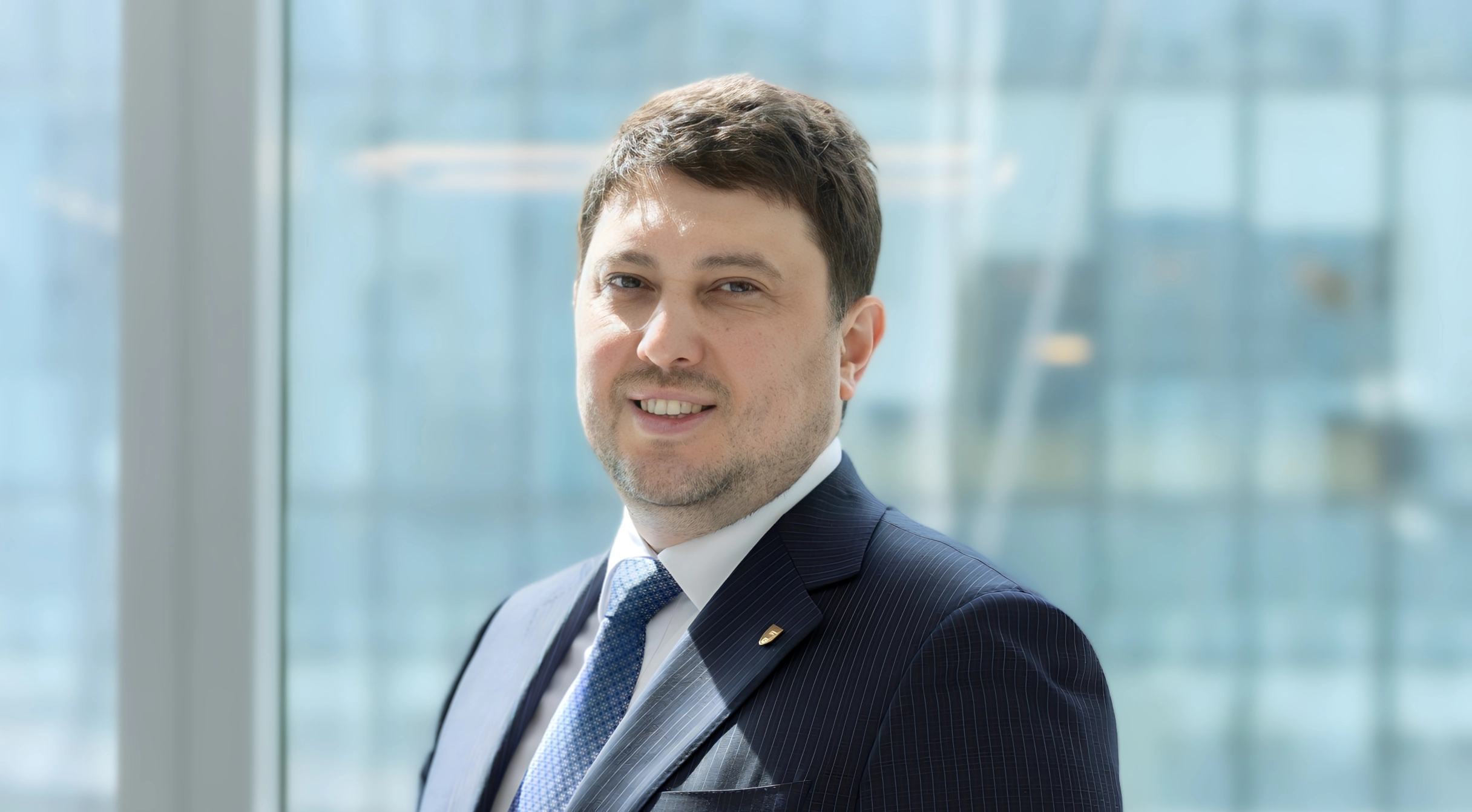
The Freedom ecosystem has long since transcended the boundaries of traditional fintech. Today, the company is testing drone grocery delivery, investing in robotics, developing HealthTech and selling millions of airline and concert tickets. How can dozens of disparate services be combined into a single SuperApp? Why are delivery drones still more expensive than human couriers, even though they are the future? And how does the startup spirit survive within a huge corporation? Freedom Lifestyle Group CEO Alexey Lee spoke with Kursiv.media about hyper-personalization, the prime era of Kazakhstani events and the right to make mistakes.

Alexey, the Freedom ecosystem unites completely different services from purchasing airline tickets to grocery delivery. What is the current structure of the Lifestyle block, and what links these projects together?
Initially, the block was built around three flagships that became part of the holding company: Arbuz (renamed Freedom Products), Freedom Travel (formerly Aviata) and Freedom Ticketon. All are leaders and pioneers in their respective segments.
The block now includes several new divisions. This includes the Restaurants vertical — Freedom Food delivery, which will gradually scale across cities, and the Smart Restaurants operating system for restaurants, the new block Freedom Health (My Health), Freedom Auto (services for car owners), a number of new business lines that we will announce soon, as well as the Freedom X and AI Labs R&D labs.
All these projects share a common goal: creating modern digital products and services designed for millions of customers and capable of providing a high level of quality. The development of all these products is based on internet technologies, digitalization and the use of artificial intelligence (AI).
Speaking of the overall goal, what fundamental tasks does the Lifestyle division solve for Freedom Holding?
A year and a half ago, Freedom Holding CEO Timur Turlov helped us crystallize a strategy based on a simple idea: In today’s world, fintech leadership is impossible without a strong ecosystem, and no ecosystem can grow sustainably without a solid banking foundation. Since then, we have strived to be a reliable partner for our banking division and to work closely and effectively with it.
In my opinion, the key value of Lifestyle for the holding is our ability to strengthen the leadership of the fintech lifestyle ecosystem, increase FRHC's overall appeal for investors.
A second important aspect is that the holding is undergoing a transition from a financial institution to a technology organization. During this process, the Lifestyle division often becomes the entry point for new startups, many of which come from the venture capital industry. Venture capital, in turn, allows us to test and implement new technologies with a level of risk appetite that is not typical for traditional financial instruments.
How do you envision Freedom Lifestyle Group over the next 3 to 5 years?
First of all, we plan to maintain and strengthen our leadership position in our current services, as we always prioritize the best customer experience. Second, we are focused on technological leadership: in the next 5 to 10 years, we expect rapid growth in AI, both in the digital and physical worlds, with so-called Physical AI. This trend will transform entire industries and we want to be part of it.
Overall, as a Lifestyle Group, we will strengthen our position as a center of expertise, a kind of "collective intelligence" for entrepreneurs who, by joining us, can avoid making common mistakes and start with an already-established competitive advantage.
This is a fascinating challenge — how to strike the right balance of decentralization to maintain entrepreneurial energy in each vertical while centralizing knowledge in engineering, data, marketing and other areas.
What key metrics are your primary indicators of success?
The first is customer happiness and satisfaction (NPS, Customer Satisfaction). If the customer is happy, everything else will follow. We build long-term relationships, even if it's not always profitable in the short term.
The second metric is financial health. Our companies are currently in an active investment phase, but they are expected to provide a return on investment. Other industry metrics (GMV, unit economics) are simply derivatives.

What is the main advantage for a client who uses multiple Freedom services?
The first aspect is convenience. Everything is at hand, in a single ecosystem. Furthermore, we offer generous cashback and a seamless experience: the system understands clients' preferences and, through hyper-personalization, makes their life more comfortable.
The second aspect is emotional. People choose us because of their connection and affinity with the company's values. Freedom's DNA is built not on handing out loans to everyone, but on teaching clients how to be investors and manage their capital. At the same time, we're building mass services and are ready to offer the best prices in all segments of our presence.
Let's talk about specific services. How is the e-grocery market in Kazakhstan changing these days?
It's growing rapidly, but we're still in the early stages. Online delivery currently accounts for about 5% of the entire grocery market. The market is complex, capital-intensive and operationally challenging. Nevertheless, we've managed to build a leader, and we'll continue to invest to create the most high-tech e-grocery service with the best prices and product offering.
Freedom Products, your flagship service, operates in this segment. What are the team's goals for the next couple of years?
The most important part of our strategy is offering the best prices on goods, and we intend to continue optimizing our supply chains to achieve this. We also expect geographic expansion and the development of new formats.
In the spring, we launched express delivery in one district of the city, and we're now planning to scale it up. Thanks to our expanded darkstore format, we can offer up to four times the product selection of traditional express delivery — which typically accommodates only a couple of thousand items — while maintaining delivery times within 40 minutes. We will be implementing multi-format delivery and new assembly technologies. The market has already seen our experiments with drones. Now we're taking it to the next level.
You mentioned new logistics technologies. When do you plan to fully launch delivery drones and robot dogs into the mass market?
We are ready to move at a pace that is comfortable for the market. The technologies are already proven and commercial flights are underway. Several hundred actual deliveries have been made.
We are working closely with government agencies on regulatory requirements and are grateful to our partners for their openness to dialogue, support and interest in developing initiatives. The skies of large cities are not yet fully open; this is a safety issue, but we are making excellent progress.
That being said, is it currently more profitable to deliver using human couriers or drones?
For now, human couriers are much more profitable, but we are investing in the future. Each drone currently costs tens of thousands of dollars, but we plan to invest in localizing their production. Also, one drone currently requires two operators. However, delivery costs will fall as autonomous capabilities are implemented through AI. As with self-driving cars, we believe drones will eventually reach the point of full autonomy (FSD).
Let's move from delivery formats to human travel. How important is the integration of a large-scale travel service like Freedom Travel into the everyday ecosystem?
Freedom Travel isn't just about tourism. It's also about business travel and constant intercity traffic, with people living and working in different regions. The service has resumed its active growth this year. For us, this is one of the most important segments of the Freedom ecosystem, and we will continue to invest in it.
People are already accustomed to buying tickets on their smartphones. What opportunities for further growth do you see in the online travel services market?
The market is facing changes. Over the past 10 years, people have become accustomed to buying everything online. The next wave of changes will be associated with the implementation of AI and seamless trip planning. The time has come to rethink the industry and create a next-generation travel service.
As part of your industry rethink, you launched a hotel aggregator, but giants like Booking and Agoda dominate the field. How do you plan to compete?
The Hotels service on Freedom SuperApp has been available to users since July, and it currently features over 3 million accommodations, from hostels and apartments to premium hotels.
In terms of content and technology, we're ready for competition — there are plenty of integrations in the market. But the key point is this: the era of standalone services is ending.
Global travel giants depend on search engines. Booking and Expedia, whose interfaces have remained largely unchanged since the 2010s, pay Google $7 billion to $8 billion annually for advertising. As a user, I'd like a completely new experience. A lot of video content and virtual reality elements already exist in products. And we have a lot of inspiration for what could be new in this industry.
Our advantage is that the Freedom super app, unlike standalone services, has an audience of almost 6 million users. Half the problem — user acquisition — is already solved for us.
Travel is often associated with leisure. How is the ticketing market and the entertainment industry as a whole changing alongside this?
Speaking of the entertainment industry, it continues to develop. We see this from the inside: interest is growing not only in concerts but also in formats that were previously considered niche. World-class circus programs and esports tournaments — people are eager to attend and tickets are selling well. The market is responding: organizers are bringing in world-class stars because they see the audience is ready. Kazakhstan is maturing as an experience market, and it's noticeable. The ticketing industry itself remains consolidated due to very thin margins. New players emerge and disappear. And this will likely continue. However, for a ticketing service to exist in a single country at a high level of quality and user satisfaction, a different investment regime and a long planning horizon are needed. Kazakhstani audiences are ready for mass events, but arena infrastructure is often underfunded. To take the market to the next level and provide customers with a better experience without long lines, we need to improve our infrastructure. While this may not pay off immediately, it's an important investment in the future, which is why Freedom is investing in access control systems (ACS) to help develop urban infrastructure.
One of the biggest pain points in the entertainment industry is ticket refunds. You launched Fan2Fan, a service for reselling tickets. What's its concept, and how does it protect buyers?
Fan2Fan is an official guarantor for the resale of tickets between people. Previously, the law often prohibited returning tickets to the organizer, so consumers resorted to resellers on classifieds. There were no guarantees: the seller could sell one ticket to ten people, and the buyer risked missing out on the concert.
We solve this problem through an escrow account. We cancel the original ticket, issue a new one to the buyer, and guarantee that the seller receives payment. As for scalpers, the market will regulate prices itself. Moreover, organizers can easily limit the number of tickets per user through the super app.
Concerning technology again, when sales for top events begin, platforms often can't handle the influx of people. How did you manage to solve Ticketon's technical issues and prepare for major events in 2026?
This was indeed quite common in 2025. For example, a million people queued to buy tickets for the Kairat vs. Real Madrid match. In the first half of 2026, we transitioned to a new technology platform, which we internally call "Ticketon 2.0." It can handle enormous loads and we are now fully prepared for the continuation of Kazakhstan's prime era and the arrival of world-class stars. This is the result of months of systematic work. We didn't switch platforms overnight to avoid disruptions, but rather carried out a gradual transition. The transition itself is a complex engineering challenge, but we strived to make it as smooth and seamless as possible. But that's not the limit: we conduct regular high-load and DDoS attack tests, and I can say with confidence that no one else in Kazakhstan offers this level of testing.
Another key area of life that you're digitizing is medicine. What's happening in the SuperApp's HealthTech segment right now, and what can users expect?
This year, we launched My Health in the SuperApp. Right now, its functionality covers doctor appointments. It also includes doctor reviews and a guarantee of slot confirmation in the hospital's accounting system.
In the near future, we'll integrate laboratory diagnostics. Users will be able to see their test history and receive personalized recommendations for checkups. We'll add access to government registration databases, DNA testing integration and partner drug delivery services. It's a comprehensive approach to health in a single app.
Managing such a large array of innovations is not easy. You were an independent entrepreneur for a long time, and now you're heading a division within a huge corporation. How has this transition changed your management style?
Previously, I had to create a product and raise money at the same time — it was like juggling while riding a unicycle. Now, the Freedom structure serves as a powerful foundation for bold decisions and scale.
Our main challenge today is managing a portfolio of companies. Being at the intersection of startups and corporations is the solution to the innovator's dilemma. At the same time, I have to be the teams' chief critic — it's a challenging coaching job. I continue to strengthen our Lifestyle management team, where we are strengthening all vital functions. Thanks to this team, our victories are becoming a pattern rather than a coincidence. We strive to unleash the potential of leaders in each area.
What was the most difficult management decision in your career?
Closing businesses when they're not working out. That's always difficult.
Who do you look for on your team, and how do you retain professionals?
We don't hold anyone back. We provide opportunities for self-fulfillment. We expect entrepreneurs to have courage, innovative thinking and persistence.
The first signs of success appear only after 3 to 4 years, and a company reaches its full potential after 5 to 6 years. Many give up right at the beginning. You need to be able to play the long game.
We look for lifelong learners, people with natural curiosity. I like the Japanese concept of Shokunin — a person who has spent decades honing their craft. We need people with strong intrinsic motivation and passion for their work.

What is your personal role as the head of a group of companies?
My job is to help teams see the long-term horizon. Sometimes projects become inward-looking, achieving local success. I align them with the Freedom strategy to achieve global goals. The market is changing rapidly, and it's important to balance decentralizing team freedom with centralizing a unified strategy. In the classic sense, the role of the CEO is always about strategy and its execution through resource sourcing and team building. In this case, crystallizing the strategy is a process of communication with other top managers and the holding's CEO. Resource sourcing in a large division like Lifestyle is often about searching internally, rather than externally. And regarding team building — its development is a never-ending task.
What do you think about mistakes in your team during product launches?
We have many projects in the startup stage. A high-risk appetite implies a high tolerance for mistakes. Without exploring various hypotheses, we won't find the right one. That's why we don't punish bold experimentation; we encourage it instead.
Do you manage to disconnect from work, considering that your services surround people everywhere?
I'm not a fan of a strict work-life balance. I like to live in a blend of work and life. When building lifestyle services, I'm constantly interacting with them. When traveling or reading a book, I always look at things through the lens of how I would do it myself for our ecosystem.
Do you have any hobbies that aren't related to technology?
I have many hobbies, but I don't have time for them all. I love surfing, riding motorcycles and hiking. I play stringed instruments: guitar, dombra and recently mastered the Bolivian ronroco. If I had more time, I would devote it to outdoor activities, off-roading and mountaineering.
Read also
Freedom Life chairman on AI, digital insurance and long-term planning
How Freedom Telecom is building telecom operator around financial ecosystem
How Digitalization Saved Freedom Insurance $14 Million in One Year
No Future for Standalone Banks. It’s Time for Ecosystems
When Rapid Growth Is Part of DNA: The Role of M&A in Scaling Freedom Holding Corp.
Lawyers must understand the business – not just the rules.
Compliance Is Not About Control. It's About the Infrastructure of Trust
How risk management works in the Freedom ecosystem
The key role of IT is to help business grow