

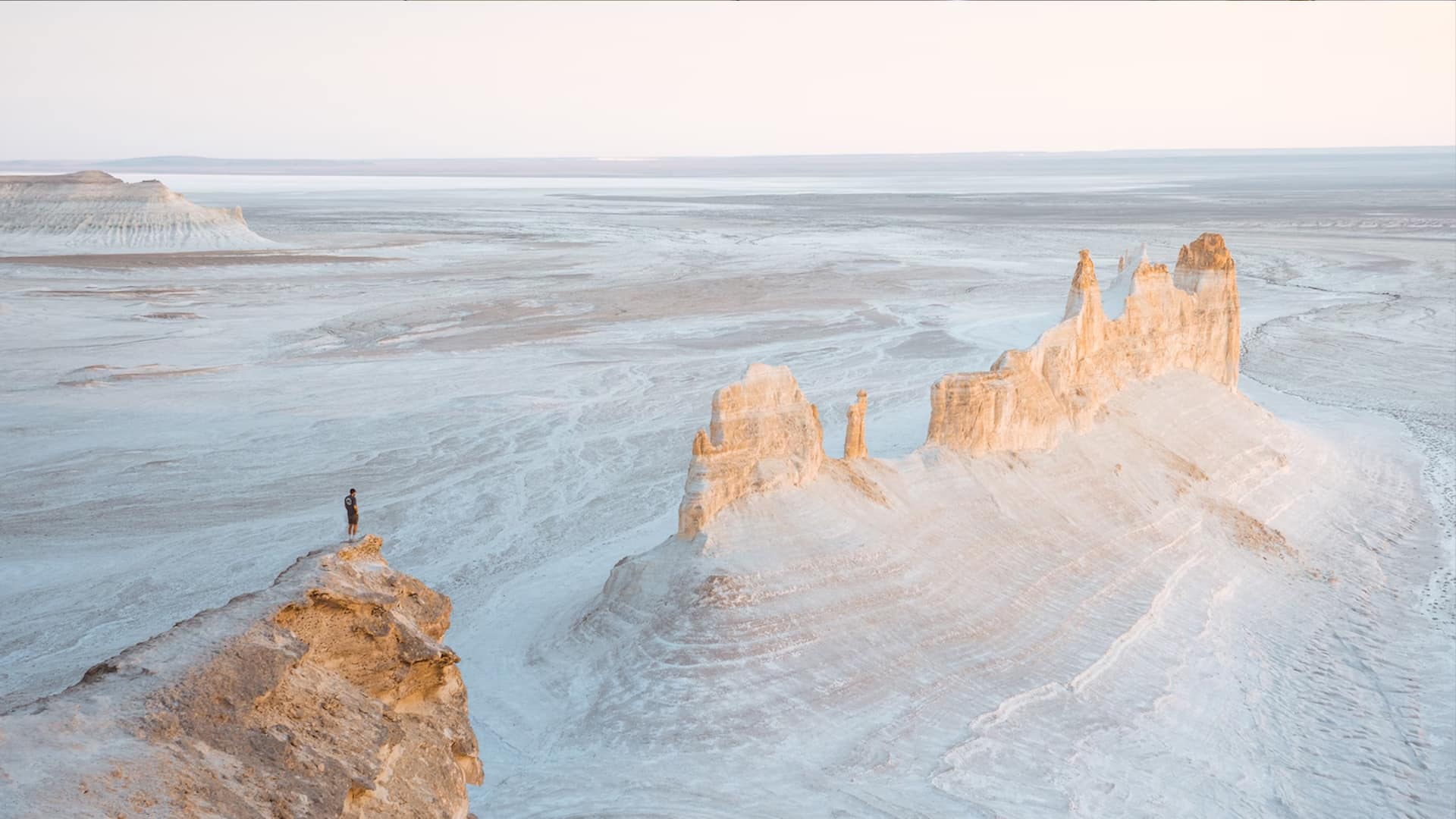
Traveling across the Mangystau region of western Kazakhstan can feel more like a lunar expedition than a road trip. Driving off-road in four-wheel-drive vehicles, travelers pass bleached rock formations, broad plateaus and vast empty plains that show little sign of human presence, the Washington Post reported.
The dramatic landscape, shaped over millions of years, was once submerged beneath the prehistoric Tethys Ocean. As tectonic shifts reshaped the land, erosion carved the limestone spires, mesas and domes that now define the region. Fossils, including shells and shark teeth, remain scattered across the ground.
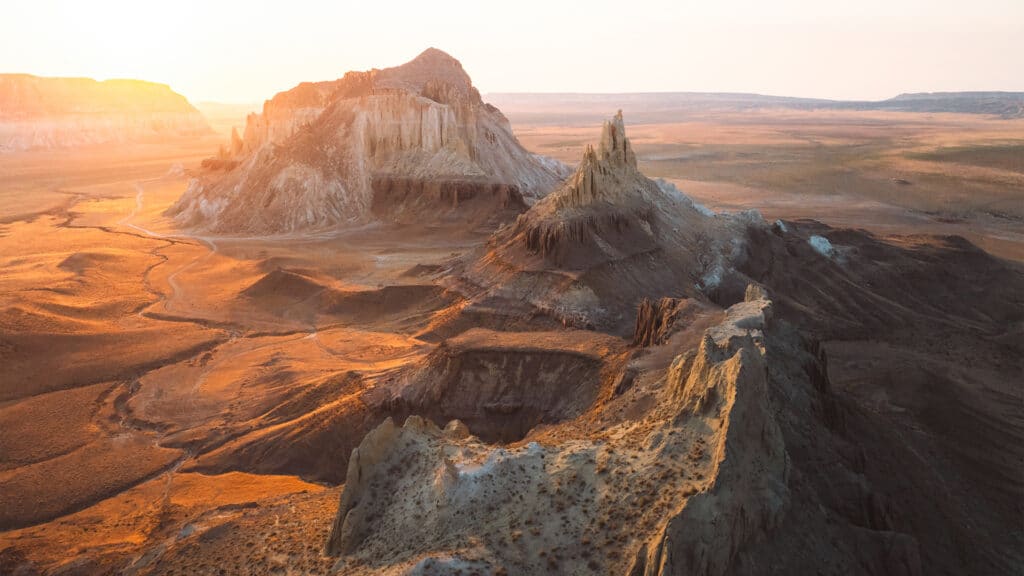
Mangystau’s isolation is striking. During days of travel through formations such as Bozzhira, Cape Zhigylgan, Tuzbair and Torysh — often called the «Valley of the Balls» for its spherical stones — visitors may encounter no one else.
Human history is also visible in Mangystau. Ruins of a Silk Road caravansary remain, along with Sufi mosques, necropolises and cave shrines dating back more than a thousand years. Some of these religious sites are still in use.
Despite the region’s natural and historical appeal, tourism remains limited. While visitors from Russia, China and parts of Europe occasionally appear, American tourists are notably absent. This stands in contrast to the strong presence of American oil and energy companies operating in western Kazakhstan.
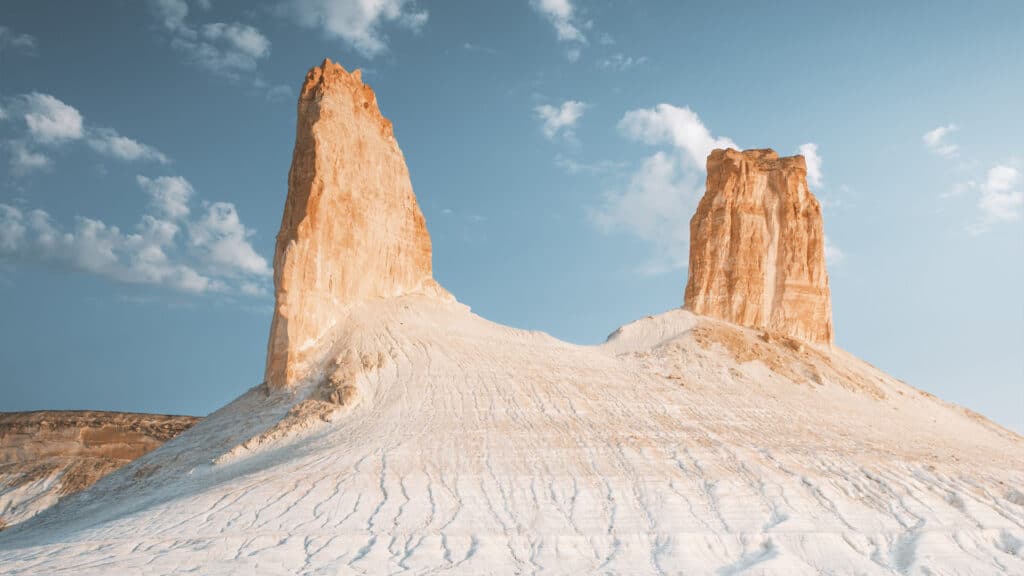
The main gateway to the region is Aktau, a Caspian Sea port city designated the 2025 Culture Capital of the Turkic World. Aktau offers basic tourist infrastructure, including hotels, cafes and a seaside promenade, and has air connections to Istanbul, Baku and Tbilisi, as well as domestic flights to Astana and Almaty.
Reaching Mangystau’s remote sites usually requires multi-day guided tours due to long distances and poor road conditions. Travelers often camp overnight, though limited guesthouses and yurt-style accommodations are available. Tour operators provide vehicles, tents and meals, making extended stays in the desert possible.
According to Kazakhstan’s Bureau of National Statistics, about 409,000 visitors stayed in accommodations in Mangystau last year, representing roughly 9 percent of all resort-area visits nationwide. Most foreign travelers come from nearby countries.