
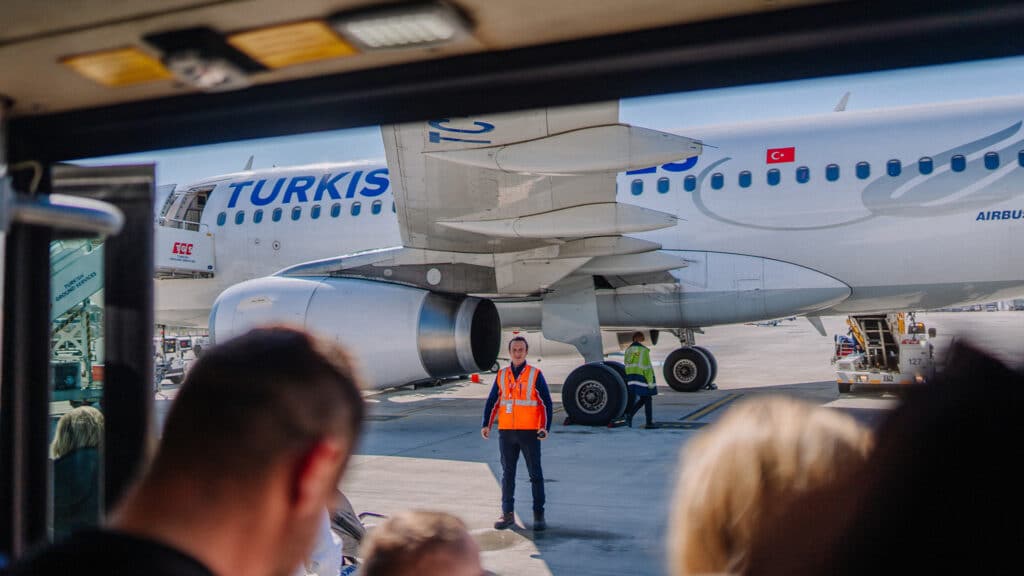
Havaş, a subsidiary of TAV Airports — the Turkish airport operator and majority owner of Almaty International Airport — continues to service flights at Antalya Airport for Ural Airlines, a Russian aiine sanctioned by the European Union, the Financial Times reported.
The EU added the airline to its sanctions list in June 2024. Subsequently, Brussels introduced a requirement for companies in the sector to ensure that their non-EU entities do not undermine sanctions imposed following Russia’s full-scale invasion of Ukraine.
Citing European Commission guidelines, the bloc said it could take legal action against non-compliant companies.
TAV Airports is partly...