
While Christopher Nolan’s «The Odyssey» continues to rake in box-office revenue, rapper Travis Scott has unveiled a limited-edition clothing collection inspired by the film. Meanwhile, Alesya Kalish of Tatler Kazakhstan explores why the costumes in Nolan’s new hit are simultaneously impressive, irritating and never quite cohesive.
First impressions
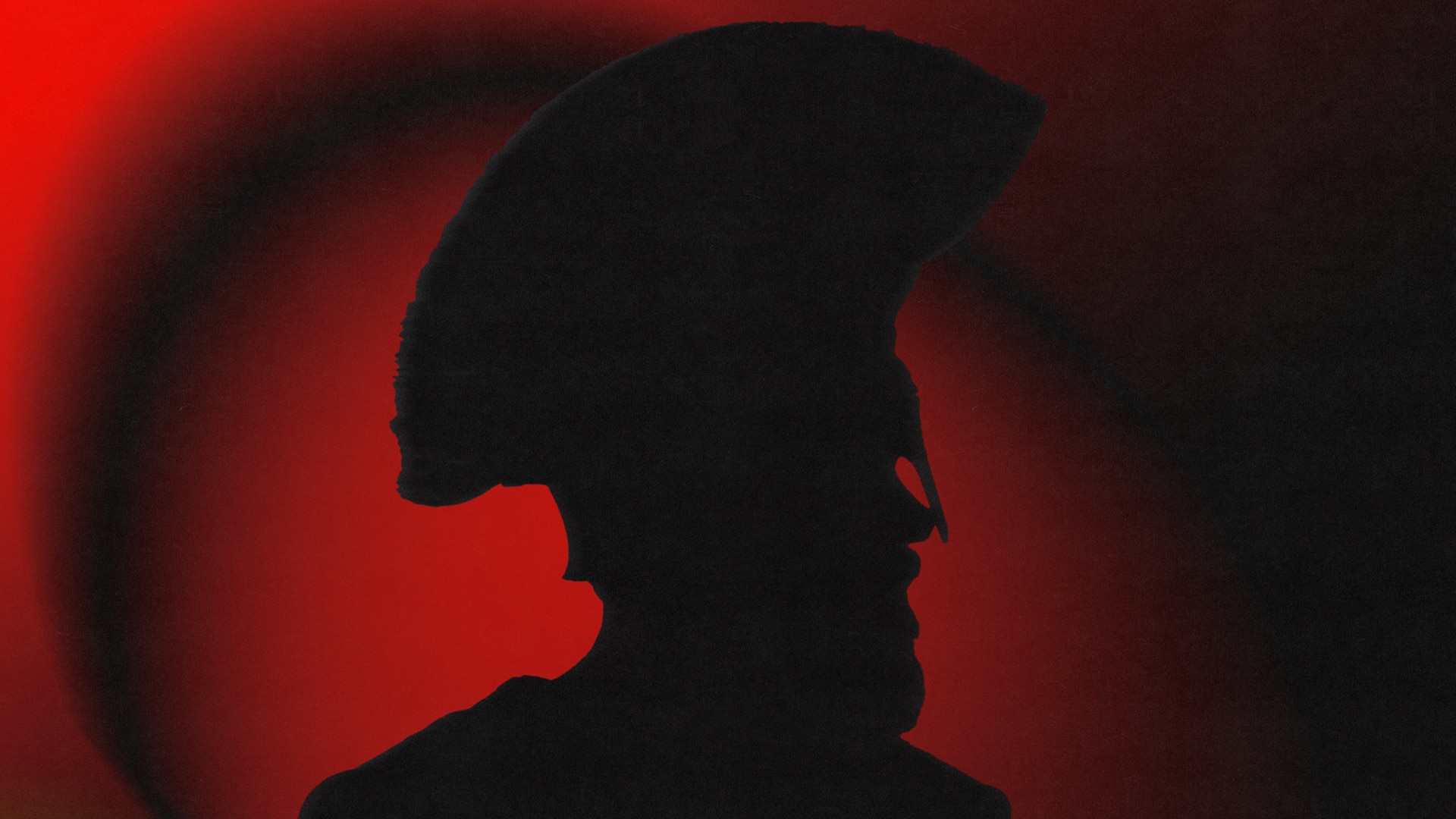
Warnings about the characters’ costumes began with the very first promotional photo. A gloomy Matt Damon, wearing a helmet clearly inspired by the classical period, complete with a crest, was awash in shades of black, gray and brown. The image hinted at the film’s limited color palette, which appears unlikely to include much polished bronze.
Indeed, the more the public learned about the film, the more skepticism grew. Telemachus, Odysseus’ son, was dressed in pants. The armor and helmet of Agamemnon, leader of the Achaeans, resembled Batman’s. Athena, the great goddess of wisdom and strategic warfare, was draped in a neutral-colored sheet.
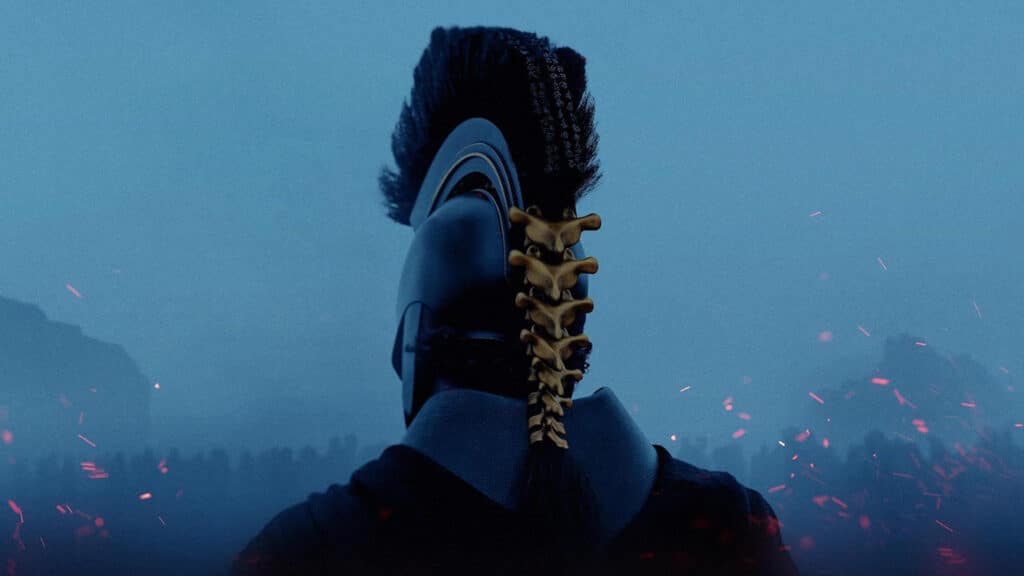
Ellen Mirojnick, a veteran costume designer, created the costumes for «The Odyssey.» This is not her first collaboration with Nolan: Mirojnick received an Academy Award nomination for her work on «Oppenheimer.»
The film was shot entirely in IMAX, a format that can readily reveal imperfections and make artificial materials particularly noticeable. As a result, the production relies primarily on linen, wool and cotton. Some fabrics, including Odysseus’ cape, which he uses to wrap around Calypso and later wears on Ithaca, were even handwoven.
The characters rarely wear anything completely smooth. Instead, their clothing tends to have a distinct, tactile unevenness: the dimples in Odysseus’ armor, the rough threads of his cape, the leather in Antinous’ attire, the pattern on Telemachus’ armor and the weave of Eumaeus’ tunic, among other details.
Odysseus’ armor and final look
Although the bronze of Odysseus’ armor has blackened with age, it shows few signs of having endured 10 years of warfare. There are no nicks from deflected sword strikes, arrow scratches, dents or chips. One might assume that the king rarely engaged in hand-to-hand combat — although why would he? — but the armor worn by his companions also looks surprisingly untouched by battle.
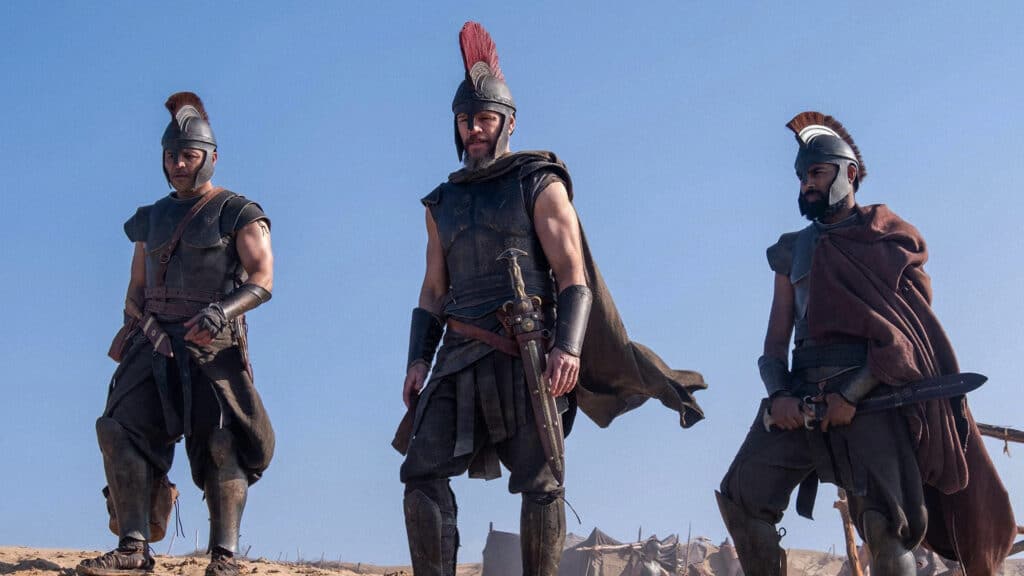
The trousers are puzzling, but we will come back to them.
Odysseus and his companions also wear oiled cloaks reminiscent of the ponchos worn by infantrymen during World War I.
Despite the predominantly black, gray and brown palette of his clothing throughout most of the film, Odysseus gets one magnificent look at the very end, after the fight with the suitors. He wears three layers of clothing that appear torn, even decayed: a beige cape resembling leather, a red tunic reminiscent of exposed muscle, and black armor made of straps that resemble ribs.
The image reveals the hero’s true nature: Odysseus is a born survivor, unstoppable even by death on his journey home.
Penelope’s silhouette
Queen Penelope’s costumes feature numerous folds and voluminous fabrics, which fits well with the familiar approach to reimagining ancient Greek clothing. However, her dresses often share a characteristic of costumes worn by leading female characters in other adaptations of ancient Greek stories: They are tailored to emphasize the figure rather than draped from a single piece of fabric.
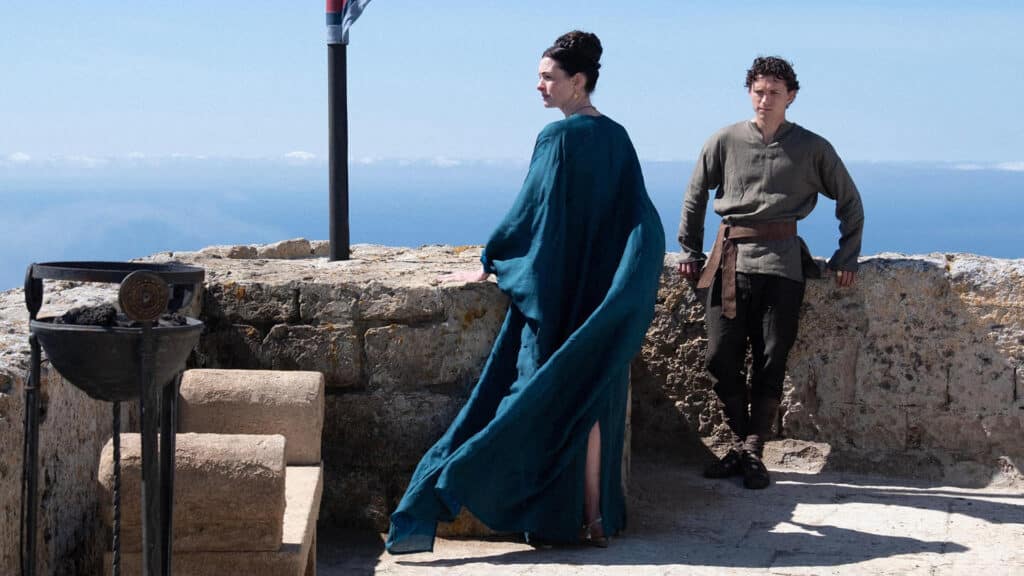
Even so, the final silhouette works, evoking the appearance of period frescoes.
Telemachus and the problem of trousers
Kalish considers Telemachus one of the film’s least successful looks. Rather than creating a harmonious visual context in which Telemachus would appear more prestigious and elegant than either his everyday self or his suitors, the filmmakers turned to the imagery of a stereotypical fairy-tale prince.
His armor is still bronze, and the pteruges are present. But the overall silhouette is so firmly rooted in something closer to the Renaissance that it is difficult to take seriously in the context of Ithaca, Odysseus and the Late Bronze Age.
And then there are the trousers.
The problem with trousers in ancient Greece is not even their historical accuracy; that can be set aside. The deeper problem is that putting the legs into two sewn tubes runs counter to the ancient Greek concept of beauty, whose ideal was the healthy, athletic male body — one that, naturally, was not meant to be hidden.
Odysseus and his companions were likely given pants to make them appear more masculine to modern audiences and to distinguish them from «swords and sandals» heroes, a derogatory term for low-budget films set in ancient times.
That choice could have worked if everyone had been given pants. But Antinous, a decidedly non-warlike character in this adaptation, does without them.
The result is almost the opposite of what the filmmakers presumably intended. A garment associated by the ancient Greeks with barbarians, outsiders and «second-class citizens» becomes a symbol of masculinity. Meanwhile, what the Greeks regarded as part of the image of a handsome, strong warrior is given to a cowardly, cunning scoundrel.
What a shame.