Can we truly end cancer as we know it?

Today is World Cancer Day, an international observance dedicated to raising awareness about cancer and promoting its prevention, early detection and treatment. In some countries, cancer is expected to surpass cardiovascular disease as the leading cause of death.
Cancer is not a modern disease. It is an ancient illness that has accompanied humanity for thousands of years.
What cancer is
Cancer occurs when changes in a group of normal cells lead to uncontrolled, abnormal growth, forming a lump known as a tumor.
As American oncologist Siddhartha Mukherjee writes in «The Emperor of All Maladies: A Biography of Cancer,» the oldest known reference to cancer appears in an ancient Egyptian papyrus dating to the 25th century B.C. The text is believed to be a copy of medical teachings attributed to Imhotep, a vizier to the pharaoh, a healer and later revered as the god of medicine.
Imhotep described the nature, signs and treatments of various diseases. In one account, he noted swelling and enlargement of breast tissue that felt dense and hard to the touch, «like an unripe fruit,» without heat or inflammation. He concluded starkly: there was no cure. Scientists believe this is an early and accurate description of breast cancer.
How cancer got its name
By the time of Hippocrates, around 400 B.C., cancer was referred to in medical literature as karkinos, the Greek word for crab. Hippocrates likened tumors with radiating veins to a crab buried in sand, its legs extending outward.
The word «oncology» comes from the Greek onkos, meaning burden or weight. In ancient Greek theater, onkos also referred to the tragic mask worn by actors to convey suffering and emotional heaviness. In the same way, a tumor was seen as a physical and symbolic burden carried by the patient.
Progress against cancer
Cancer still spares no one, affecting millions of people worldwide. Yet the territory it occupies is slowly shrinking.
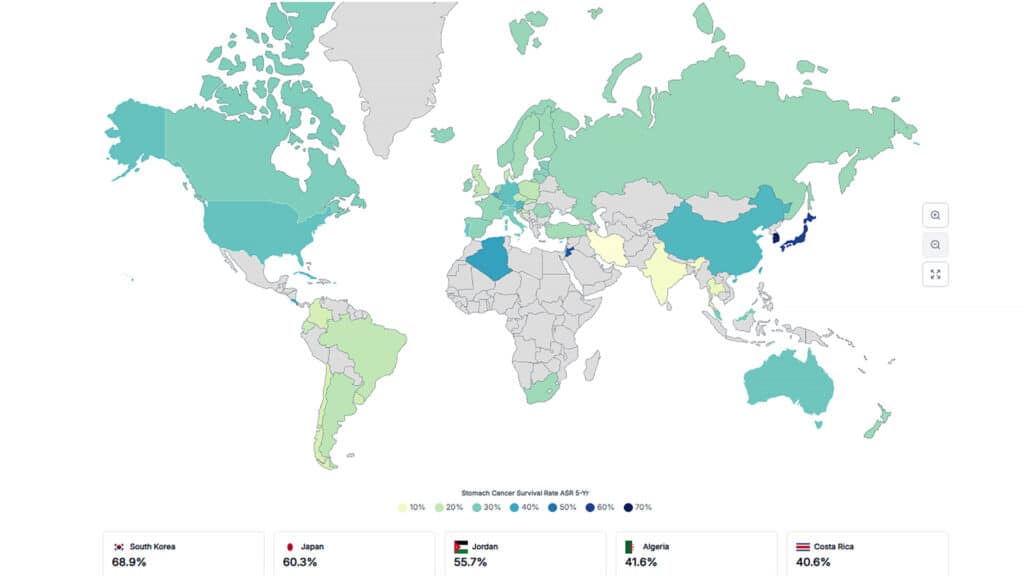
There is no single reason for declining cancer mortality. Primary prevention, such as reduced smoking rates, has significantly lowered lung cancer cases, particularly in the U.S. and other developed countries. Secondary prevention — early detection — has contributed to declines in colorectal and cervical cancer. Advances in chemotherapy have improved outcomes for cancers such as lymphoma and leukemia.
In recent years, deaths from breast cancer have also declined, largely due to a combination of mammography for early diagnosis, improved surgical techniques and effective follow-up chemotherapy.
The human cost behind the science
As Mukherjee observes, the history of medicine’s fight against cancer is not a simple story of triumphs and victories. Along the way, countless patients lost hope, and many children and adults died prematurely.
Medical history is often told through the achievements of doctors and scientists. But behind every advance stand the courageous and patient individuals who entrusted their lives to medicine. Without them, progress would not have been possible.