Kazakhstan develops biodegradable plastic bags

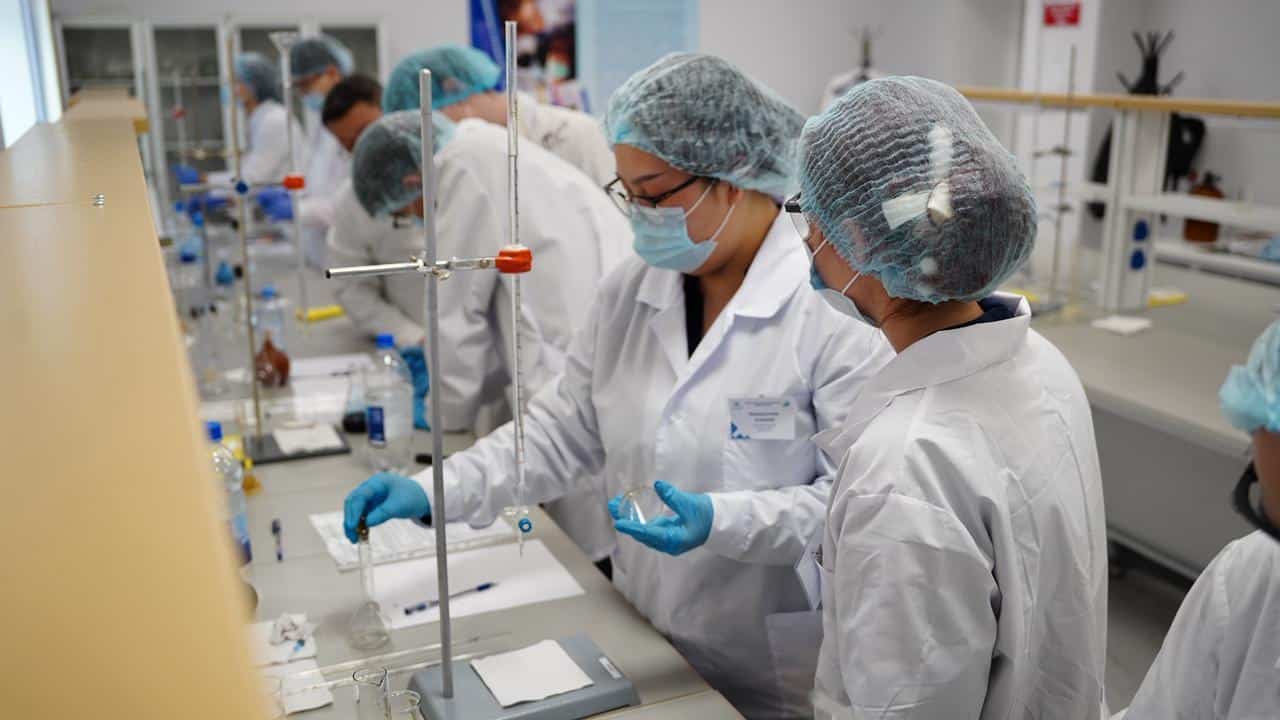
An international laboratory has been established at Utebayev University in Atyrau, Kazakhstan, in collaboration with Turkish scientists. The specialists will develop environmentally friendly packaging based on polypropylene derived from water and agricultural raw materials, Kazakhstan’s Ministry of Science and Higher Education reported.
The project is being funded through the Ministry’s 2025-2027 grant. It aims to create biodegradable composites to reduce the environmental impact of plastic. During the development process, the scientists use domestic materials: bulrush and agricultural waste products.
Biological raw materials are integrated into the polypropylene structure using specialized equipment, thereby reducing the packaging’s decomposition time and lowering production costs.
Research at Utebayev University is being conducted in collaboration with Prof. Yasin Kanbur from Karabuk University in Turkey. Assylbek Kanbetov, dean of the N. Nadirov Institute of Petrochemical Engineering and Ecology, noted that the initiative strengthens the link between science and industry and demonstrates the team’s strong scientific capacity.
The laboratory is currently being provided with state-of-the-art technology, and the materials’ characteristics are being tested using scanning electron microscopy, thermal analysis and UV resistance testing. If the experiments prove successful, eco-friendly packaging will be used in the food industry, logistics, construction and medicine.
Previously, Kursiv.media reported that German entomologists have described a new species of bee, Andrena aequinoctialis, discovered in southeastern Kazakhstan.