Ready for anything: Analyst breaks down Iran’s survival strategy in 2026

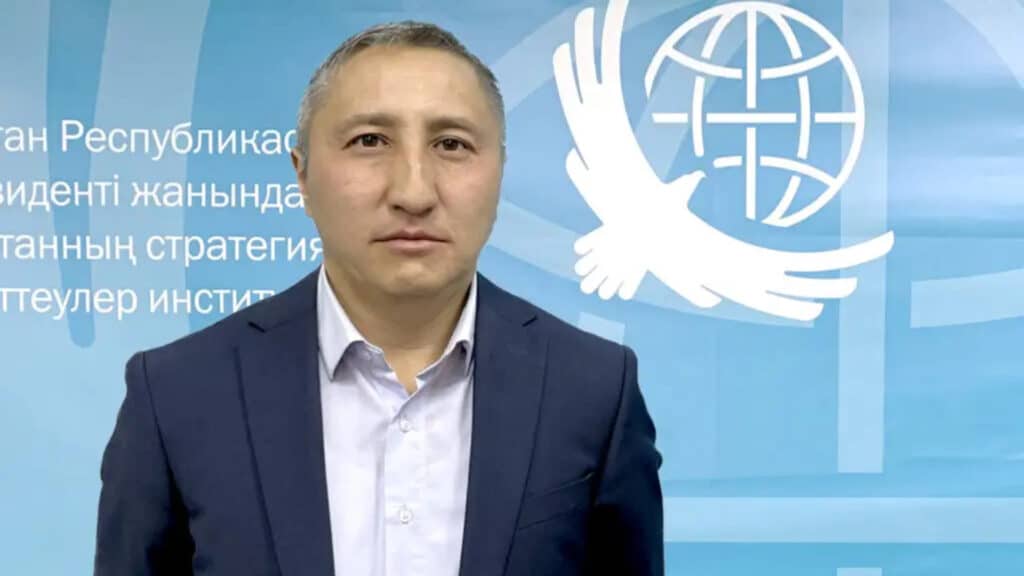
Iranian authorities were prepared for the possibility of conflict and the force majeure scenarios that could arise, according to Kazakh political analyst Mukhit Assanbayev. Below are excerpts from an interview with Assanbayev conducted by a correspondent for Kursiv.media.
Leadership after Khamenei
— Ayatollah Ali Khamenei and other officials were killed. Reports say 48 officials died in a single strike. Has Iran been left without leadership?
— No. Khamenei had already outlined power transfer arrangements after last year’s «12-day war» against Iran, led by Israel and the U.S. In other words, procedures for governing in a force majeure situation had been decided in advance.
Read also: Iran names interim leader, declares jihad after escalation.
The fact that Iran temporarily shifted to a collective leadership model following Khamenei’s death demonstrates that preparation. Currently, authority is effectively concentrated in three offices: the supreme leader, the speaker of parliament and the head of the judiciary.
If any of them are killed, successors have already been identified. Iran is prepared for various contingencies.
For many Shiite Muslims, Khamenei’s assassination during Ramadan carries deep symbolism. Some interpret his death as martyrdom, drawing parallels to Hassan and Husayn, figures revered in Shiite tradition.
Read also: China-led Shanghai block defends Iran, calls for UN action after strikes.
Overall, the supreme leader’s death is unlikely to weaken Iran politically. On the contrary, it could consolidate the regime and mobilize public support. Moreover, China is likely to extend assistance to Iran.
Duration of the conflict
— How long could this war last?
— There will be an active phase of fighting that could last from one to two weeks up to a month. Whether a prolonged standoff follows will depend on a range of additional factors.
Potential regional impact
— How could the war in Iran affect Kazakhstan?
— Oil prices may rise, and likely already have. China imports oil from Iran, so disruptions could pose challenges for Beijing. However, I do not expect prices to increase dramatically.
There will likely be little direct impact on Kazakhstan. However, neighboring countries — including Azerbaijan, Armenia and Georgia, as well as Russian republics in the Caucasus — could face potential refugee flows.
An estimated 15% to 20% of Iran’s population is ethnically Azerbaijani, and 5% to 7% is Turkmen. In the event of large-scale ground operations or a prolonged war, many refugees would likely seek shelter in Azerbaijan or Turkmenistan. A mass exodus would depend on the scale and duration of the conflict.
Admittedly, the objective of the U.S. and Israel is to eliminate Iran’s political leadership quickly and compel Tehran to sign a peace deal.