
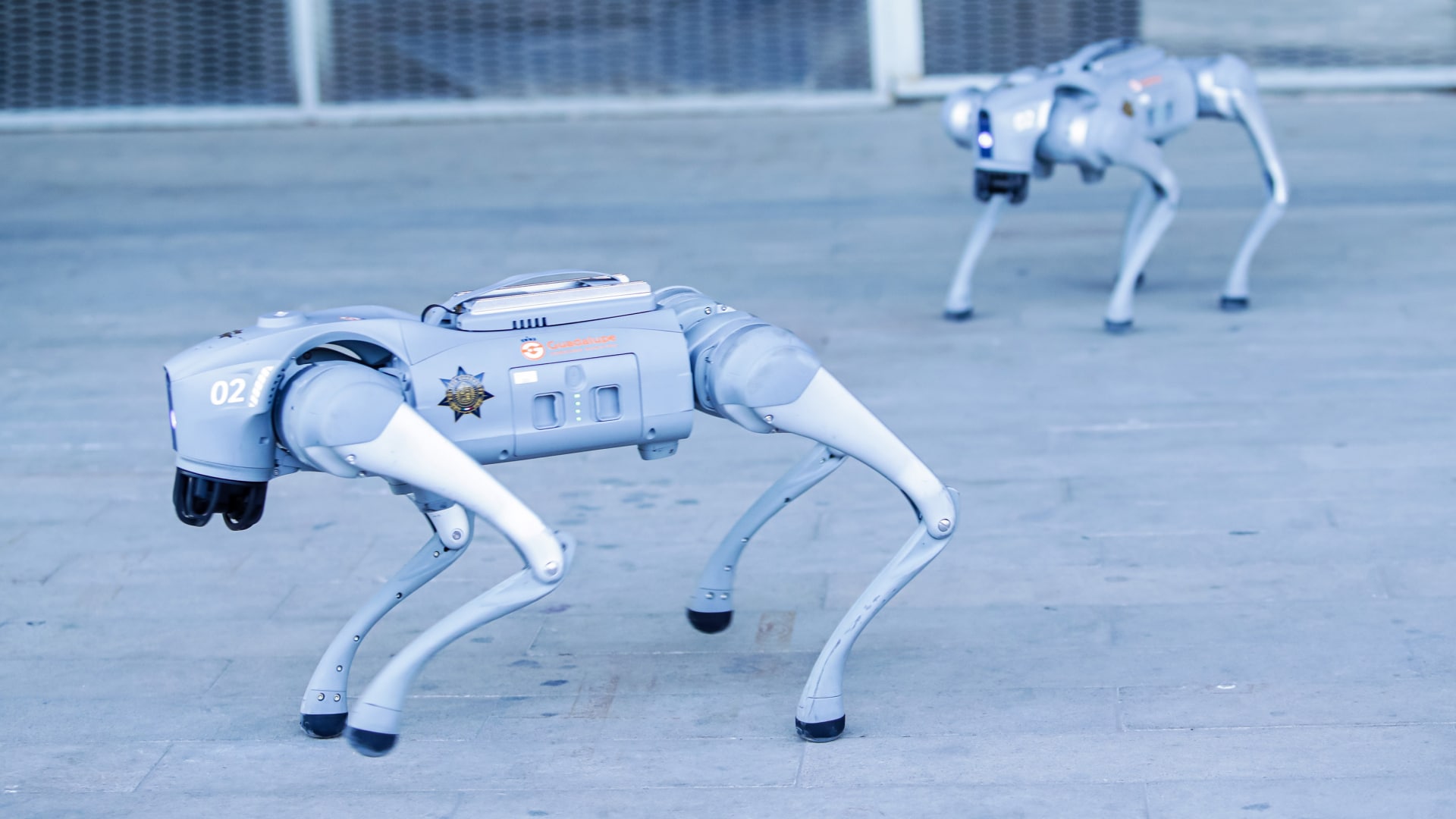
Four-legged robots, often called quadrupeds, are gaining traction among AI companies. These robotic «dogs» are now being deployed to guard and patrol sprawling data centers across the U.S., according to a Fortune report.
Growing demand for robotic security
Tech firms are investing heavily in artificial intelligence infrastructure, with spending approaching $700 billion — a figure comparable to the gross domestic product of countries such as Sweden. Many of these data centers cover vast areas, sometimes stretching across multiple football fields. One example, Meta’s Hyperion facility, is expected to span roughly four times the size of Central Park in New York City.
Read also: China is leading the charge to bring humanoid robots home.
These enormous sites require significant resources, including large amounts of electricity and millions of gallons of water. Their scale also makes maintaining constant security both complex and costly, prompting companies to explore alternatives like robotic patrol units.
Beyond perimeter patrol
Quadruped robots, Fortune notes, are not limited to security duties. Data center operators are increasingly using machines developed by companies such as Boston Dynamics and Ghost Robotics for a range of operational tasks. These include industrial inspections, site mapping and monitoring construction progress.
Such capabilities can help managers identify potential hazards more efficiently, including leaks, standing water or other safety risks that might otherwise go unnoticed.
A broader shift toward robotics
Some industry leaders believe advances in artificial intelligence could accelerate the adoption of robotics across multiple sectors. In the long term, robots may become more prevalent than humans in certain environments. While AI is already reshaping white-collar professions, robotics could eventually disrupt jobs that rely on physical labor as well.