Hands-off hardware: China’s new 2026 law allows fully electronic steering

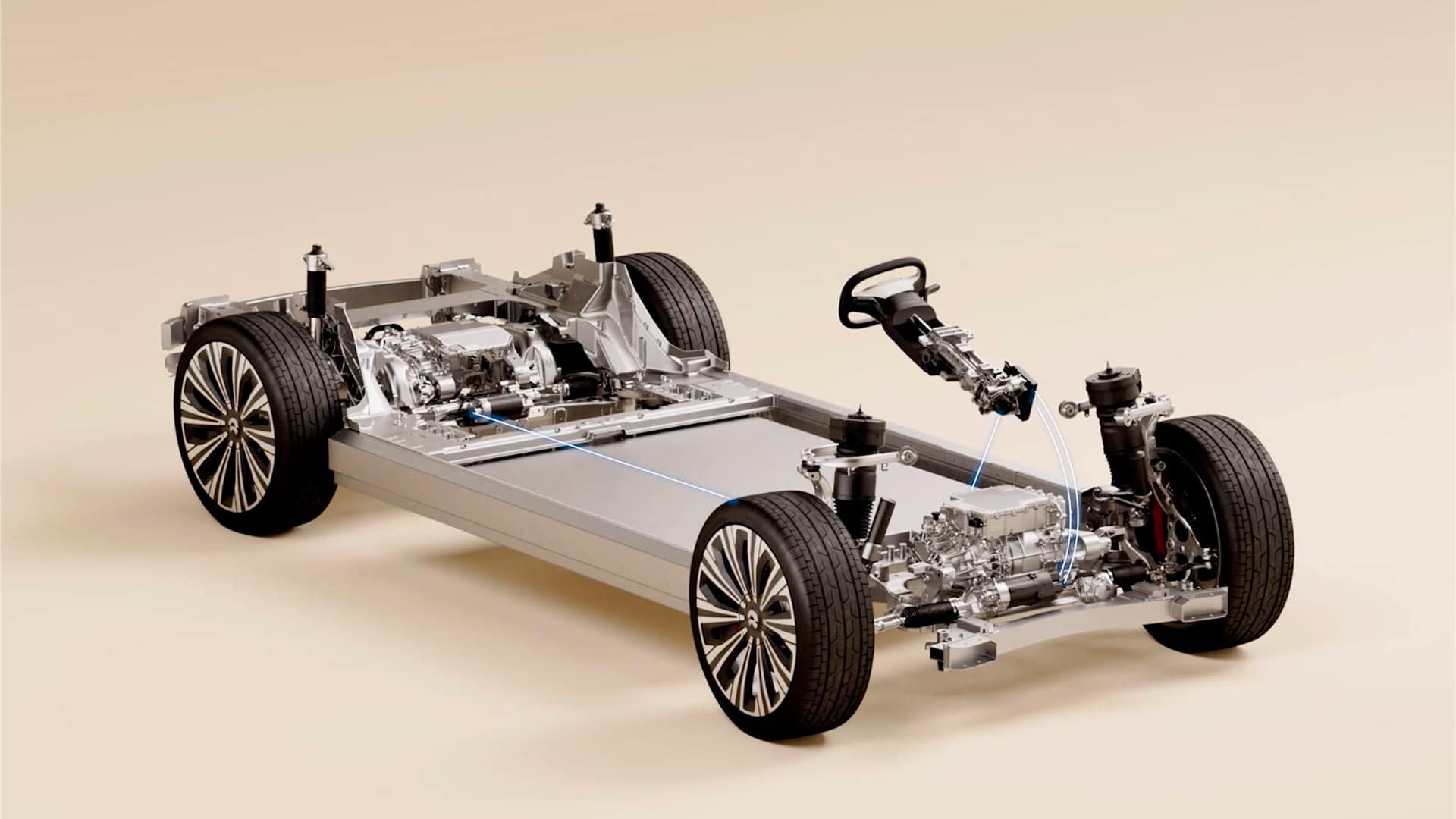
China is once again reshaping the global auto industry — this time in steering technology, according to CarNewsChina.
An updated national standard set to take effect July 1, 2026, will allow automakers to use fully electronic steer-by-wire systems. In practical terms, this means a vehicle’s steering wheel no longer needs a mechanical connection to the wheels — a significant shift the country is making deliberately.
End of mechanical backup requirement
China currently requires electronic steering systems to include a mechanical backup. The new standard removes that requirement.
Instead, it introduces detailed technical rules governing electronic systems, including functional safety, operating algorithms and failure response protocols.
A broad range of automakers and technology companies contributed to developing the standard, including Nio, Xpeng, BYD, Geely, Xiaomi, Huawei and BAIC, as well as joint ventures involving Toyota and Mercedes-Benz in China.
The breadth of participation underscores that this is not an experiment, but a coordinated push toward a future where mechanical steering may no longer be necessary.
Early adopters and industry shift
Steer-by-wire technology has been tested by multiple manufacturers, but mass-market adoption has been limited.

The Infiniti Q50 uses electronic steering but retains a mechanical backup. In contrast, the Nio ET9 became one of the first production vehicles to eliminate the traditional mechanical connection entirely.
With the new standard in place, such designs are expected to become more widespread.
A foundation for future vehicle design
Fully electronic steering is more than a futuristic feature. It is a key component of next-generation vehicle architecture, enabling advanced driver-assistance systems, autonomous driving and more flexible interior designs.