
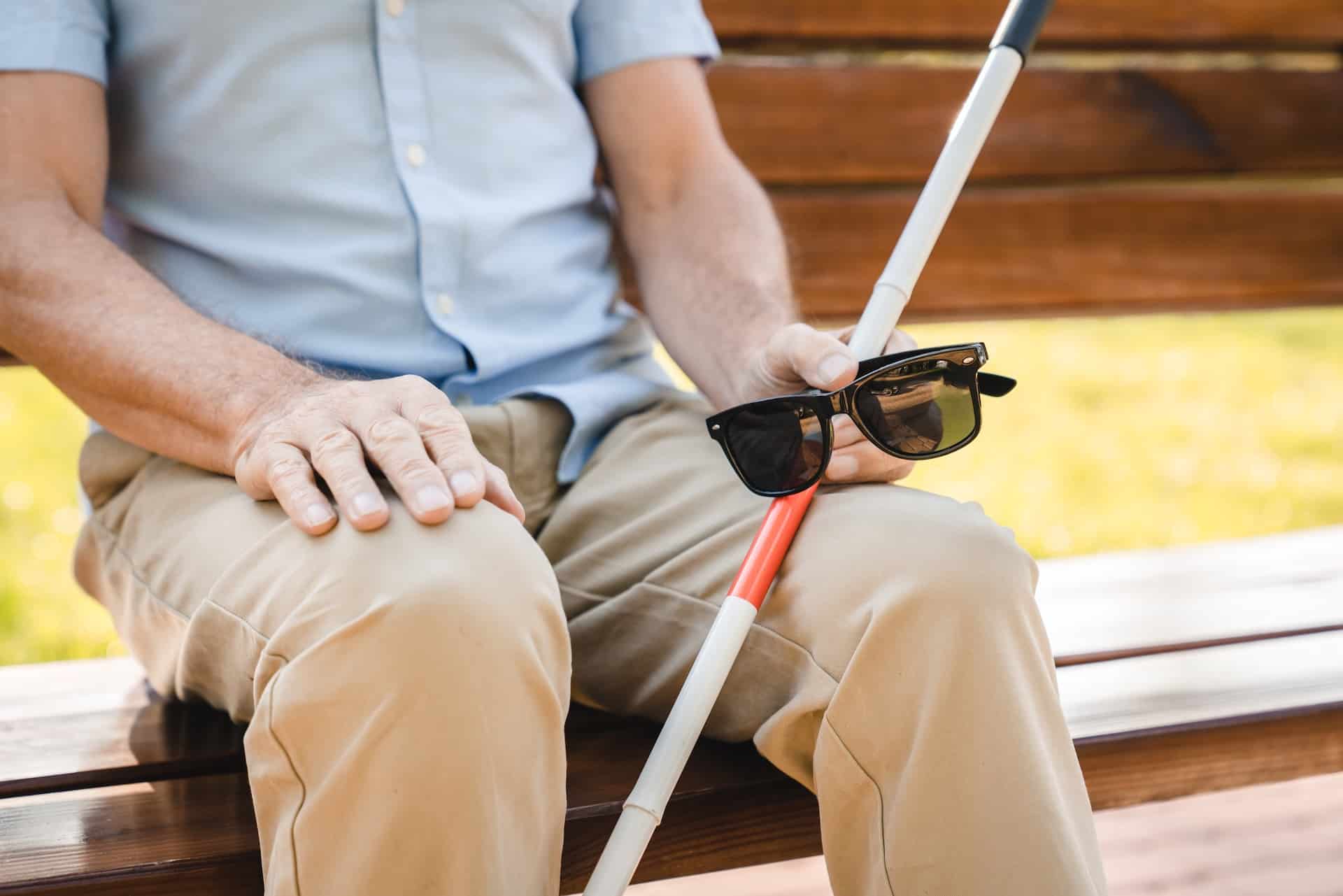
Kazakh inventor Galimzhan Gabdreshov has developed an echolocation device that allows people who are completely blind to navigate independently, ride bicycles and even shoot at targets. Despite successful trials and international recognition, the social-impact project has not received government support. Gabdreshov shared details about the situation on Threads.
A personal crisis inspired the invention
The idea for creating an alternative form of vision came to the 52-year-old Arkalyk native after a serious medical emergency. In 2019, Gabdreshov suffered a steam burn to his eyes that caused retinal detachment. Doctors warned that without laser surgery within five days, he could permanently lose his sight.
Specialized equipment and a surgeon were urgently located in Astana, and the operation was successful. However, doctors said he still faced a high risk of sudden vision loss in the future. Confronted with the possibility of blindness, Gabdreshov began researching ways for people to navigate without relying on the optic nerve.
How the technology works
That research led to the creation of the startup Sezual — a name inspired by the Kazakh words for «to feel» and «to perceive» — which Gabdreshov co-founded with his partner, Nurbek Yensebayev. The team developed a compact wearable device that fits around the user’s neck and operates on the principles of natural echolocation, similar to the systems used by bats and dolphins.

The device emits high-frequency clicks that bounce off surrounding objects. According to the developers, it enables blind users to detect objects within a radius of up to 15 meters, identifying their shape, distance and even the material they are made from. The brain then processes the reflected signals to create a three-dimensional perception of the surrounding space.
Videos from product tests show completely blind users confidently riding bicycles, navigating indoor spaces and shooting paintball guns at targets. The invention has received an official patent and passed state testing, demonstrating its practical effectiveness.
Посмотреть в Threads
International recognition but no government support
In 2021, experts from the World Bank praised the innovation and featured the project on the organization’s official blog. In addition to the echolocation device, the company also develops audio-based Braille self-learning materials.
However, according to Gabdreshov, Kazakhstan’s Ministry of Labor and Social Protection classified the project as «non-priority» and declined to provide financial support, despite appeals from members of the visually impaired community.
Continuing the project independently
Gabdreshov says he continues to manufacture the devices using his own funds. He donates them to specialized schools for blind children and hopes to draw broader public attention to the project. Without stronger public and institutional support, he says, large-scale implementation of the technology in Kazakhstan will remain difficult.