
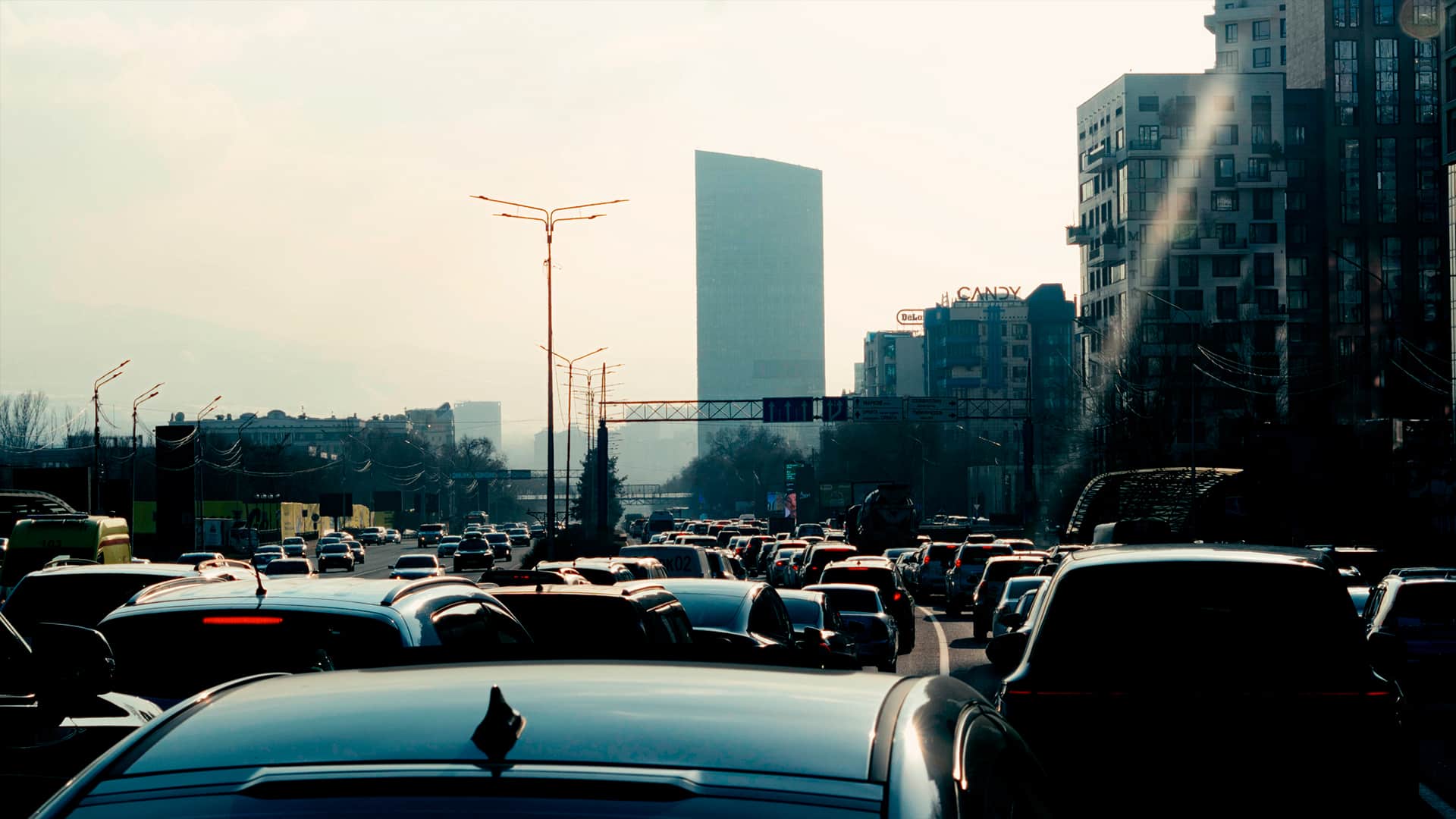
Traffic congestion in Kazakhstan’s largest city continues to worsen, prompting debate over the most effective ways to improve mobility.
Earlier this year, media reports indicated that a consortium of Chinese companies and Integra Construction KZ LLP would design and build a SkyTrain line in Almaty. To assess the potential impact of the project, Kursiv.media spoke with Dauren Alimbekov, an urbanist and former head of Almaty’s passenger transport department.
According to Alimbekov, neither new metro stations nor the proposed SkyTrain will solve the city’s overall traffic congestion problem.
In a post on Instagram, he noted that the metro line along Abay Avenue, one of Almaty’s busiest roads, did not eliminate traffic jams, although some residents living near metro stations may choose to leave their cars at home and use public transport instead. He believes the SkyTrain would have a similar effect.
Dedicated bus lanes as an alternative
To ease congestion, Alimbekov proposes a relatively low-cost solution that he says could produce results within two to three months: expanding dedicated lanes for buses and trolleybuses across the city.
Read also: Gridlock on the Silk Road: Is Almaty turning into the Los Angeles of Central Asia?
«We can start today and by September, we’ll have significantly reduced the city’s traffic congestion problem. We have 4,000 buses. That’s four times more than Barcelona. That is practically enough to provide the entire city with good routes. The problem is that we don’t have enough dedicated lanes. To accommodate them, we need to create a lot of one-way streets,» Alimbekov said.
About the SkyTrain project
Almaty authorities unveiled plans for an elevated metro system in 2025. On June 2, President Kassym-Jomart Tokayev instructed the akimats of Almaty and the Almaty region to streamline the project.
The main objective of the SkyTrain is to connect Almaty with the future city of Alatau.