
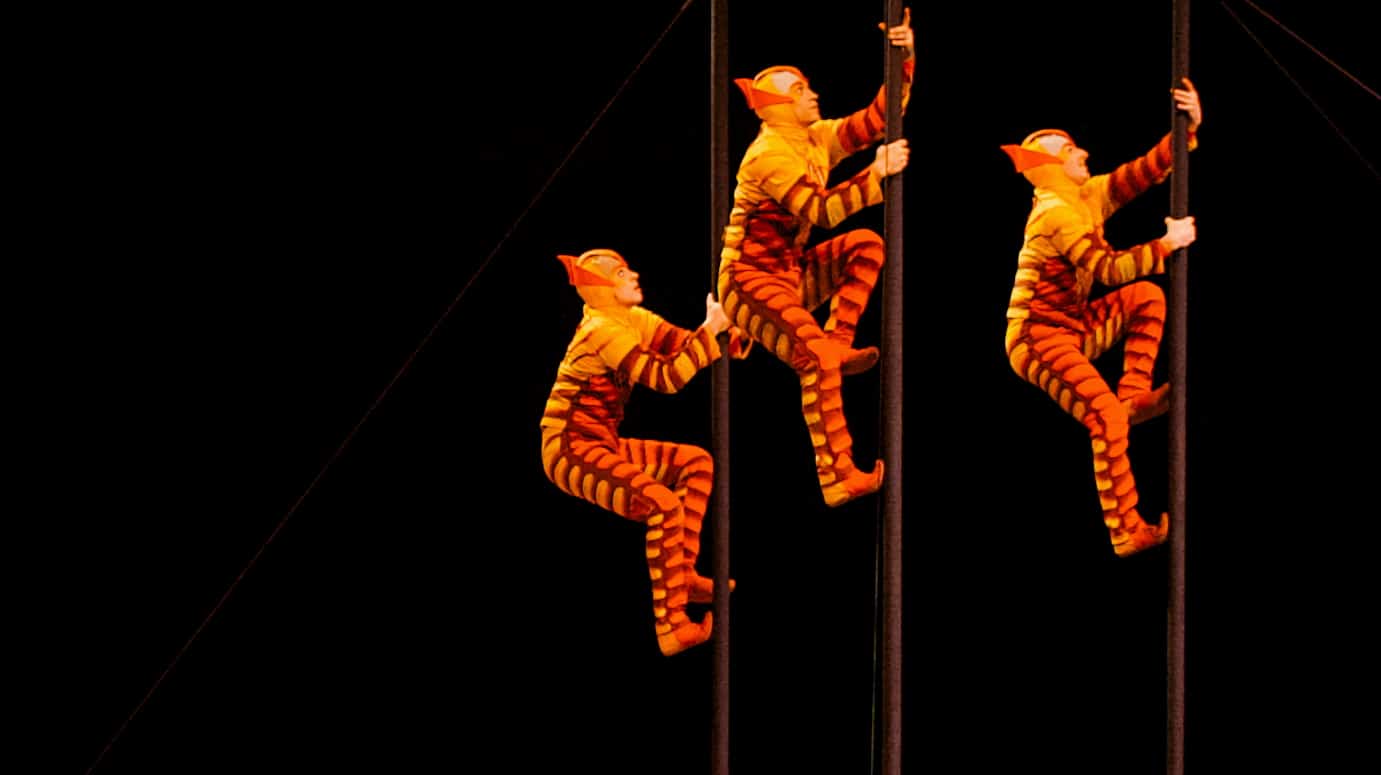
Just a few hours before showtime at Almaty Arena, the venue is nearly empty. Behind the scenes of Cirque du Soleil’s OVO, however, preparations are already in full swing. While some performers warm up before taking the stage, others apply makeup. Costume specialists inspect hundreds of wardrobe pieces, and musicians prepare for the live performance.
On the day of the premiere, Cirque du Soleil’s international team gave journalists rare behind-the-scenes access to the production. Kursiv LifeStyle got a firsthand look at what happens before audiences see the first acrobatic acts.
A global production arrives in Central Asia
OVO has been touring for 17 years and has been seen by more than 10 million spectators in nearly 50 countries. Kazakhstan became the 47th country on the show’s tour itinerary and the first in Central Asia to host the production.
According to organizers at Freedom Events, negotiations to bring the show to Kazakhstan began about a year and a half ago. Before signing the contract, Cirque du Soleil representatives spent several days inspecting venues in Astana and Almaty, evaluating security measures, logistics and the technical capabilities of the arenas. Only after those assessments was approval granted for the tour.
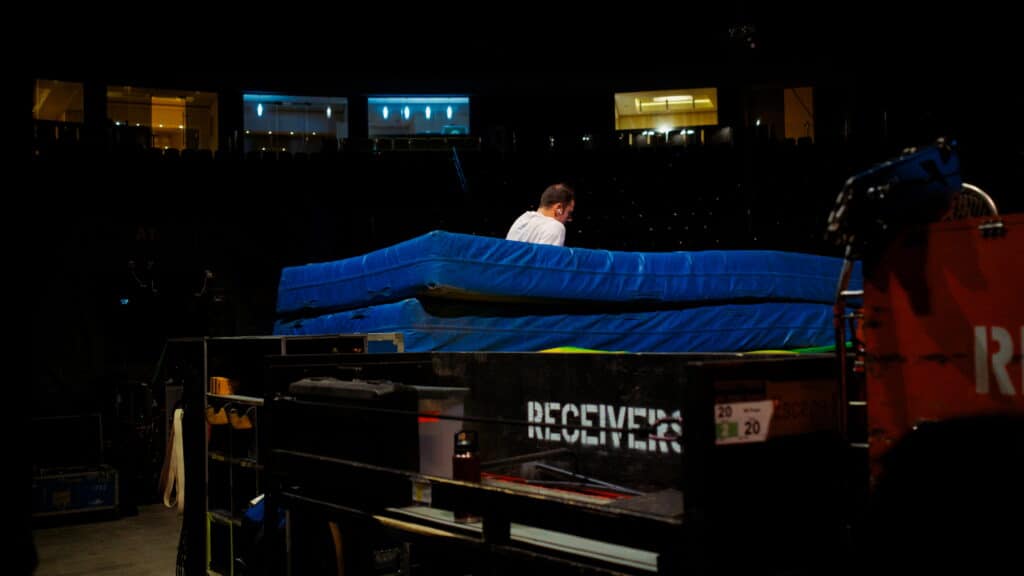
Transporting the production to Kazakhstan required two cargo aircraft, while a convoy of 21 trucks carried sets and equipment from Astana to Almaty. The show travels with what organizers describe as a self-contained city, including equipment, costumes, training gear, kitchens and technical services.

«The circus exists in its own ecosystem. More than 100 people live and work together throughout the tour,» said Victoria Torgunakova, CEO of Freedom Events.
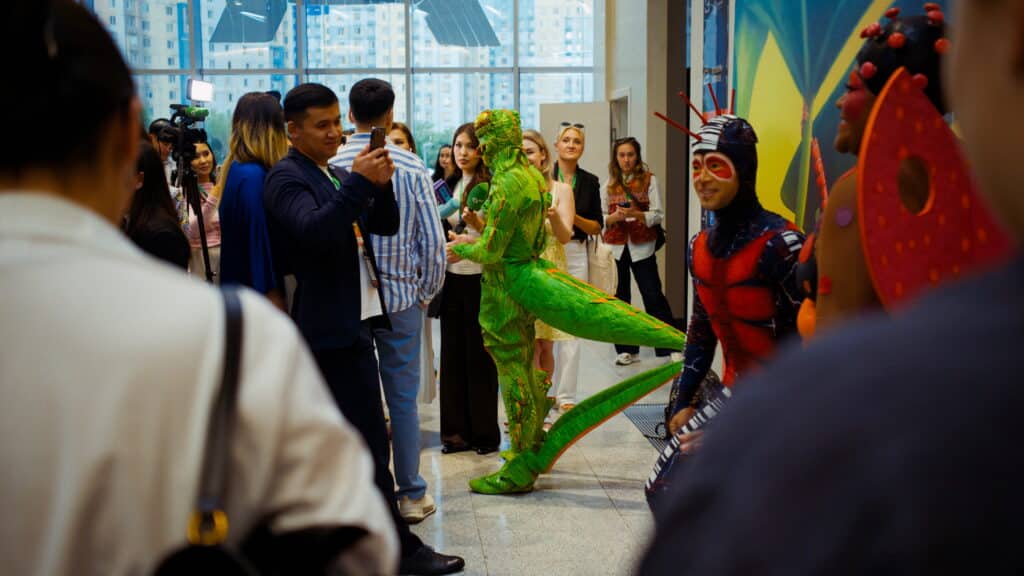
Behind the scenes, it becomes clear that the production is far more than a traditional circus.
The team behind the performance
Fifty-three artists from around the world perform on stage. Supporting them is an even larger team of costume specialists, technicians, musicians, lighting and sound professionals, and security staff.
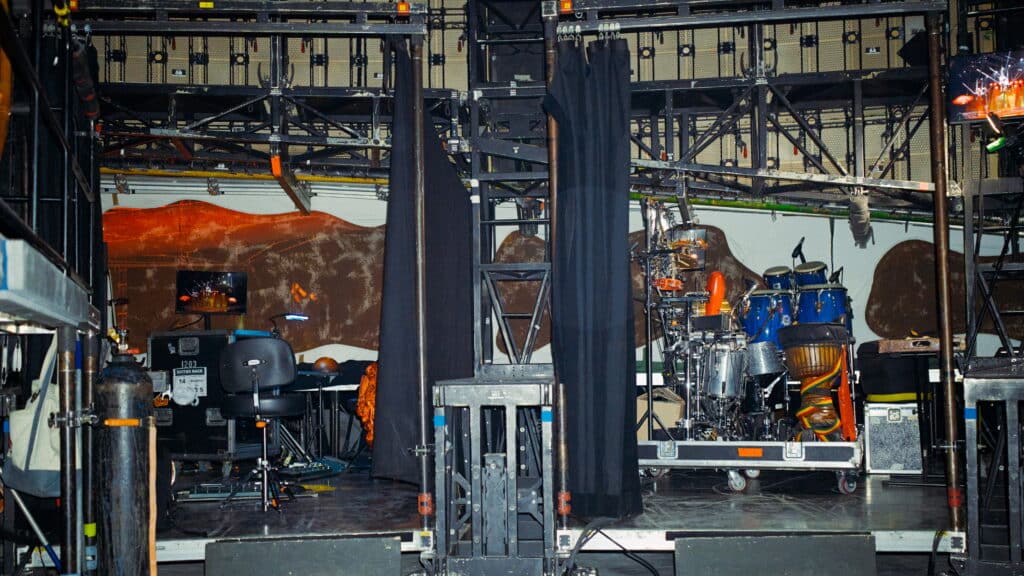
One detail many audience members may not realize is that all of OVO’s music is performed live. Seven musicians work backstage during each performance, accompanying the action on stage in real time.
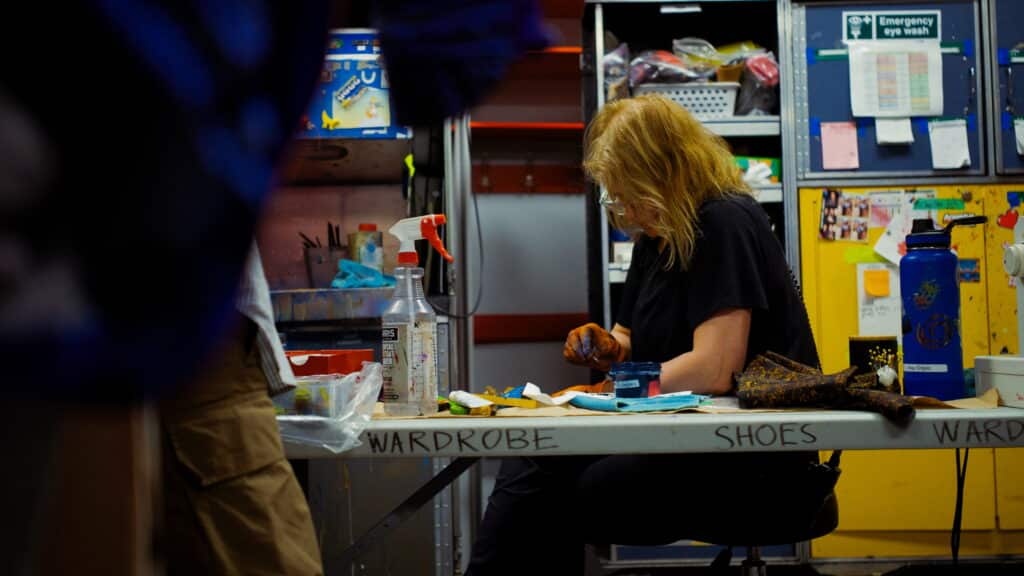
Perhaps one of the most fascinating areas behind the scenes is the costume department.
Hundreds of costumes, one performance
All costumes for OVO are created at Cirque du Soleil’s headquarters in Montreal. Approximately 200 specialists work on costume production, while a touring wardrobe team of just five people oversees maintenance and preparation on the road.
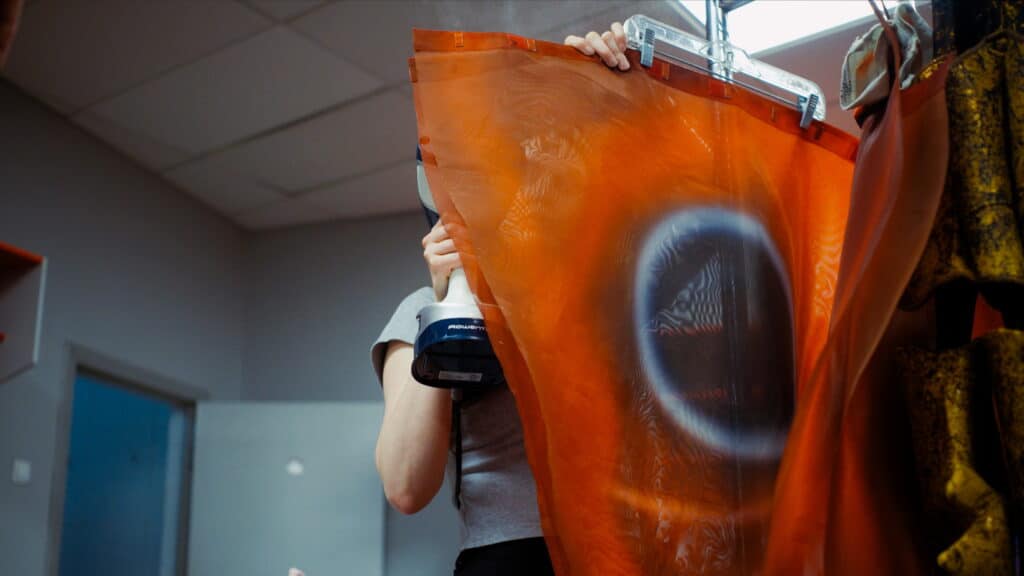
Each performance uses roughly 800 costume pieces.
The day before the Almaty premiere alone, the team completed about 60 laundry cycles to prepare the costumes for the show.

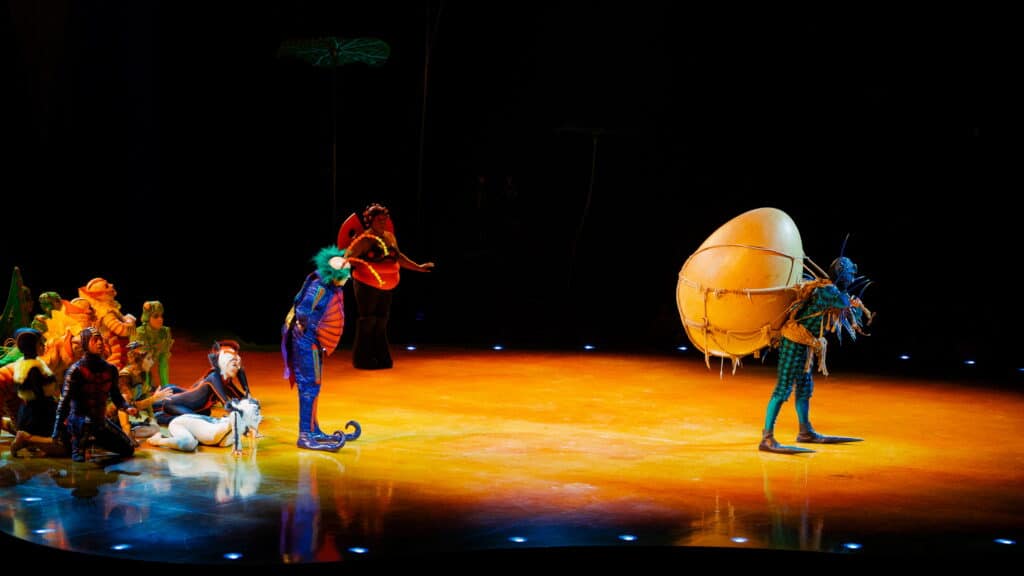
Journalists were shown costumes representing spiders, butterflies, crickets and other inhabitants of OVO’s insect-inspired world. Many of the pieces are hand-painted, and every costume is custom-made for its performer.
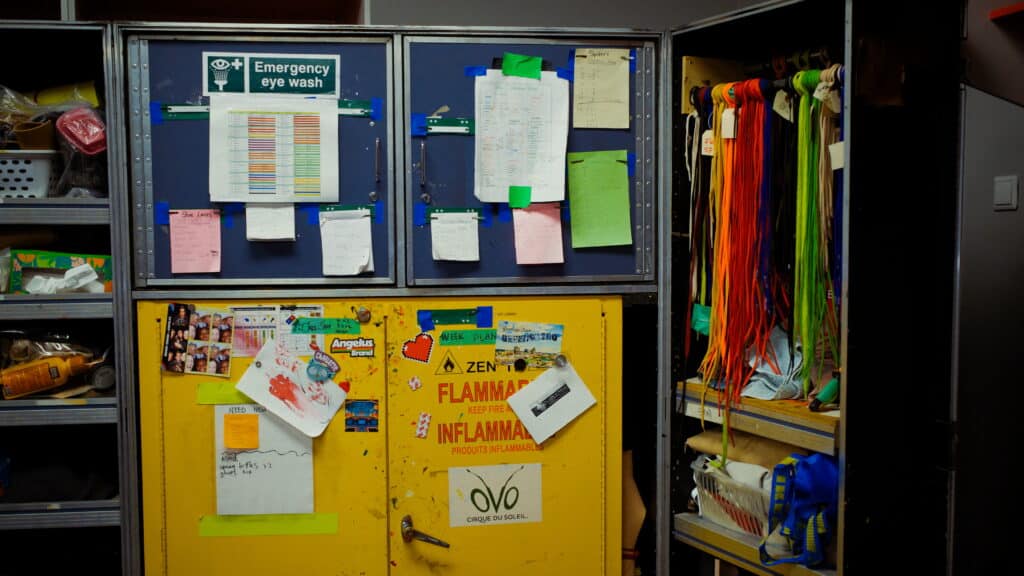
The reason is simple: acrobats perform highly complex stunts, often at significant heights, so costumes must fit perfectly without restricting movement.
Makeup and training
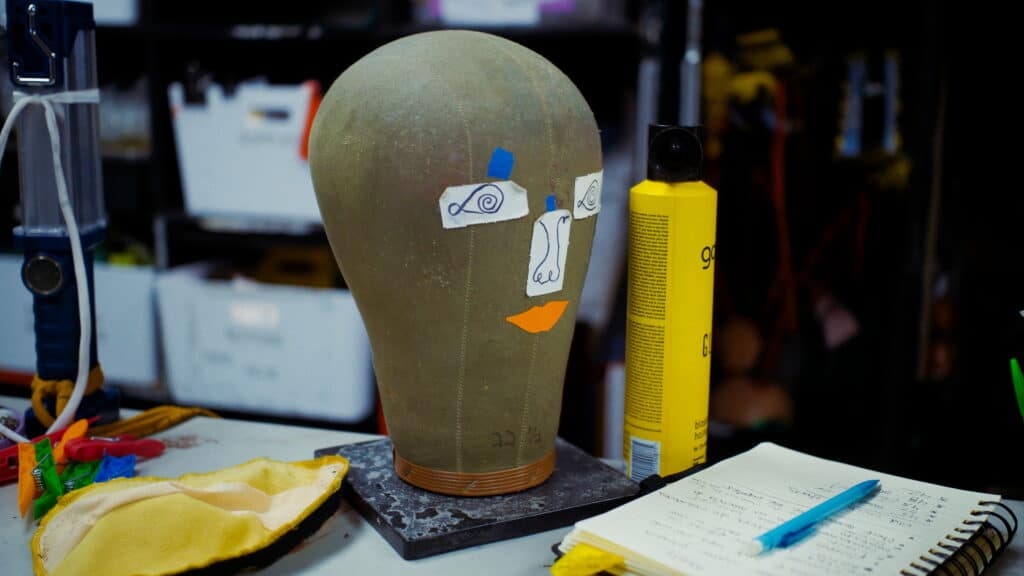
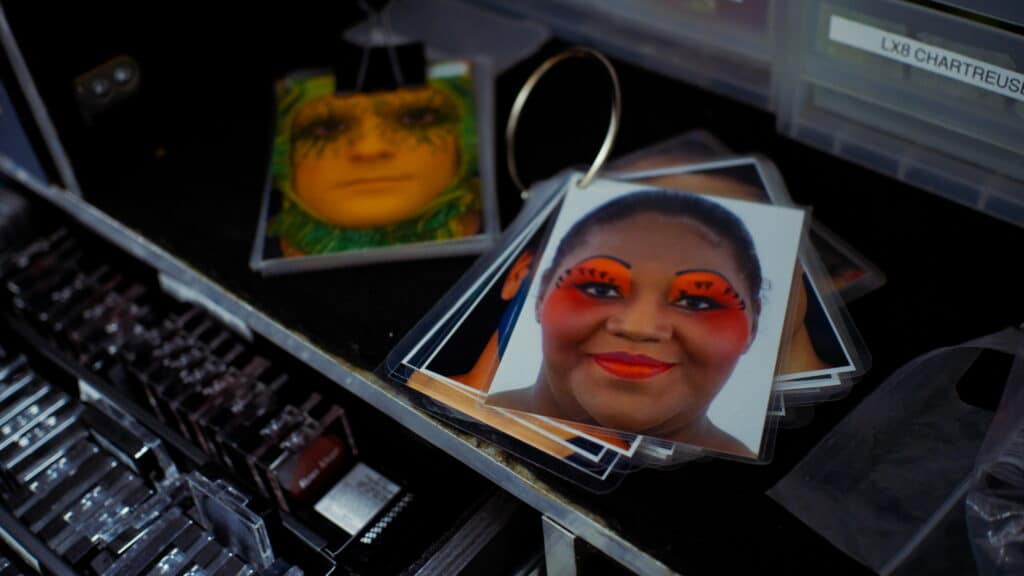
Performers also apply their own stage makeup. Creating a single look can take anywhere from 30 minutes to an hour.
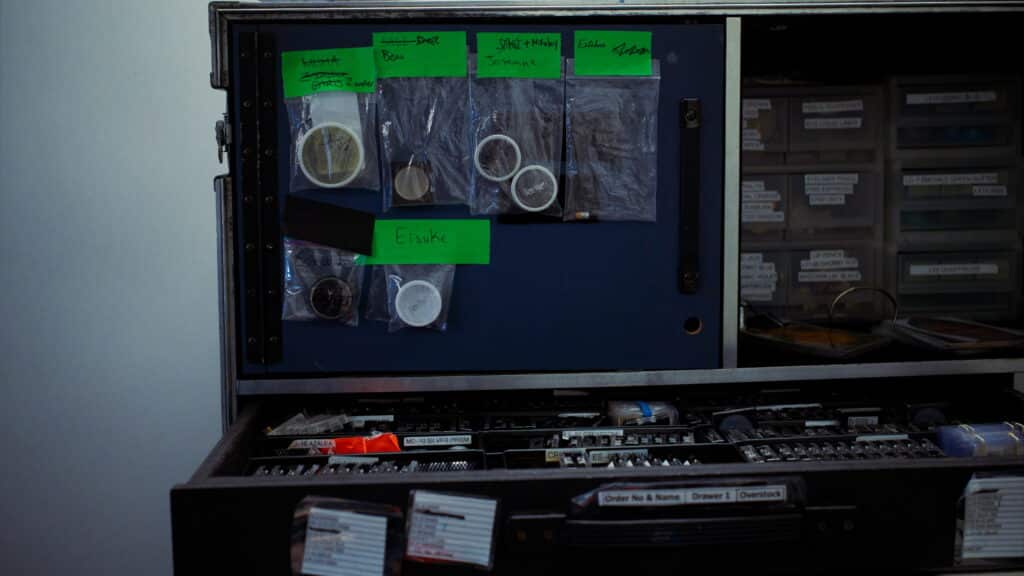
According to Cirque du Soleil representatives, some artists spend up to three months after being hired simply learning how to apply their character makeup correctly.
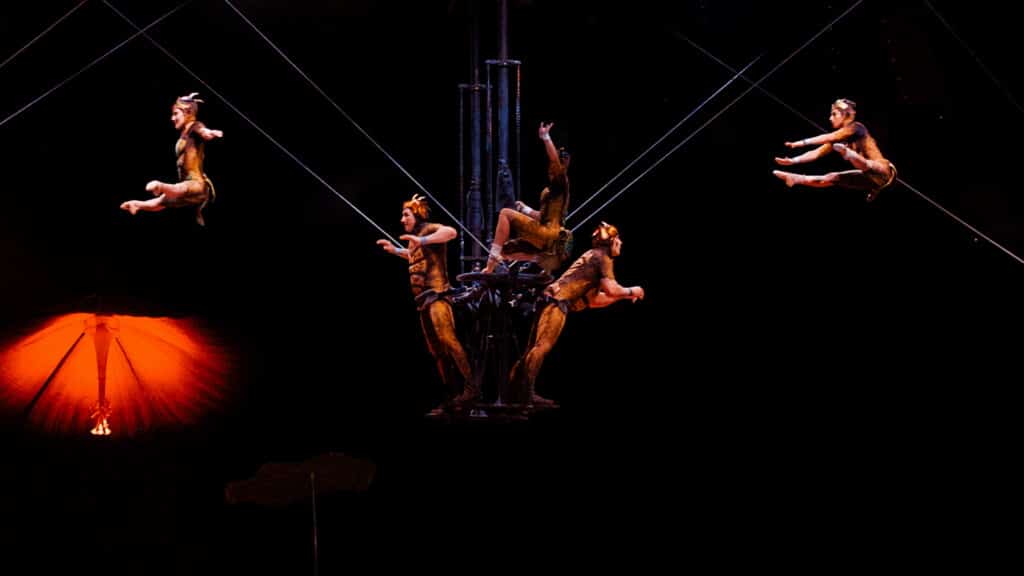
During the behind-the-scenes tour, journalists observed several training sessions that are typically hidden from public view. Aerial acrobats, wall-trampoline performers, aerial cradle artists and jugglers rehearsed simultaneously on stage.
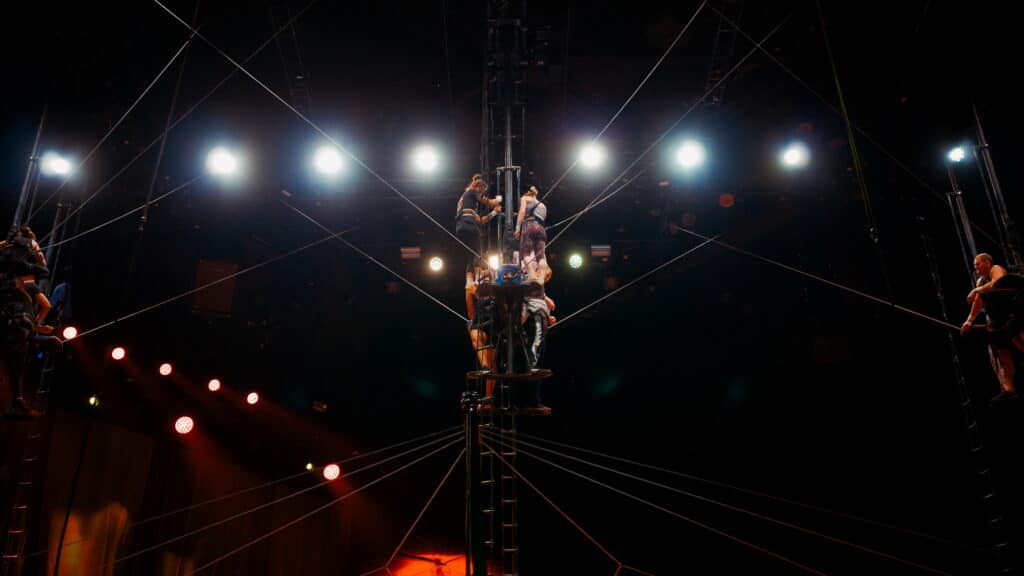
Even routine training sessions resembled a polished performance.
Life on the road
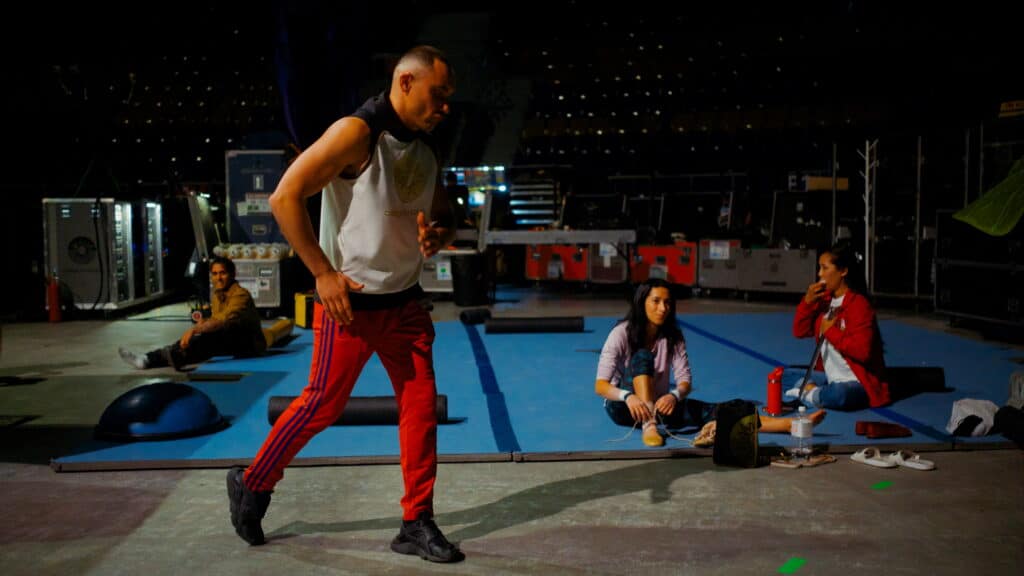
Mikhail Kostianov, a seven-time World Cup champion in tumbling, has performed with Cirque du Soleil for 10 years.
He said one of the greatest challenges of the profession is not the acrobatics themselves, but the constant travel.
«You arrive in a new city, unpack your suitcase, and a few days later you pack everything again. That’s how it goes every week. In reality, it’s not an apartment that becomes your home — it’s life on tour itself,» Kostianov said.
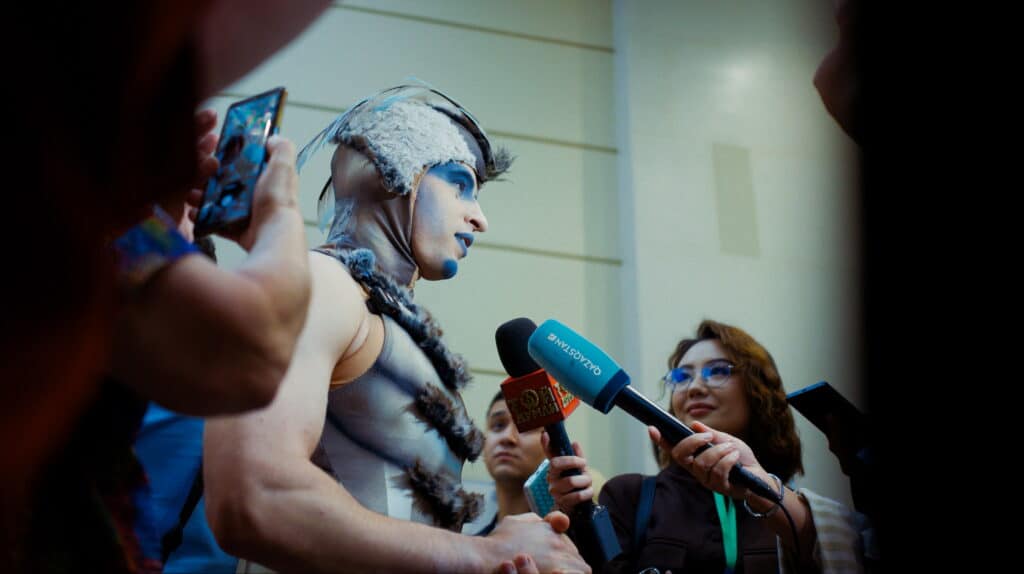
Other members of the cast face similar challenges.
For example, Artur Dudov, a Ukrainian aerialist who performs butterfly acts alongside his wife, joined Cirque du Soleil six months ago despite having more than 15 years of experience in circus arts.
According to Dudov, the most difficult part of the job is not performing, but living on the road.
«We don’t have a permanent home base. Certainly, every circus artist tries to create a sense of home wherever they are. But we move almost every week — hotels, planes, buses, new cities. It’s exhausting. Traveling is probably the hardest part of our job,» Dudov said.
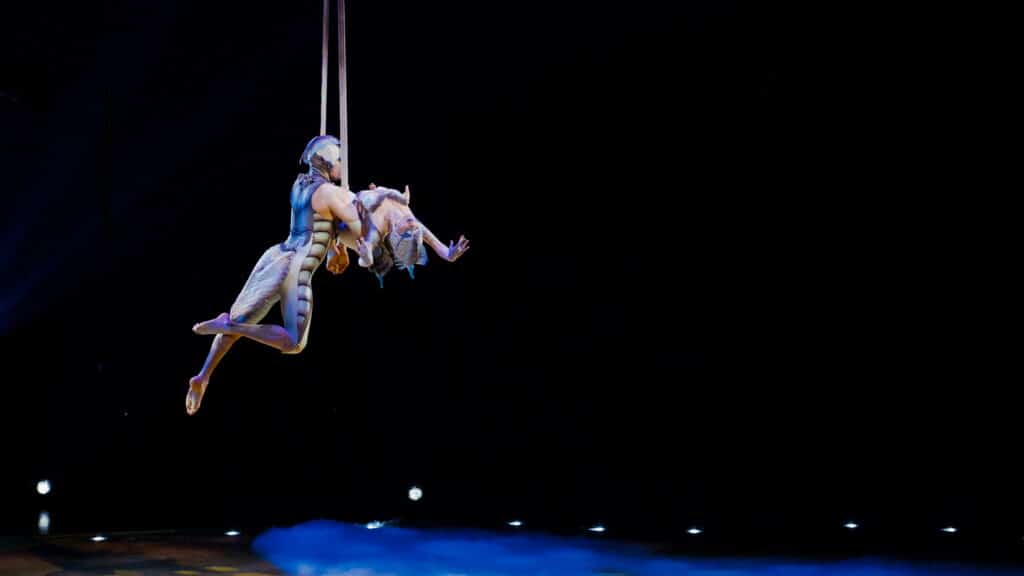
Despite the demanding schedule, Dudov said Kazakhstan left him with especially warm memories.
«It’s a very beautiful country. Almaty was the second city on our tour in Kazakhstan. The nature is wonderful, and the people are very hospitable. Honestly, it feels like I’ve come home for a vacation,» Dudov said.
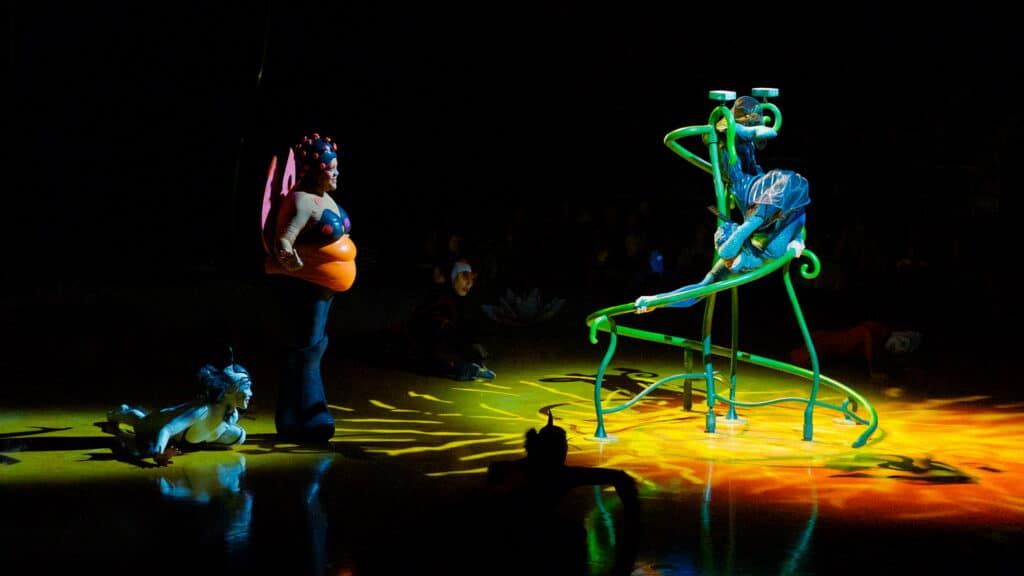
Despite the scale of the production, the story of OVO itself is relatively simple. The show’s title translates from Portuguese as «egg.» This mysterious egg serves as the catalyst for a plot that unfolds in a fantastical world inhabited by insects.
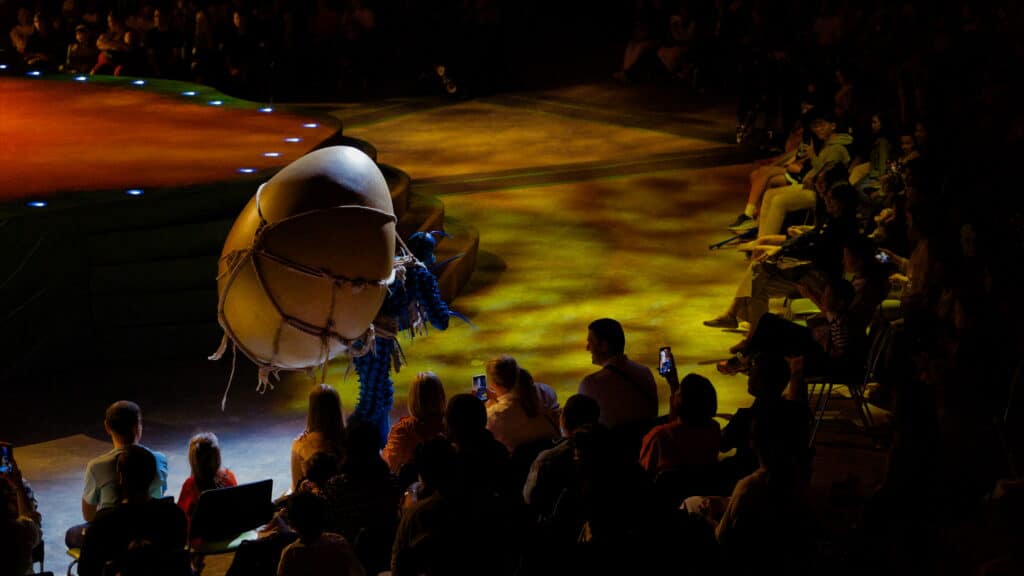
A colorful world of insects
Butterflies, crickets, spiders, beetles, ants and dozens of other characters appear on stage throughout the performance. OVO was created and directed by renowned Brazilian choreographer Deborah Colker.
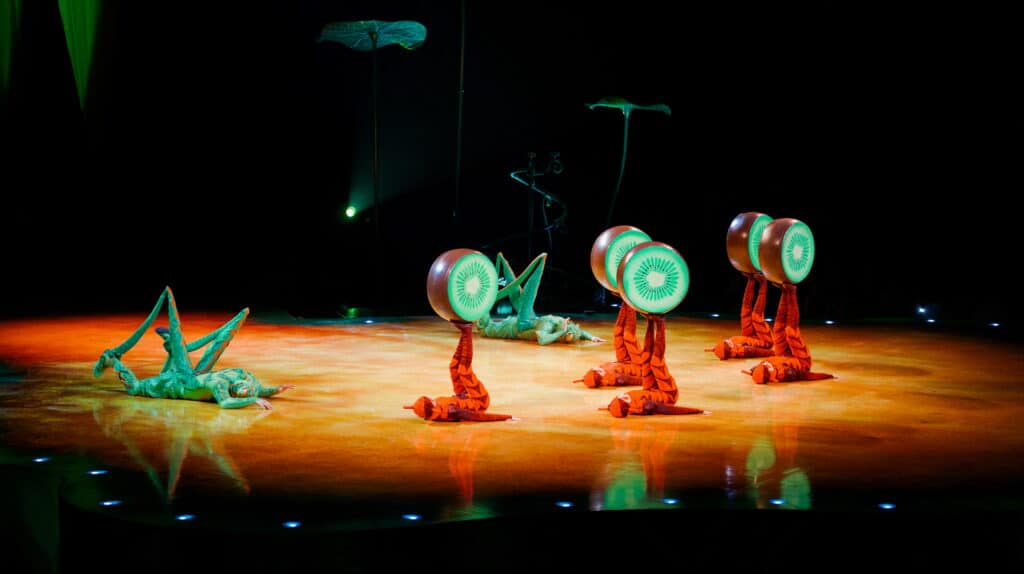
Brazilian influences are evident throughout the show — in the music, the vibrant set design, the performers’ movements and even the production’s name.
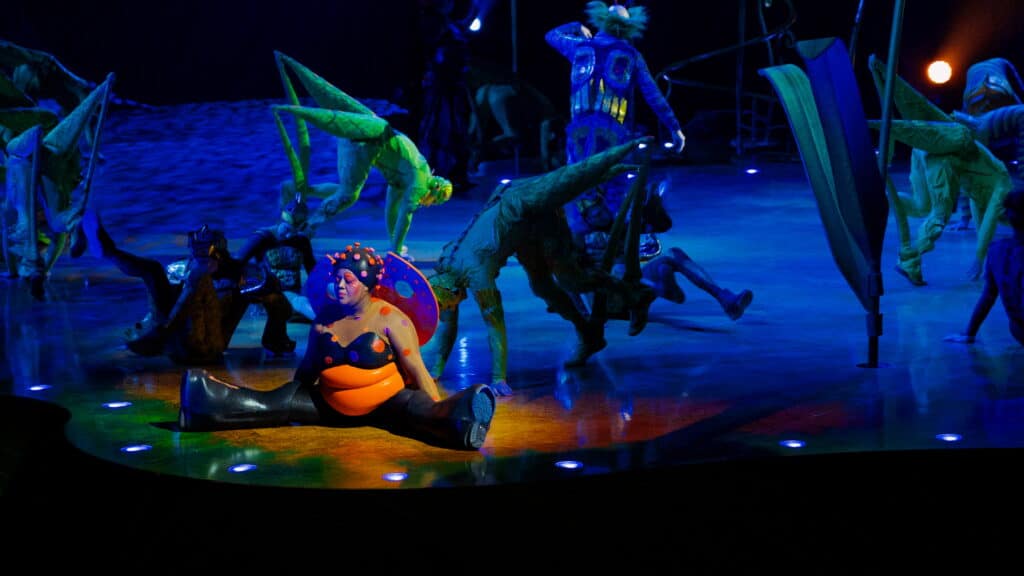
Reinventing the circus
Canada-based Cirque du Soleil has long been regarded as the world’s leading contemporary circus company. The organization transformed the industry by demonstrating that large-scale circus productions could captivate audiences without the use of animals.
Instead of traditional acts featuring trained animals, Cirque du Soleil built its reputation on world-class acrobatics, live music, theatrical storytelling, street-performance influences and cutting-edge stage technology.