
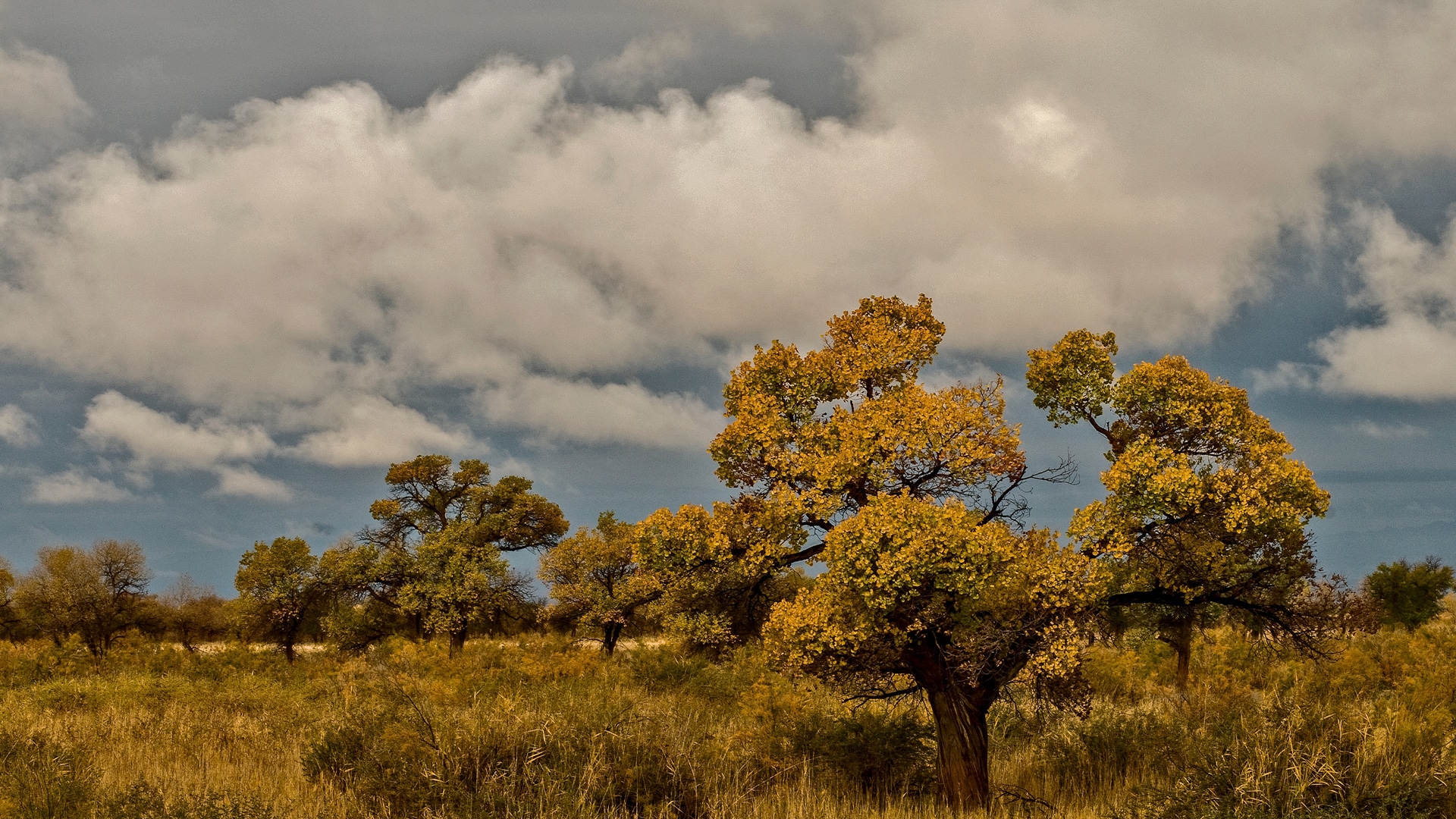
The area near the well-known Lake Balkhash in Kazakhstan’s Karaganda region is home to many natural attractions, including a grove of turanga (Asiatic poplar) trees that have survived since the Ice Age.
According to travel blogger Dinara Kanzler, the Asiatic poplar is considered one of the most unusual and fascinating trees in Central Asia. It is easily recognizable by its leaves: a single tree can have leaves of different shapes, making its crown appear as though it is made up of several different plants.
The tree’s most remarkable feature lies underground. It has an exceptionally powerful root system that allows it to regenerate even after the tree itself dies. New trees grow from the same roots, retaining the characteristics of the original plant. This ability is believed to have helped the turanga survive the Ice Age and other major climatic changes.
Turanga trees grow in only a few parts of the world, including China and Central Asia, with Kazakhstan being one of their natural habitats. Thanks to roots that can reach groundwater at depths of up to 50 meters (about 165 feet), the trees can thrive even in deserts where most plants cannot survive. The entire grove is also connected by a shared root system, allowing the trees to support one another.
The turanga grove in the Karaganda region is particularly well known. Despite the surrounding arid steppe and the absence of nearby surface water, dozens of these trees continue to flourish there. One solitary turanga has even become a favorite photography spot for visitors.
People have long recognized the turanga’s unique nature. According to an old legend, if the turanga ever stops growing and dries up completely, it will mark the end of the world.