
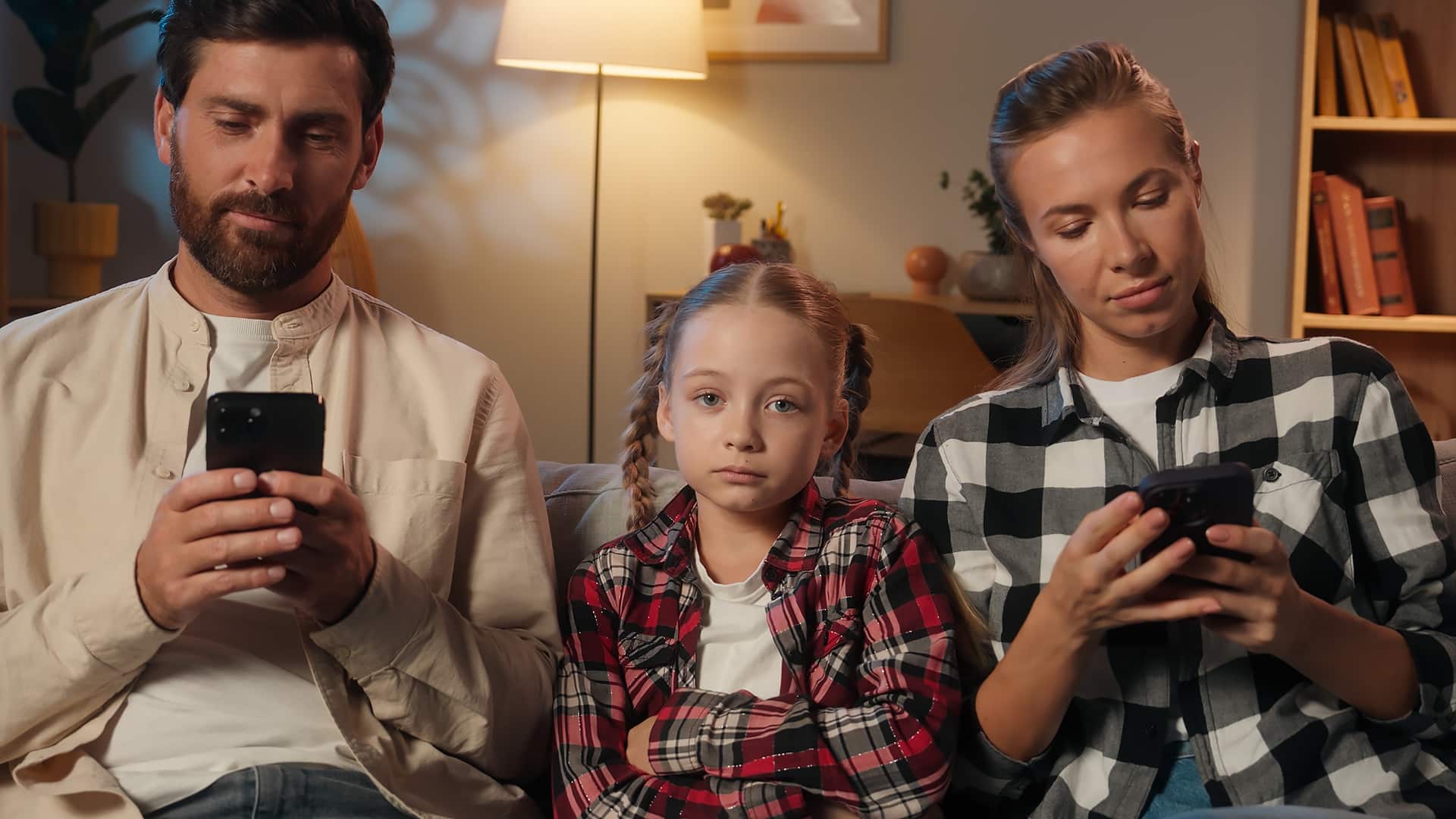
«Do you love your phone more than me?» A clinical psychologist’s daughter once asked her mother that question. Stories of children feeling overlooked while their parents use their phones are not uncommon.
Researchers in the U.S. examined whether parents’ frequent smartphone use is associated with adolescents’ emotional well-being. Their findings were published in Frontiers in Psychology.
The researchers described situations in which parents turn to smartphones or other devices while interacting with their children as «device attachment interference.» They sought to determine whether such behavior is associated with patterns of emotional attachment among adolescents.
Study examines parent-child interactions
The researchers surveyed 600 adolescents ages 12 to 17 from across the U.S. Participants reported how often their parents were distracted by smartphones or other devices and how they believed this affected communication within their families. The researchers then compared those responses with measures of emotional attachment.
The study found that adolescents who more frequently felt their parents were inattentive because of smartphone use were more likely to show signs of insecure attachment, according to the researchers.
The study focused on two forms of insecure attachment:
- Anxious attachment, in which a person frequently seeks reassurance that they are loved and valued.
- Avoidant attachment, in which a person tends to distance themselves from close relationships.
Insecure attachment can later be associated with difficulties forming and maintaining relationships, as well as a higher risk of psychological problems, according to attachment theory.
Researchers caution against drawing conclusions
The study does not establish that smartphone use causes insecure attachment. The researchers identified a statistical association between adolescents’ perceptions of parental device use and their attachment patterns, but other factors may also contribute.
One of the study’s authors said the problem may be more significant than it appears. According to the researcher, many adolescents discussed negative feelings during consultations that they associated with their parents’ frequent phone use.
The researchers are not urging parents to put their phones away every time their children seek their attention. Instead, they recommend that parents respond to teenagers’ attempts to connect and avoid consistently ignoring them, which can make children feel unimportant or overlooked.