Trapped by sanctions, Iran turns to China for economic survival


Decades of severe international pressure have forced the Islamic Republic of Iran to develop a distinctive and resilient, but heavily distorted, economic model. In her book «Iran: Economy Under Sanctions,» Russian economist Pavla Ripinskaya examines how a country of roughly 85 million people has weathered the effects of comprehensive financial sanctions, arguing that while sanctions have prevented sustained prosperity, they have not triggered a total economic collapse. Instead, they have pushed Tehran toward a deep and asymmetric dependence on China.
The devastating toll of financial sanctions
The impact of sanctions on Iran has been profound. According to Ripinskaya, Iran’s average annual GDP growth between 2012 and 2021 was just 0.58%, leaving per capita GDP below its level 15 years earlier.
Read also: How Iran uses culture and faith to project global influence.
After the U.S. withdrew from the 2015 nuclear agreement in 2018 and launched its «maximum pressure» campaign, Washington imposed sanctions on more than 700 banks, companies and individuals, deepening the country’s economic crisis.
Iran’s financial isolation has been particularly severe since the Central Bank of Iran was disconnected from the SWIFT financial messaging system in 2012. U.S. secondary sanctions have made many Western financial institutions unwilling to process transactions involving Iran, particularly those involving dollars.
The resulting pressure has contributed to persistent currency depreciation and high inflation, which has at times approached 50%, making basic living costs increasingly difficult for many Iranians to afford.
China as Iran’s economic anchor
Cut off from many Western markets and sources of technology, Iran has increasingly turned toward Asia. Ripinskaya argues that under comprehensive sanctions, «the country is inevitably driven to the shores of China.»
China is now Iran’s largest trading partner and accounts for a substantial share of Iranian exports and imports.
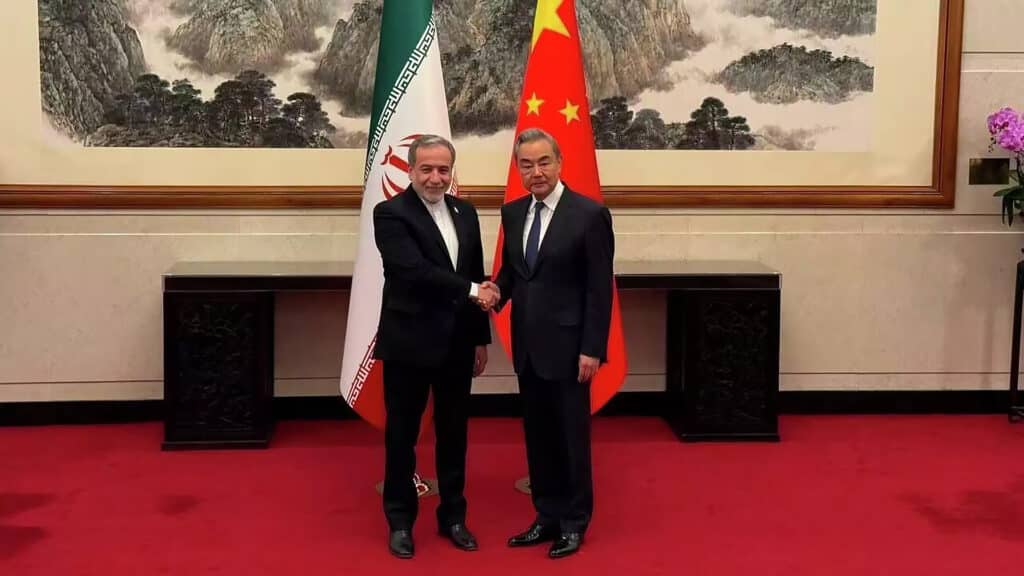
The relationship is heavily centered on oil and alternative payment arrangements. Because Iran faces difficulties accessing conventional international banking channels, Iranian exporters have used various arrangements to exchange oil and other commodities for Chinese goods, including consumer electronics, mobile phones and industrial components. Although such arrangements may not always be economically advantageous for Tehran, they provide an important channel for maintaining trade.
Chinese companies have also filled some of the gaps left by Western firms. After French energy company Total withdrew from a project at Iran’s South Pars gas field and European automakers pulled out of the Iranian market, Chinese companies became important suppliers of industrial machinery, infrastructure and transportation equipment, including equipment for Tehran’s metro and passenger rail systems.
China, however, remains cautious about expanding its economic ties with Iran. As a major trading partner of the U.S. and European Union, Beijing has sought to avoid exposing its financial institutions to secondary sanctions. As a result, major Chinese banks have limited operations involving Iran, while Chinese payment networks such as UnionPay have had little presence in the country.
The gray mechanisms of the resistance economy
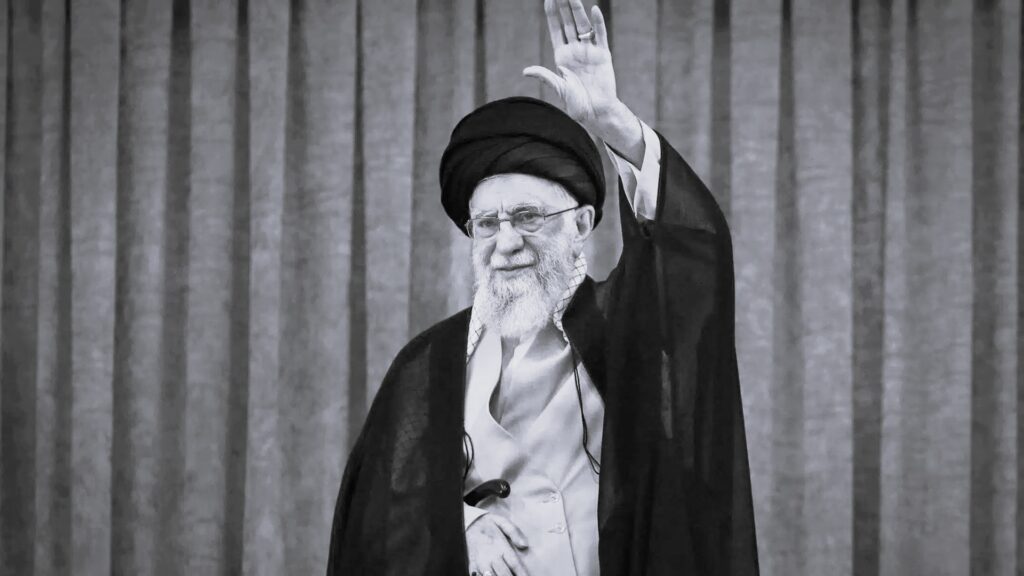
To withstand sanctions, Iran has developed what it calls a «resistance economy,» a strategy of economic self-sufficiency endorsed by the late Supreme Leader Ayatollah Ali Khamenei. The model relies in part on an extensive network of informal and gray-market trade mechanisms.
Read also: Ready for anything: Analyst breaks down Iran’s survival strategy in 2026.
Iran has used so-called «ghost tankers» to transport oil while obscuring the origin and destination of shipments. Tankers may disable or manipulate tracking systems and transfer cargoes to other vessels, making the oil’s provenance more difficult to establish.
On the financial side, businesses cut off from conventional banking channels have used hawala, an informal, trust-based system for transferring money without conventional bank transactions.
Entrepreneurs have also established intermediary companies in jurisdictions such as Turkey and the United Arab Emirates to obtain goods and technology that are difficult to import directly. In some cases, companies in third countries purchase European industrial equipment before arranging its shipment to Iran.
These gray-market mechanisms have helped keep Iran supplied with consumer goods and locally developed alternatives, including the domestic app store Café Bazaar. At the same time, Ripinskaya argues, they have contributed to a less transparent economy that benefits well-connected traders and officials.
The result, she contends, is a combination of prolonged economic stagnation, a large shadow economy and a widening technological gap.