Smartphone: Not a toy, but a business tool

President Kassym-Jomart Tokayev has outlined the next stage of Kazakhstan’s digitalization: a smartphone should no longer be viewed simply as a means of communication or entertainment, but also as a tool for accessing services, doing business and earning money.
In other words, Kazakhstan is moving beyond the digitalization of public services toward a more advanced stage — the practical integration of technology into the economy and everyday life.
The smartphone is becoming a gateway to mobile banking, government services, e-commerce, education and entrepreneurship. As a result, the digital economy requires not only new online platforms and applications, but also trust in the devices people use to access this digital environment.
The IMEI verification project currently underway in Kazakhstan is fully consistent with this approach. It also aligns with government policy aimed at ensuring that digitalization benefits both citizens and businesses.
Verification is more than a technical check of a phone. It is one of the tools for creating a transparent mobile device market by reducing the circulation of illegally imported devices and identifying devices with incorrect or duplicate IMEI codes, as well as those included on international blocklists.
The project also helps ensure fair competition among businesses. It supports companies that legally import devices, meet their tax and customs obligations and provide warranties to customers. These businesses should not have to compete with gray-market supply chains on price alone. This is why verification has both technological and economic significance.
Another important effect of the verification project is a shift in consumer behavior. In a mature market, buyers consider not only a smartphone’s price, specifications and appearance, but also its legal and technical status. Checking the IMEI before making a payment should become as routine as reviewing warranty terms or obtaining a receipt.
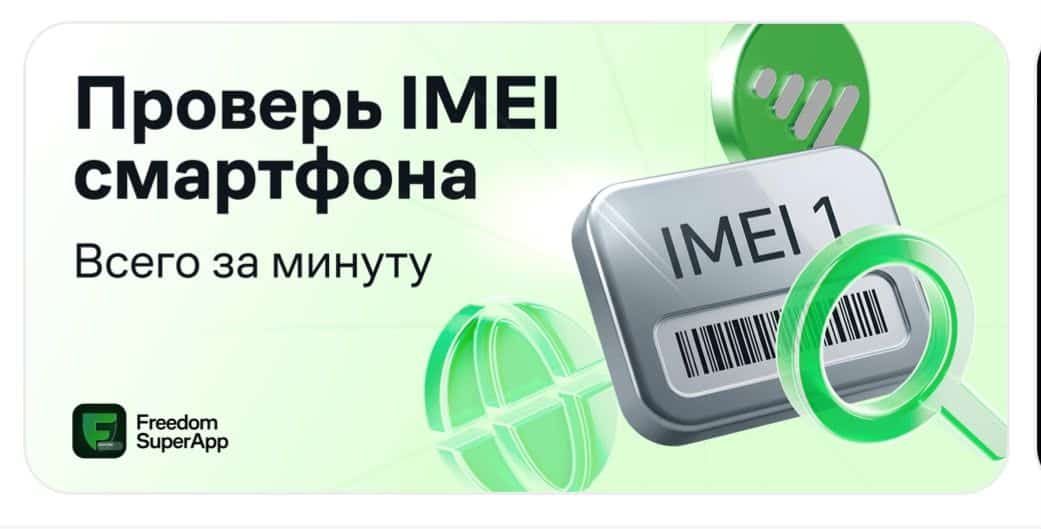
Major market players are already integrating this type of verification into their digital infrastructure. For example, Freedom Mobile is developing a «Check IMEI Before Buying» service within the Freedom SuperApp, allowing users to verify a device’s status in advance. This makes verification part of the customer journey: Buyers can check a smartphone before paying, while sellers can confirm that the device complies with applicable requirements.
Freedom Mobile also offers a trade-in option for previously purchased devices that have failed verification. This demonstrates how businesses can go beyond simply complying with new requirements and provide practical, consumer-friendly solutions.
Buyers now have the right to request a device’s IMEI code from the seller in advance and check its status. This approach reduces the risk of purchasing a noncompliant device and encourages more responsible consumer behavior: Buyers can verify the product’s legal and technical status before deciding whether to purchase it.
If a device fails verification after purchase, the buyer can contact the seller to request an exchange or refund in accordance with consumer protection laws.
A digital state is defined by more than just the number of online services it provides. Its maturity is also reflected in the reliability of the entire digital environment — from the platform itself to the device in the user’s hands. If the smartphone is to become a tool for business, services and income generation, it must be legal, verified and secure.
In this sense, IMEI verification is part of a broader infrastructure of trust that is essential to the sustainable development of the digital economy.