

Driven by the global artificial intelligence boom, Kazakhstan’s government is spearheading an ambitious initiative to build a competitive data center industry almost from scratch, leveraging the country’s cheap coal-fired power generation. President Kassym-Jomart Tokayev designated 2026 as the Year of Digitalization and Artificial Intelligence, setting off a wave of sweeping legislative and infrastructure updates designed to attract high-tech foreign investments.
A regulatory shield and energy incentives
To signal its commitment to international investors, Kazakhstan recently enacted a comprehensive Digital Code, designating data centers as strategic state assets. This legislative shift replaces cumbersome construction permits with a streamlined notification-only system, while guaranteeing that national telecom operators will provide data centers with necessary network connectivity and traffic routing.
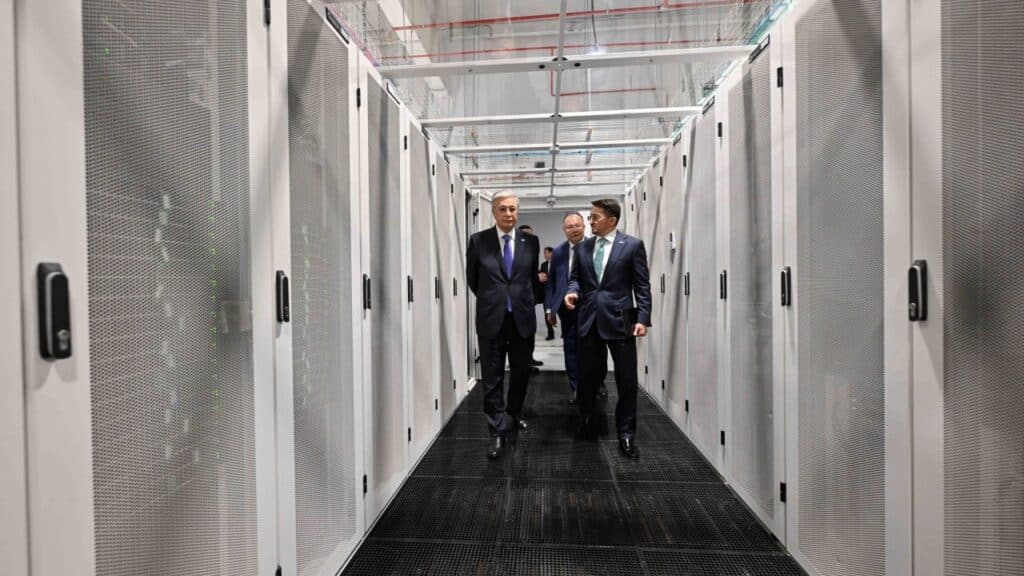
A critical component of this regulatory push is a novel 70/30 investment mechanism designed to upgrade the country’s aging power infrastructure. Under the new rules, modernized coal-fired thermal power plants can contract up to 70% of their newly generated capacity directly to data centers through long-term, fixed-price contracts. The remaining 30% is directed to the national grid, protecting tech facilities from rolling blackouts and power shortages.
The Data Center Valley and global tech tie-ups
The centerpiece of this digital expansion is the Data Center Valley project, located in the northern city of Ekibastuz near the GRES-1 power station. The government has expanded the project’s land allotment to 1,400 hectares, establishing a 300-megawatt substation with plans to scale capacity up to one gigawatt.
The initiative has already captured the attention of major American tech players. Kazakh government recently finalized a strategic cooperation agreement with Firebird AI and chipmaker NVIDIA to establish an AI research laboratory and map out technical cooperation in the valley. Meanwhile, in the private sector, Akashi is constructing a 100-megawatt Tier IV facility in Astana, backed by a $90 million financing deal with the Eurasian Development Bank.
Paper losses in the telecom sector
While the digital infrastructure push gathers momentum, Kazakhstan’s domestic telecom sector recorded a seemingly paradoxical trend in the first half of 2026. Official state statistics registered a sudden loss of one million mobile internet subscribers in January.

However, Kursiv Research notes that this drop was a purely administrative adjustment. A newly introduced state accounting methodology forced operators to separate mobile internet from general web services and purge dormant SIM cards that had not shown data traffic for over 90 days, revealing a healthier, more active subscriber base.