Prediction market puts Turlov’s chances of winning FIDE presidency at 82%

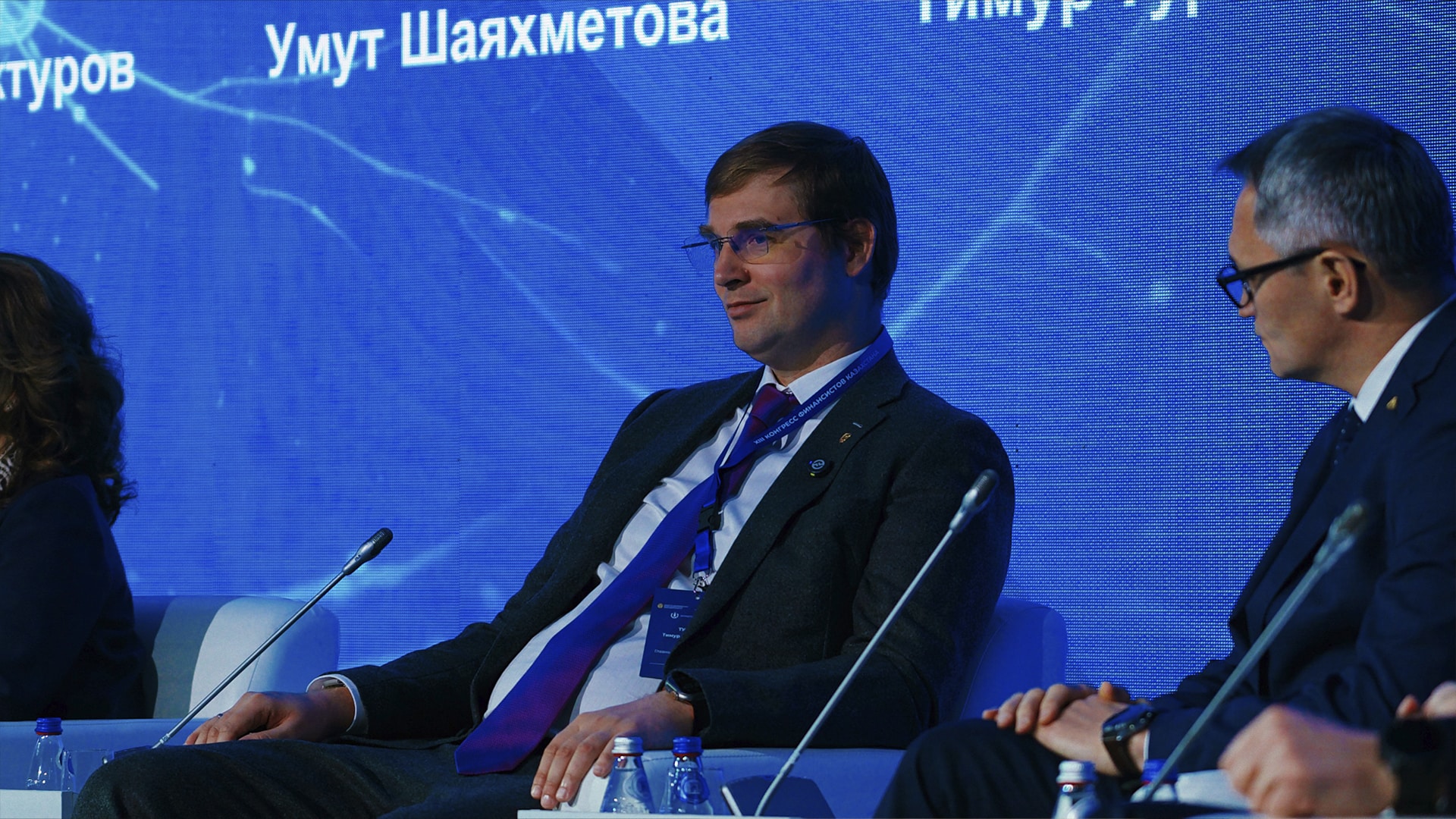
The probability of Timur Turlov and Viswanathan Anand winning the upcoming International Chess Federation (FIDE) presidential election has reached 82% as of Sept. 22, according to the forecasting platform Manifold Markets.
Candidate probability assessment
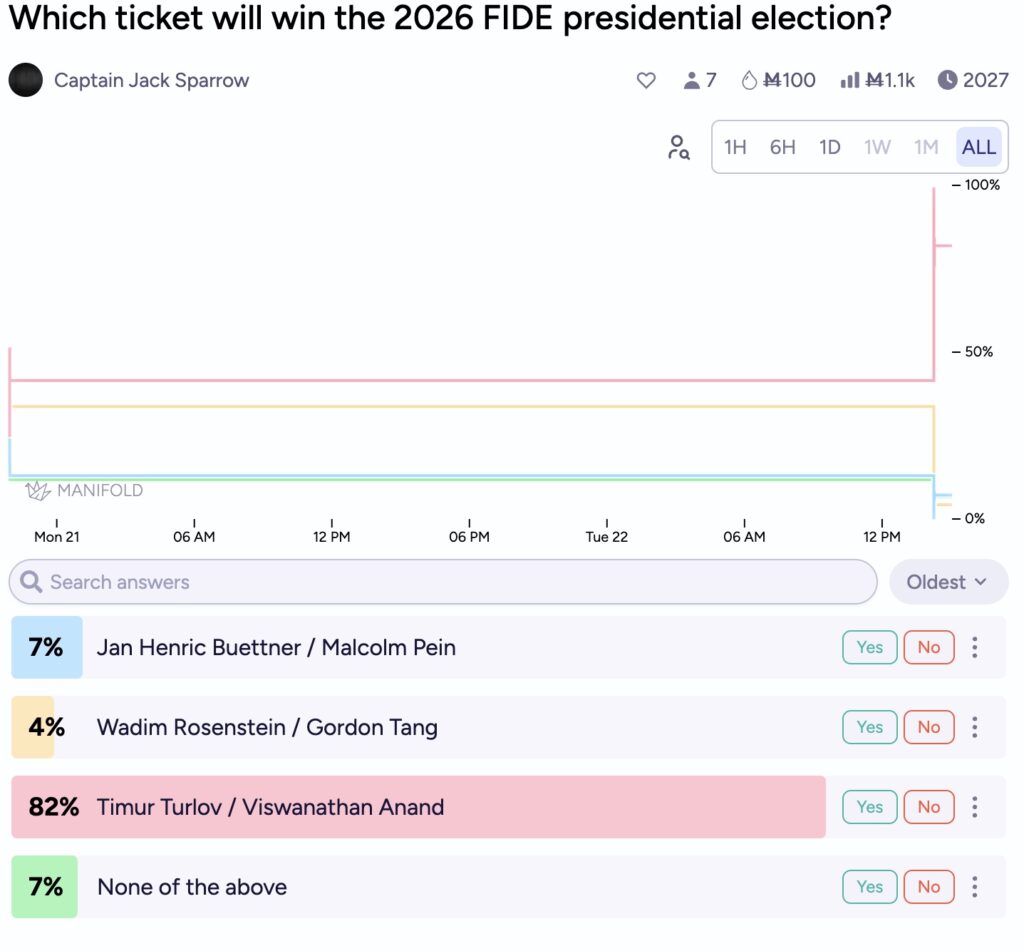
According to aggregated estimates from prediction market participants, the Freedom Holding Corp. CEO and his running mate have a much higher chance of success than other contenders. The second-most-favored candidate, Jan Henric Buettner — running alongside Malcolm Pein — has a 7% probability of winning on the platform.
Market participants put the chances of victory for Wadim Rosenstein and Gordon Tang at just 4% each, while assigning a 7% probability to a scenario in which none of the listed candidates wins.
Platform statistics
To date, seven traders have participated in the market. Total trading volume has reached 1,117 units of virtual currency, equivalent to approximately $95.86. To provide additional liquidity, the platform has also allocated 100 Mana in liquidity subsidies.
Manifold Markets is a forecasting platform where users worldwide can place bets on the outcomes of future events. The markets cover a wide range of topics, from political election results to the timing of major scientific discoveries. Trading on the platform is conducted using its virtual currency, Mana.
The election for FIDE leadership is scheduled for Sept. 26 during the organization’s General Assembly in Samarkand, Uzbekistan. During election campaign debates, Timur Turlov announced plans to invest more than $6 million in international chess through a new development fund.
Earlier this week, Mykhailo Podolyak, adviser to the Office of the President of Ukraine, accepted Timur Turlov’s invitation to join his team and run for FIDE vice president. Turlov’s rival Wadim Rosenstein left the September debate early, declining to answer questions. Meanwhile, the European Chess Union publicly distanced itself from Rosenstein’s campaign.