

Many women are familiar with an unpleasant surprise when jumping, sneezing or laughing hard. Gynecological surgeon Alexandr Kulkin explained that the cause can be excessive urethral mobility or urethral sphincter insufficiency, and that specialized tests can help determine the mechanism behind the problem.
Reason No. 1: Urethral hypermobility
«Stress urinary incontinence occurs when urine leaks during coughing, laughing, jumping or sneezing, without an ‘unbearable urge’ to urinate. This does not automatically mean the pelvic floor muscles are weak. The mechanics are simple: Coughing increases intra-abdominal pressure. Normally, the urethra should close and hold. But if the closure and support system cannot cope, incontinence occurs. There are several possible reasons,» the doctor explained.
According to Kulkin, the most common cause of incontinence is urethral hypermobility.
In other words, the urethra and bladder neck are too mobile because their support structure — the fascia, ligaments and anterior vaginal wall — has weakened. This often occurs after childbirth, he explained.
Reason No. 2: Urethral sphincter insufficiency
A second possible cause is urethral sphincter insufficiency, also known as intrinsic sphincter deficiency (ISD). Kulkin noted that the support structure may be nearly normal, but the «valve» does not close tightly, resulting in leakage even under slight strain.
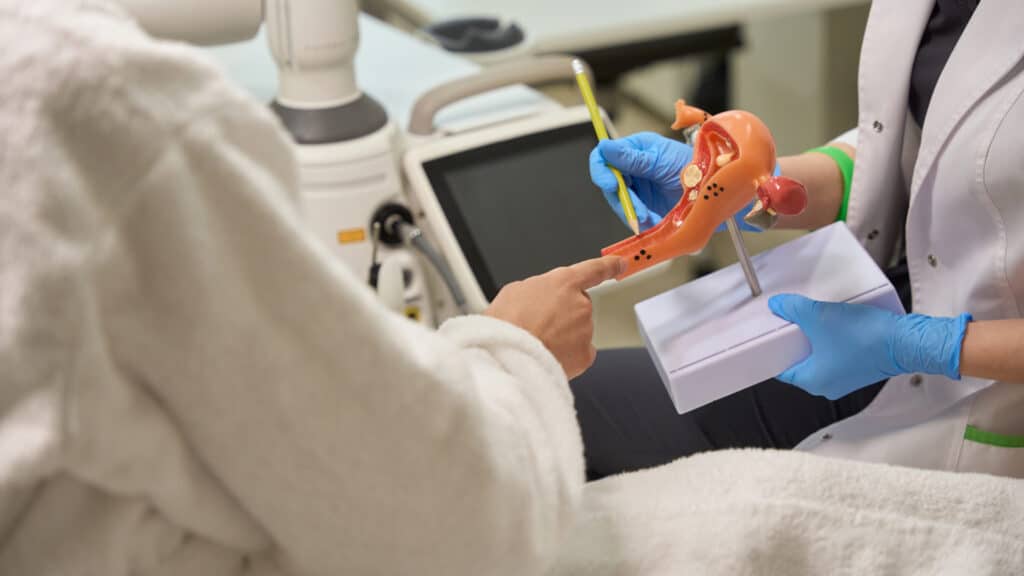
To avoid treating the condition blindly, doctors need to determine whether the problem is primarily related to urethral mobility or sphincter function. One quick in-office diagnostic method is the Q-tip test, he said.
How the test is performed
«A sterile cotton swab is gently inserted into the urethra to the level of the bladder neck. The angle is then measured, the patient is asked to cough and strain, and the degree to which the swab moves is observed,» Kulkin explained.
According to the doctor, the interpretation is relatively straightforward. A deflection of around 30 degrees typically indicates urethral hypermobility associated with inadequate structural support.
«If mobility is minimal but symptoms are pronounced, we tend to look at the sphincter. Importantly, the Q-tip test is not a definitive diagnosis on its own, nor is it the sole criterion. We usually supplement it with a cough stress test, an examination for pelvic organ prolapse and a detailed assessment of the patient’s symptoms,» the doctor said.
Pelvic organ prolapse is a condition in which the uterus, bladder, vaginal walls or rectum move downward from their normal position because of weakened pelvic floor muscles and supporting tissues.