

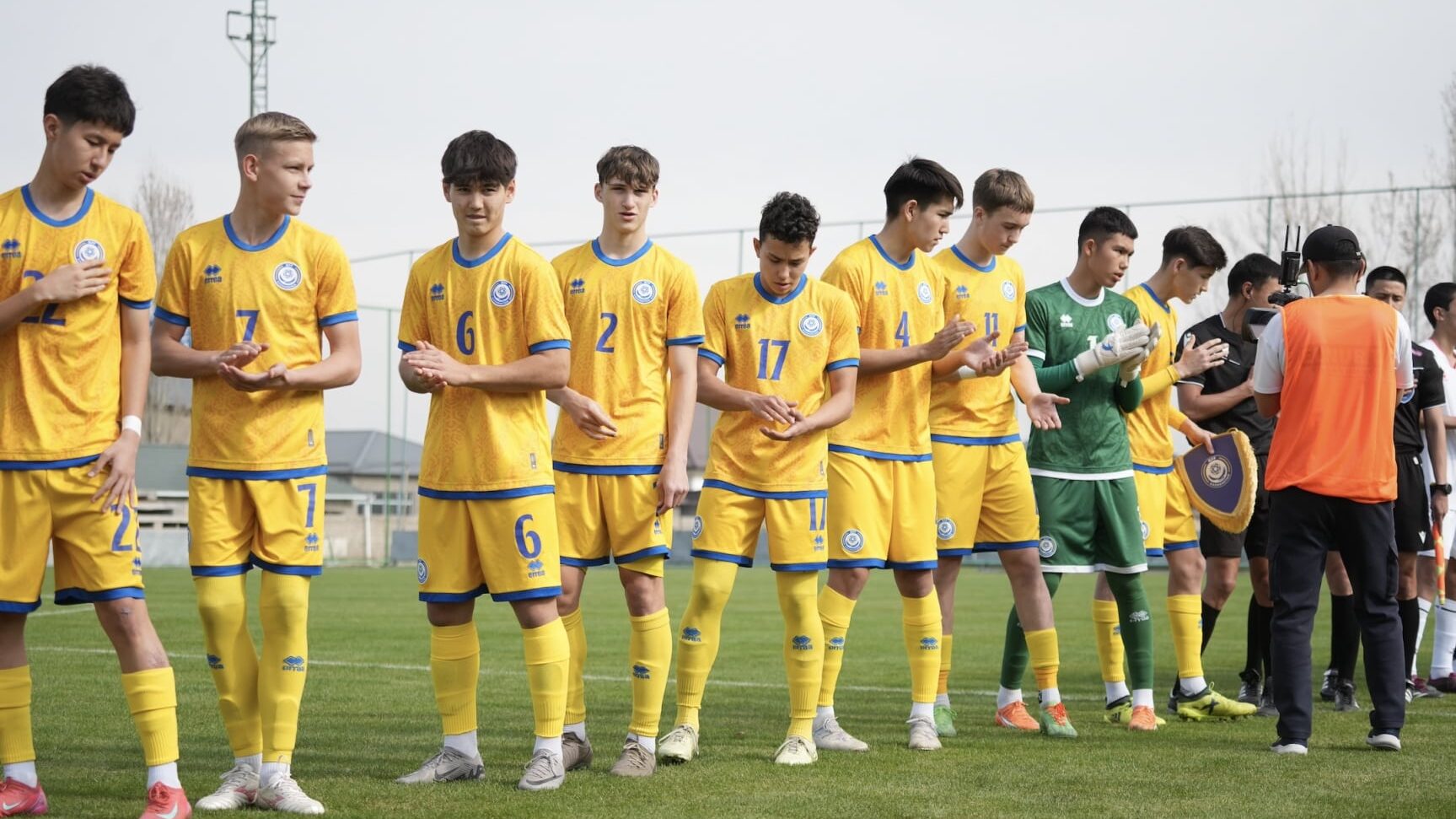
On Oct. 8, Scott Munn, general secretary of the Kazakhstan Football Federation (KFF), addressed fans after a 2-2 draw with the Faroe Islands. He described the national team’s recent result as unacceptable and pledged to carry out a comprehensive review of the entire player development system, from the U15 level to the senior national team, once the Nations League cycle ends. The federation has not ruled out «radical» decisions based on the findings and has set qualification for the European Football Championship as its strategic goal.
Publicly acknowledging the problem is a significant step toward transforming Kazakhstani football. Yet alongside the national team’s setbacks, an ambitious development effort is underway: the country is building football pitches, private investment is flowing into academies and professional leagues are being reformed. Kursiv.media examined whether these investments could deliver tangible results and how long similar transformations took in other countries. Long story short, it is possible, and Kazakhstani football appears to be on the right track.
Where football grows: children, pitches and investment
For decades, Kazakhstan neglected football, leaving it with a shortage of pitches and coaches and low participation among children. According to the Kazakhstanskaya Pravda newspaper, the country has about 7,400 football facilities. Of these, more than 1,400 require repairs, and nearly 1,700 new facilities are estimated to be needed.
Over the past year and a half, funding from multiple sources has addressed this problem on a significant scale for the first time. For instance, Kazakhstan has secured full FIFA funding to build 100 mini-pitches at schools in small towns and rural areas. Schools are selected based on criteria such as social vulnerability, population density and a lack of existing infrastructure. The country’s first pitch under the FIFA Arena program has opened in Kokshetau. The federation handed it over to a school with about 900 pupils, and it plans the next one for Khromtau.
The federation is also encouraging private investment in the sector. Together with Baiterek Holding and the Damu Fund, the KFF is developing a mechanism to provide entrepreneurs with concessional loans and interest-rate subsidies to build KFF Arena facilities in the regions. At the same time, KFF has negotiated with financial and industrial groups to build three privately funded football academies. The first such facility is already under construction. In June 2025, work began on the KFF Academy in Talgar, a 5,500-square-meter complex with an indoor training hall and a dormitory. Almaty International Airport is funding the project, with no public money involved. Kaspi.kz has also said it is ready to help build an academy in Astana.
Meanwhile, Almaty is building a 45,000-seat stadium. In Aktobe, the government has allocated 6.5 billion tenge from its reserves for a 35,000-seat arena. It will meet UEFA Category 4 standards. Moreover, the ALAÑ pitch renovation program also continues across the regions.
Kazakhstan’s football system is seeing an influx of young players, while youth leagues are expanding. For instance, FIFA approved a KFF project under its 2026 Talent Development Scheme. Under the initiative, KFF will receive $250,000 to scout and identify talented children.
In youth and grassroots football, the federation approved a 2025-2030 strategy to reach 1.5 million regular participants. In 2025, KFF events recorded more than 1 million participant entries, although this figure counts total competition entries rather than unique children who play football regularly. For the first time, KFF held a championship for private professional football schools and academies across six age groups, alongside the «Baldauren» tournament for younger schoolchildren. According to Akorda, 17 regional football centers and two academies were operating in the country in 2023, training more than 7,000 children.
When will we see results, and what role does infrastructure play?
Development takes time. A child who steps onto a new school pitch for the first time at age eight in 2025 will not become a potential national team player until 2035 at the earliest.
Countries such as Iceland, Belgium and Japan show that it typically takes years to reform a football system and see tangible results at the national-team level. The timeline depends on player development, funding and club operations.
Kazakhstan’s current setbacks, therefore, do not invalidate the existing strategy. To a large extent, they reflect the legacy of previous decades, when football investment focused primarily on expensive foreign players and club salaries. Years of sustained work, however, could eventually produce results and give Kazakhstani fans something to celebrate, as similar efforts have done elsewhere.
Lessons from abroad: rising from the bottom to the top
Comparing Kazakhstan with England or Brazil is not particularly useful. In those countries, football has been deeply embedded in the culture for more than a century. It is more instructive to look at nations that began as underdogs.
Iceland. In the early 2000s, this island nation’s national team, with a population of around 350,000, was seen as an easy opponent. Its strategy focused on two areas: building indoor arenas and full-size pitches to enable year-round play, and sharply increasing the number of licensed coaches. Children began to be trained by specialists with UEFA coaching licenses. The result was a quarterfinal appearance at Euro 2016 and qualification for the 2018 World Cup.
Belgium. The failure at Euro 2000, which Belgium co-hosted, served as a turning point. The federation introduced a unified methodology for youth teams nationwide, abandoned the pursuit of immediate youth results in favor of long-term player development, and prioritized academies. In 2015, the national team topped the FIFA rankings for the first time, and in 2018, its «golden generation» won bronze at the World Cup. The journey from reform to a World Cup medal took nearly two decades.
Japan. In the 1980s, Japanese football was largely amateur. The launch of the professional J.League in 1993, with strict requirements for clubs regarding academies, stadiums, and financial stability, combined with a long-term national plan, turned Japan into a regular World Cup participant from 1998 onward. The key factor was developing and implementing club standards, not financial investment alone.
Morocco. The Mohammed VI Football Academy opened in 2009, followed later by a national training complex. A combination of a domestic player-development system, stronger club football, and recruiting diaspora players trained in European academies paved the way for Morocco’s historic 2022 World Cup semifinal appearance, the first by an African national team.
The common denominator in all these stories is institutional reform: infrastructure, qualified coaches, unified standards, and the patience to sustain those reforms over an entire generation.
The role of the federation: A commitment to the system
Many changes in Kazakhstani football trace back to Marat Omarov’s arrival at the KFF. The federation elected him president on Dec. 20, 2024. A Bolashak graduate with experience leading the Agency for Protection and Development of Competition, Omarov entered the football world as a professional manager rather than an industry insider, a background reflected in his priorities.
Omarov articulated his philosophy in one of his first interviews, saying the federation needed to «stop building window displays and start building a foundation.» A series of concrete decisions have backed up this approach.
Expanding cooperation with UEFA and FIFA
During a meeting with UEFA President Aleksander Čeferin, the KFF secured agreements for a team of consultants, help recruiting a head of the refereeing department, support for infrastructure projects through the HatTrick program, and support for women’s football. In addition, the KFF reached an agreement with FIFA to fund school football pitches for the first time fully.
Gaining business confidence
The club privatization is a state policy initiated by the president, and the KFF is actively involved in this process. One of the initiative’s first results was transferring Kyzylorda-based club Kaisar to private management in October 2025.
League reform
Starting in 2026, the Premier League has expanded to 16 clubs. Meanwhile, the KFF has announced plans to gradually reduce the foreign-player limit from 12 to eight by 2028, a move intended to encourage clubs to develop more homegrown talent.
International status
On April 22, 2027, Astana will host the 51st UEFA Ordinary Congress. The event is expected to strengthen Kazakhstan’s standing in European football, with UEFA covering all organizational costs.
It is also significant that the federation is not promising quick victories. The KFF has openly stated that its goal is to build a sustainable football ecosystem rather than chase short-term success. For a football system that spent years running on promises of imminent qualification for major tournaments, this rhetoric represents a fundamental shift in management culture.
What will indicate success?
It is too early to judge the reforms by the national team’s results over the next two or three years. Other indicators will be far more telling: how many of the planned 100 school pitches and KFF Arena facilities are actually completed and put into use; whether the number of licensed youth coaches increases; how many clubs transition to private ownership and remain financially stable; whether Kazakhstani players get more playing time in the Premier League as roster rules change; and how many players of Satpayev’s caliber move to top European leagues.
Iceland, Japan and especially Belgium needed years of consistent effort to break through, and new pitches and academies alone do not guarantee success. If Kazakhstan can stay the course despite short-term results, today’s setbacks may mark the start of the same kind of transformation other successful national teams in Europe and Asia once went through.