Kazakhstan eyes labels for AI-generated news


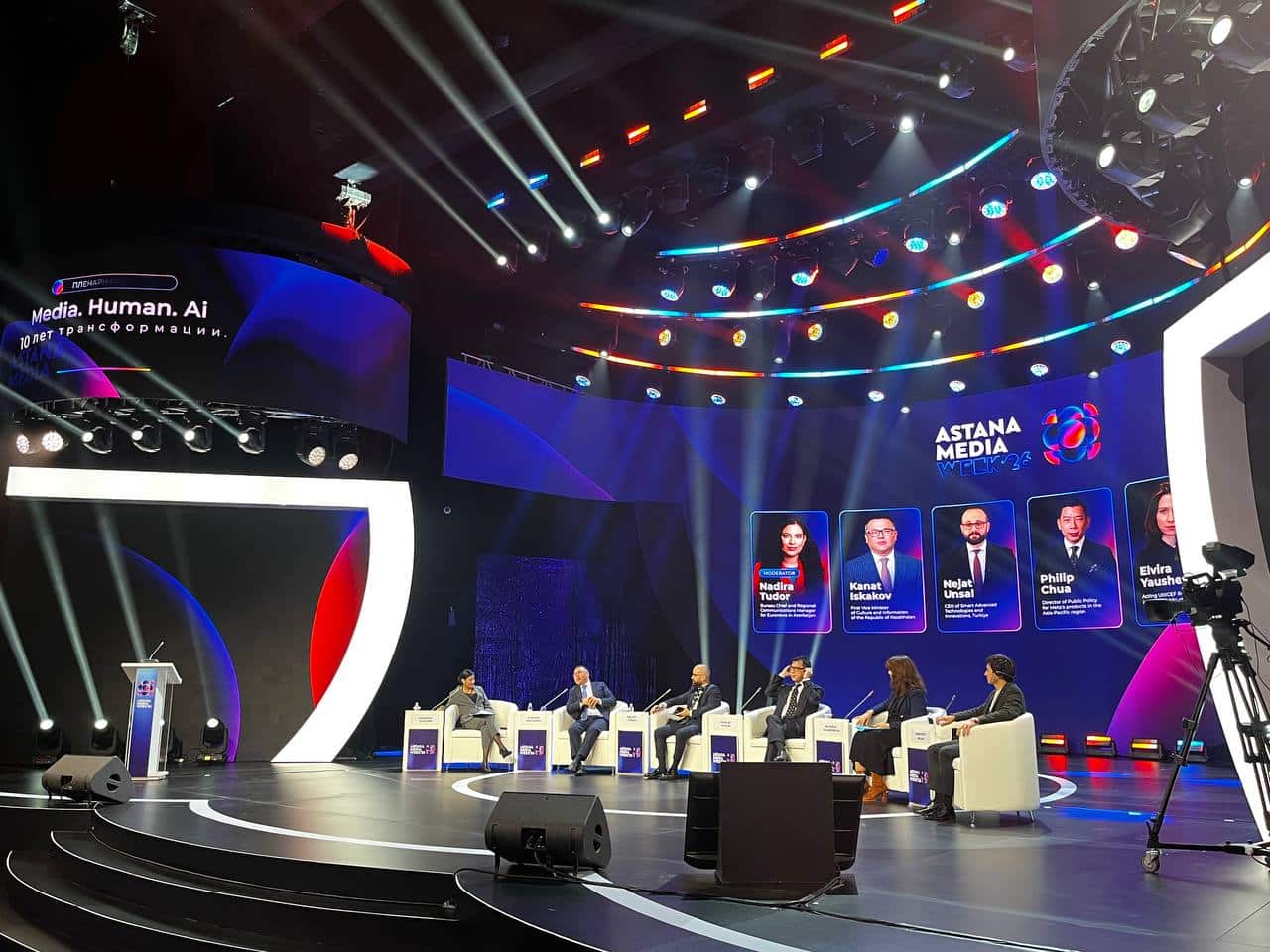
According to First Vice Minister of Culture and Information Kanat Iskakov, artificial intelligence (AI) does not absolve journalists of responsibility for their publications. The official spoke about the issue at the Astana Media Week 2026 forum, which is celebrating its 10th anniversary this year under the theme «MEDIA. HUMAN. AI: 10 Years of Transformation. A New Architecture of Trust.»
AI as a tool with risks
As the vice minister noted, AI is a valuable tool for the media that enhances operations but also entails certain risks.
«The more capabilities technologies offer us, the greater our responsibility for their use,» Iskakov said.
That is precisely why a new architecture of trust is needed. It must rest on three pillars.
Supporting quality media
The first pillar concerns the media sector itself. Iskakov emphasized the need for strong, resilient players who engage with digital platforms while upholding standards and quality.
The government will continue to support high-quality content through legislative initiatives, funding and grants. He revealed that two projects are already underway: one focused on fact-checking and information verification, and another on content production — spanning both state and non-state sectors.
Humans bear all the responsibility
The second pillar relates to people and the consequences of mistakes.
«An algorithm can generate text, but it cannot assume responsibility for the content. Responsibility always remains with journalists,» Iskakov emphasized.
He proposed collaborating with the media and the public to establish principles for the responsible use of AI tools. According to the vice minister, clear ground rules — including ethical ones — are needed. These must be based on professional standards supported by journalists themselves. This would facilitate self-regulation and internal accountability within editorial teams.
Labeling
The third pillar concerns technology, which should serve people’s interests. According to Iskakov, it is important to keep viewers, readers and users informed whenever AI has been used to create material. This is why labeling is necessary.
A new AI law enacted earlier this year already requires individuals, businesses and non-profit organizations to label AI-generated content in Kazakhstan. Additionally, such labeling must be machine-readable, allowing software and digital systems to recognize it automatically.