

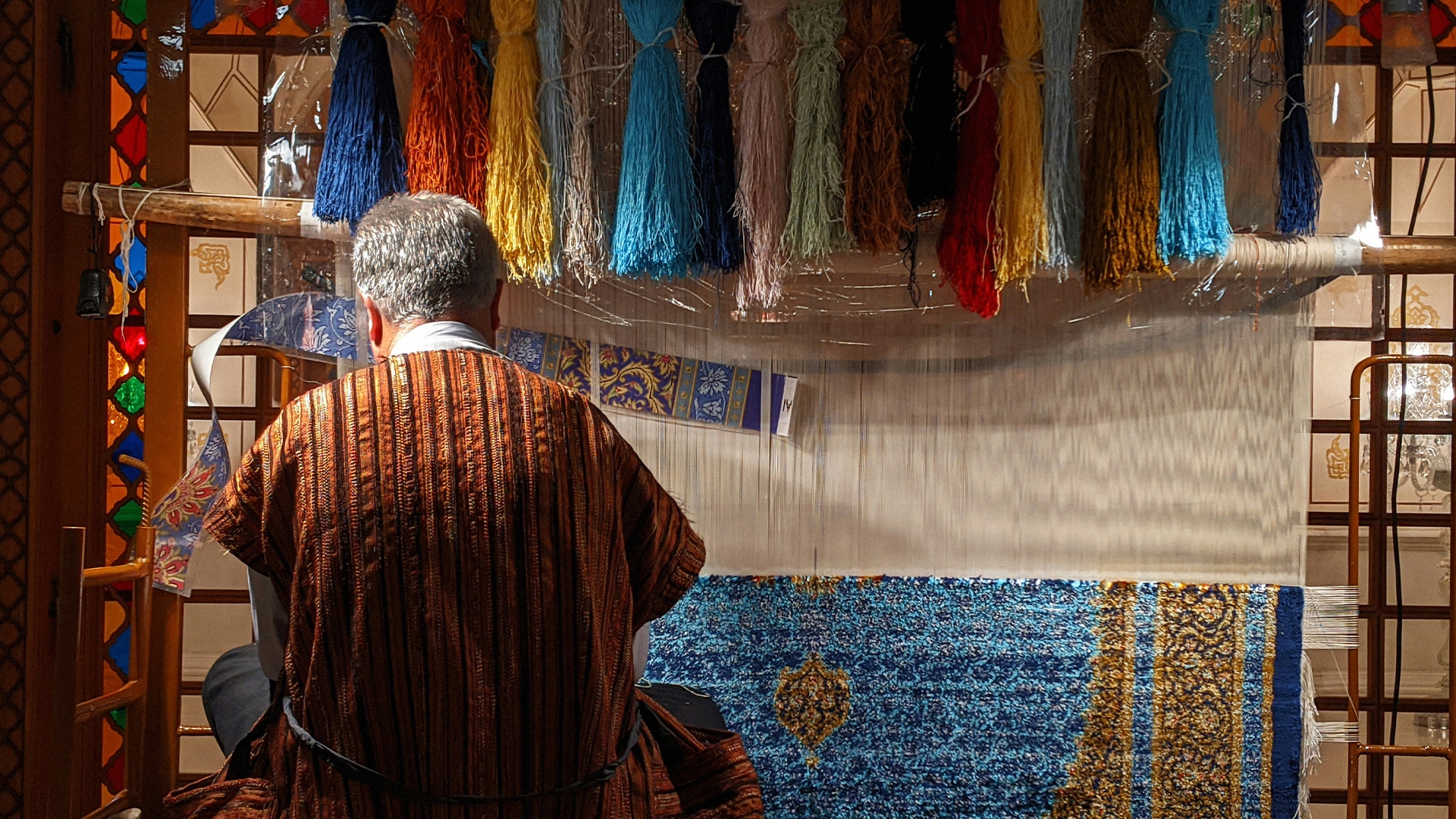
Be Woman, a popular Almaty event focused on sustainable development, always offers attendees something interesting. This year, visitors could see how Kazakh artisans make Persian-style rugs. Kursiv LifeStyle learned how the rugs are made and how much they cost.
«Modern Chinese dyes for yarn leave traces on the skin and last no more than 50 years. We use natural dyes. As a result, rugs made this way last for centuries,» explained Gaukhar Kabdugalieva, an art historian and representative of a Kazakhstani company that produces rugs and almost all the materials needed to make them.
All the rugs are handmade by two female craftspeople from Iran. They stretch warp threads onto a special loom, tie knots to create the pattern and trim the ends with a short knife after each knot. It takes them seven days, working eight-hour shifts, to complete a small wool prayer rug. Such a rug costs approximately $1,100 per square meter.
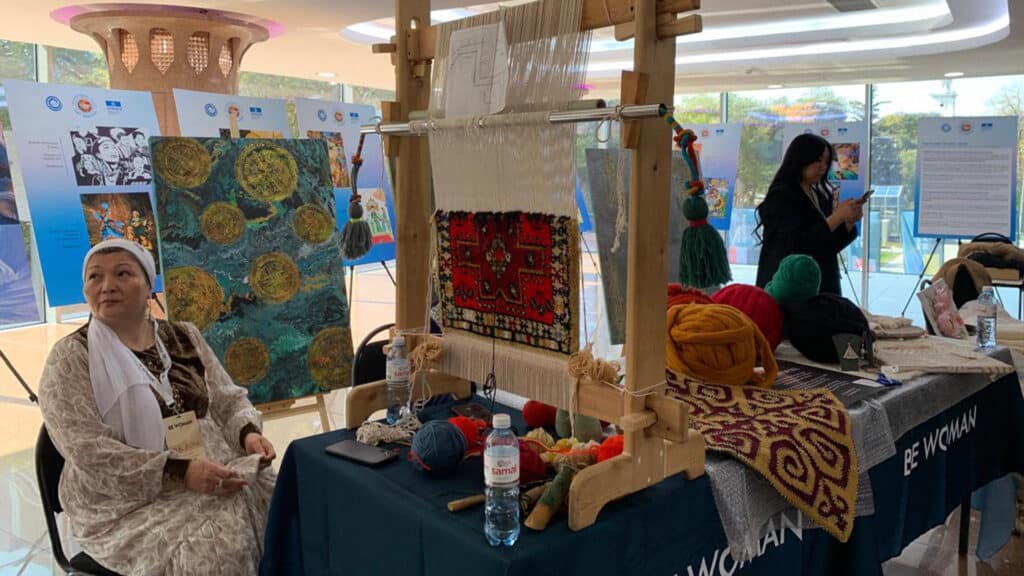
Both craftswomen are ethnic Kazakhs, descendants of those who fled Kazakhstan amid Soviet collectivization and famine in the 1920s and 1930s. While living in Iran, they mastered the centuries-old technique of hand-weaving rugs.
«Our artisans brought their way of life with them from Iran. For example, out of respect for their traditions, we allow them to break up their workday with a siesta; they take a two- to three-hour nap during the day,» Kabdugalieva said.
Regardless of the schedule, however, handcrafting rugs requires considerable time and effort. A silk rug measuring 1.5 by 1.5 meters, for instance, can take about five years to complete and cost around $20,000.
Such a work of art, however, can last for centuries, and its value can increase over time, the art historian said.
«My husband’s family has a carpet that belonged to his great-grandfather. Remarkably, after roughly a hundred years, it hasn’t faded or suffered moth damage. Nowadays, we treat carpets with chemicals to protect them from insects. So, I think, the secret of how this was done in the past has likely been lost,» she added.