


Sex remains a topic many people feel uncomfortable discussing — much like menstruation. Talking about sex during a period can feel especially awkward, even though many couples have sex during menstruation.
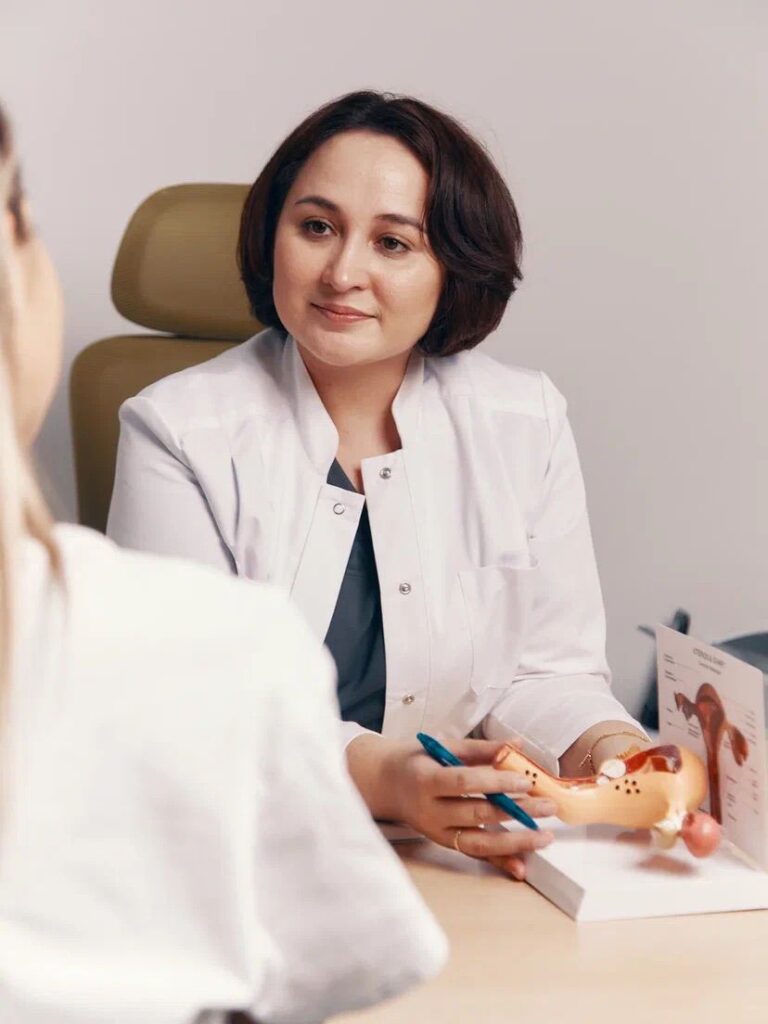
Kursiv Health spoke with Vera Yazar, an obstetrician-gynecologist, to find out whether sex during menstruation is safe, whether pregnancy is possible and whether any special hygiene measures are necessary.
Is it OK to have sex during menstruation?
Menstruation is not a medical contraindication to sexual activity.
«If a woman feels comfortable — meaning she has no pain, unusual discharge or other symptoms — having sex during her period is perfectly fine,» Yazar said.
However, menstruation does not protect against sexually transmitted infections (STIs). According to Yazar, contact with blood can increase the risk of transmitting certain infections, including HIV and bloodborne viral hepatitis, if one partner is infected. Using a condom is particularly important with a new partner, when STI status is unknown or when either partner may have been exposed to an infection.
«Having sex during menstruation does not automatically mean a woman will develop inflammation or experience a disruption of her vaginal microbiome,» Yazar said.
Read also: Is bleeding between periods normal? A gynecologist shares warning signs.
Can sex make menstrual bleeding heavier?
It may seem as though bleeding increases after sex. During sexual arousal, blood flow to the pelvic organs increases, and orgasm causes uterine contractions. As a result, menstrual blood may be expelled more quickly, Yazar explained.
However, this is generally a temporary effect and does not mean that sex necessarily increases the total amount of menstrual blood loss.
Can an orgasm relieve menstrual cramps?
For some women, orgasm may temporarily ease menstrual cramps. This may be due to the release of endorphins, changes in pain perception and muscle relaxation. The effect varies from person to person.
«Some women experience relief, while others notice no change. For those with severe pain, sex can even be uncomfortable. An orgasm should not be considered a treatment for dysmenorrhea, or painful menstruation,» Yazar said.

Read also: ‘Bleeding is not my choice’: The fight for period products in public restrooms.
Can you get pregnant during your period?
A common myth holds that pregnancy is impossible during menstruation. In reality, pregnancy is possible, although the likelihood is generally lower than during the fertile window.
«Sperm can survive in the female reproductive tract for several days. If a woman has a short or irregular menstrual cycle and ovulates early, sex during the final days of her period could theoretically result in pregnancy,» Yazar noted.
Bleeding that appears to be a period may also be spotting unrelated to menstruation, including bleeding around ovulation.
«For this reason, menstruation should not be relied on as a method of contraception. If pregnancy is not desired, reliable contraception is necessary regardless of the day of the menstrual cycle,» Yazar said.
Is special hygiene necessary?
No special hygiene routine is needed during menstruation. A regular shower and washing the external genital area are sufficient, according to Yazar.
Gynecologists advise against vaginal douching, antiseptics and harsh intimate hygiene products. The vagina has a natural self-cleaning mechanism, and excessive cleansing can disrupt its normal bacterial balance and cause irritation.
Read also: Biological necessity, not luxury: Kazakh woman fights to abolish the tampon tax.

Tampons should be removed before vaginal intercourse. Penetration can push a tampon farther into the vaginal canal, making it difficult to remove and potentially causing pain or discomfort. Menstrual cups should also be removed before penetrative sex, as they can shift and cause discomfort.
Yazar added that urinating after sex may be a useful habit for women prone to urinary tract infections (UTIs). However, it does not prevent STIs.
When should you avoid sex?
How you feel should be the primary guide, Yazar said.
«I recommend postponing sex if you experience unusually heavy bleeding, significant or unusual pain, fever, an unpleasant odor, itching, burning, abnormal discharge or symptoms that suggest an infection. You should never push yourself to have sex if it causes pain or significant discomfort,» she said.
Yazar also stressed the importance of barrier protection when there is a risk of STI transmission.
«Otherwise, menstruation is a natural physiological process, and there is no general medical prohibition against having sex during this time. What matters is comfort, mutual consent and safer sex,» she said.
Previously, Yazar spoke with Kursiv Health about the proper use of emergency contraception.
