

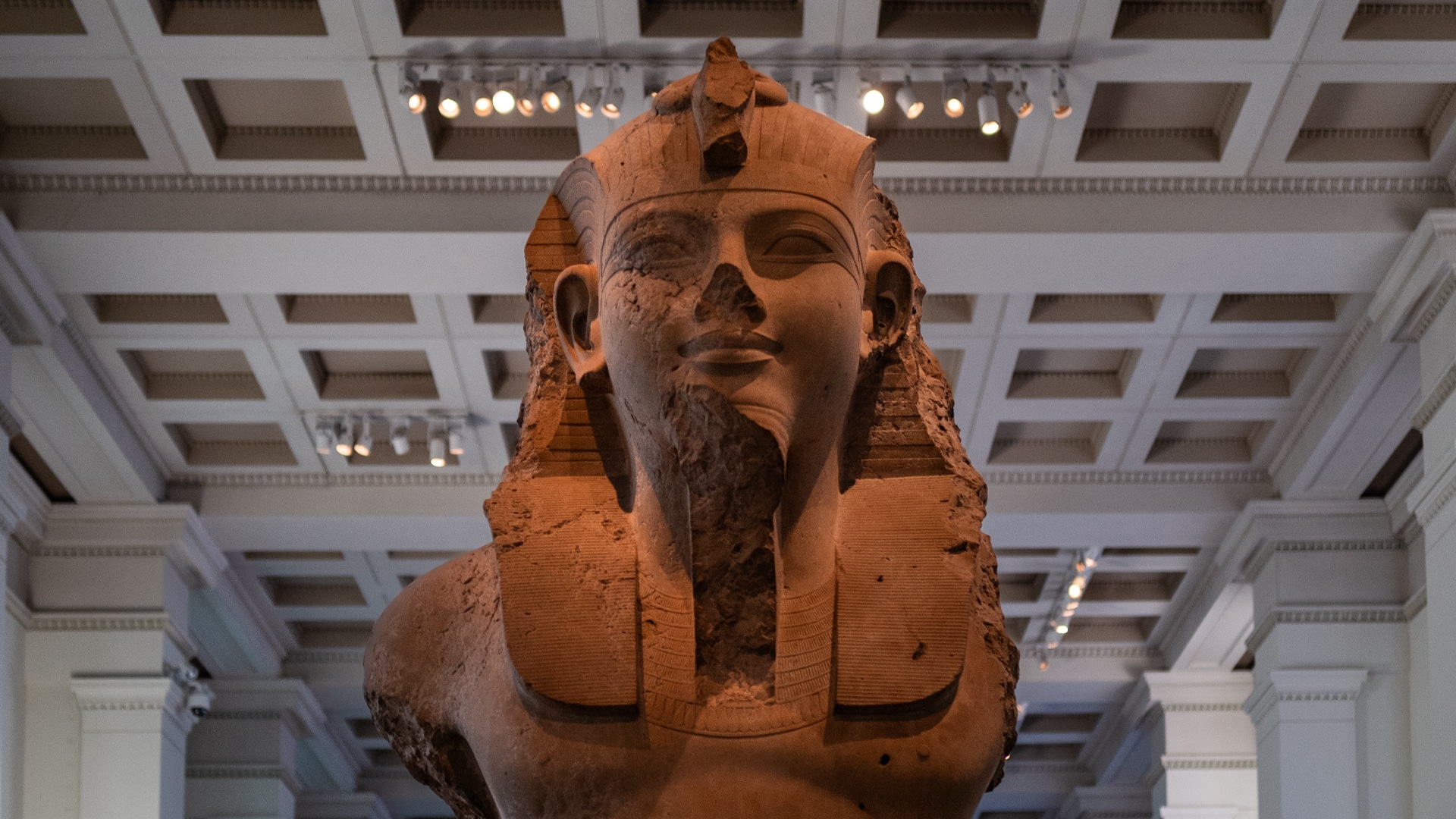
Egyptian archaeologists have discovered the remains of two massive ancient statues in Behbeit el-Hagar, a village in the Nile Delta. One of the finds is a large stone head believed to depict Pharaoh Ramses II.
The discovery came after Khaled Khalil, a local cucumber farmer, found a stone he believed to be a historic artifact and notified authorities, Euronews reported.
The discovery prompted an excavation by a team from Egypt’s Supreme Council of Antiquities. They later identified one find as the head of Ramses II, shown wearing the double crown associated with Upper and Lower Egypt. They also discovered part of a pillar behind the statue bearing one of the pharaoh’s royal names.
Based on the head’s size, researchers estimate the complete statue may have stood about 8.5 meters tall, including its base.
Researchers also uncovered a second statue fragment, measuring about 2.4 meters. Even though the statue’s face is largely intact, its legs and part of its royal headdress are missing. Archaeologists believe it may depict Ramses II, though they have not confirmed the identification.
Ramses II ruled Egypt for more than 60 years during the 19th Dynasty, from about 1279 to 1213 B.C. He was one of ancient Egypt’s most prominent pharaohs and commissioned numerous temples and monuments during his reign.
Egyptian officials thanked Khalil for reporting the discovery. They awarded him and his wife a trip to perform Umrah, the Muslim pilgrimage to Mecca that can be undertaken at any time of year.
