


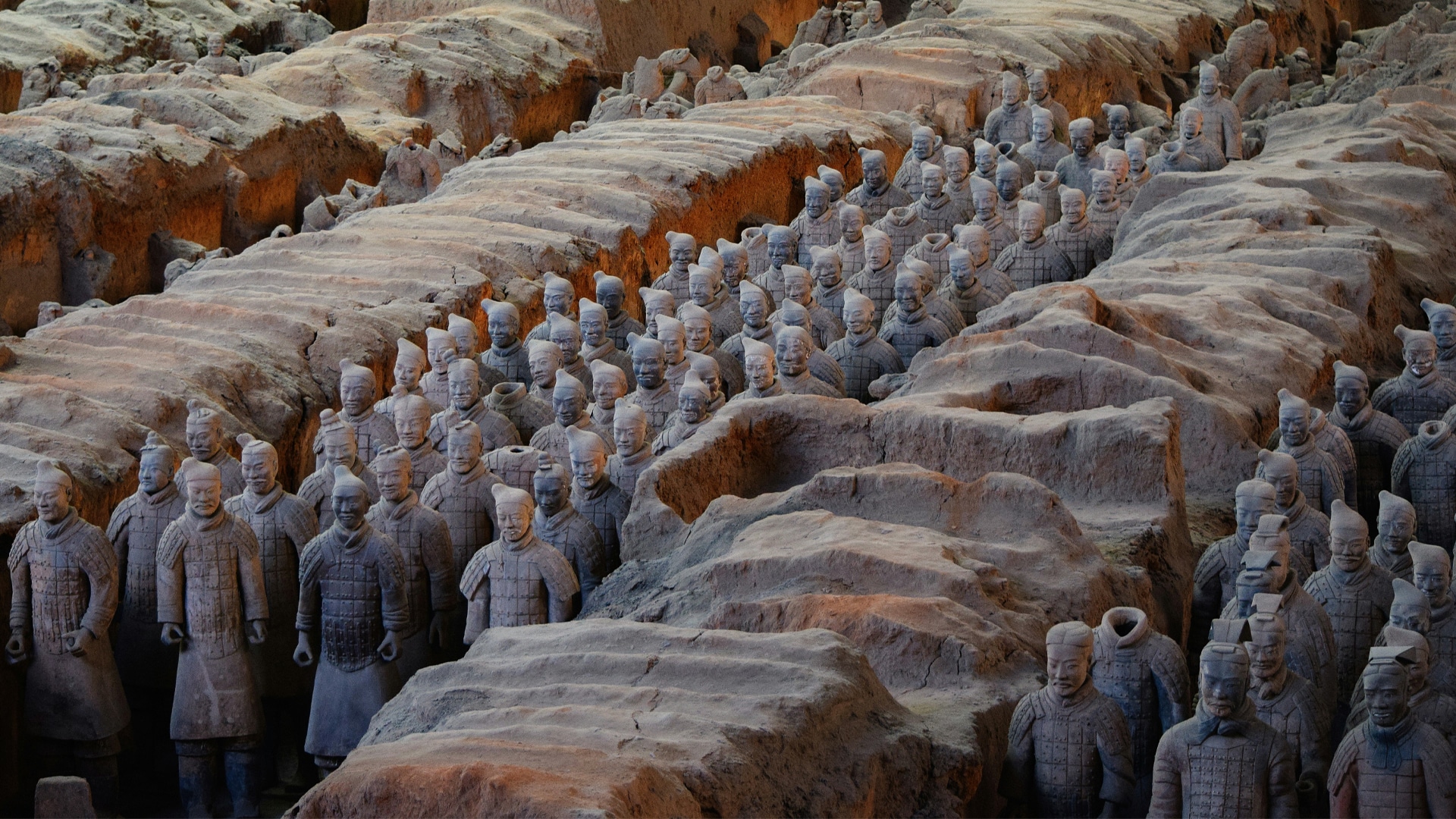
Scientists have found evidence suggesting that the famous Terracotta Army in China may not have been built by adult men alone. An analysis of fingerprints preserved on the clay figures indicates that more than half of the prints examined may have belonged to women and children under age 15.
The Terracotta Army consists of thousands of life-size clay warriors, horses and chariots created in the third century B.C. to guard the tomb of Emperor Qin Shi Huang. Although archaeologists discovered the army in 1974, relatively little is known about the people who made the figures.
Read also: How Egypt’s pyramids inspired China to rewrite its ancient past.

Researchers led by Xiaoxi Li of the Museum of the Terracotta Army in Xi’an identified 79 fingerprints on 36 statues recovered from a single excavation pit. The prints were preserved on various parts of the figures, including their hands, heads and armor.
The researchers measured the spacing between fingerprint ridges. Because this distance generally increases as a person grows, it can help estimate the age of the person who left the print.
The findings suggest that about 45% of the fingerprints may have belonged to adult men, while nearly 33% likely came from adult women and approximately 22% from individuals younger than 15.
