

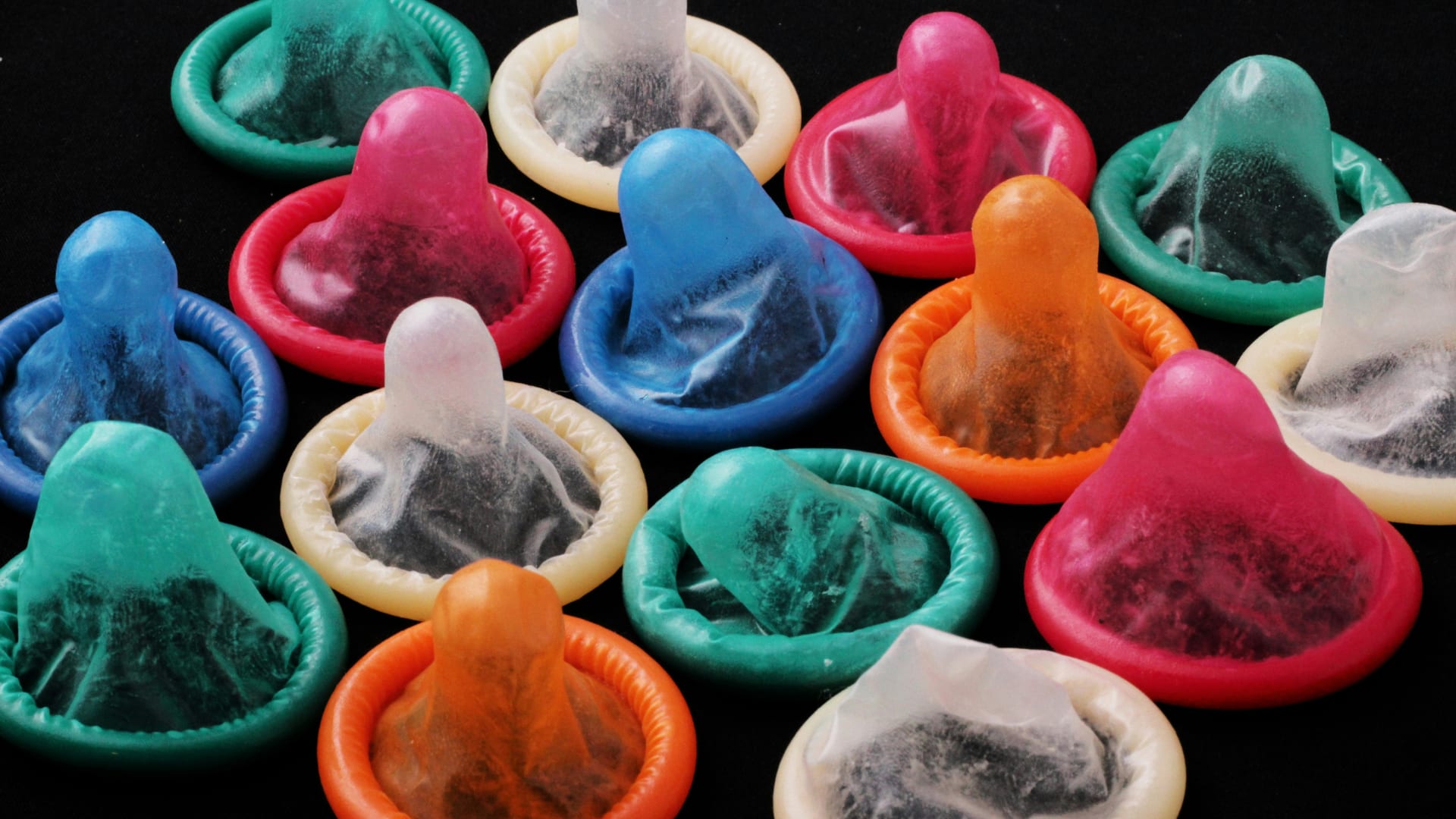
A recent report by The Economist highlighted a troubling trend: sexually transmitted infections (STIs) are surging in Europe. One possible explanation is that people are using condoms less frequently, although the available evidence is inconclusive. A World Health Organization (WHO) study found a decline in reported condom use among adolescents between 2014 and 2022, but data on condom use among the broader population aged 20 and older remain limited.
Data from the World Bank’s World Development Indicators, compiled from Demographic and Health Surveys and the Joint United Nations Programme on HIV/AIDS (UNAIDS), show substantial differences in condom use among males ages 15-24 across developing regions. The dataset covers 60 countries, with an average reported rate of 45.4%. The indicator measures condom use during the most recent sexual encounter within the previous 12 months, rather than consistent use during every sexual encounter.
Regional disparities in condom use
Latin America and the Caribbean has the highest average rate among the regions examined, at 60.9%, led by Guyana at 77% and Jamaica at 74%.
Europe and Central Asia follows at 49.9%, with Armenia reporting a rate of 73.6%.
Sub-Saharan Africa, represented by 37 countries in the dataset, averages 45%. However, rates vary considerably across the region. Namibia (79.2%), Gabon (73.7%) and Eswatini (66%) report relatively high levels, while Madagascar (7.5%), Burundi (13.1%) and Sierra Leone (15.4%) are at the lower end.
East Asia and the Pacific records the lowest regional average, at 16.2%, with Timor-Leste at 8.3%, the Philippines at 13.5% and Vietnam at 16.4%. South Asia averages 25.3%, with India at 14.6%.
The figures also reveal differences across national income groups. Average condom use stands at 32.1% in low-income economies, compared with 48.1% in lower-middle-income countries and 52.1% in upper-middle-income countries. These differences may reflect variations in health care access, public health infrastructure and prevention programs, although the figures alone do not establish a causal relationship.
Condoms remain essential to STI prevention
The WHO identifies condoms as the only available multipurpose prevention technology that protects against STIs, including HIV, while also helping prevent unintended pregnancies.
In 2020, an estimated 374 million new cases of four curable STIs — syphilis, chlamydia, gonorrhea and trichomoniasis — occurred worldwide among people ages 15-49. Most could have been prevented through correct condom use.
Modeling estimates suggest that increased condom use since 1990 has helped avert approximately 117 million new HIV infections worldwide. Of these, an estimated 47% were in sub-Saharan Africa and 37% in Asia and the Pacific. Meanwhile, contraceptives, including condoms, are estimated to prevent more than 300 million unintended pregnancies annually.
Read also: Under pressure: What it’s really like to be a professional condom tester.

When used correctly during every sexual encounter, male condoms provide approximately 98% protection against unintended pregnancy over a year. Female condoms provide approximately 95% protection under correct use. The WHO also recommends water- or silicone-based lubricants to reduce the risk of condom breakage, advising against oil-based products with latex condoms.
Declining condom use among European adolescents
The WHO’s European office has raised concerns about declining condom use among adolescents. Its analysis of nearly 250,000 young people across Europe found that, between 2014 and 2022, the proportion of sexually active adolescents who reported using a condom during their most recent sexual encounter fell from 70% to 61% among boys and from 63% to 57% among girls.
Nearly one-third of adolescents (30%) reported using neither a condom nor the contraceptive pill during their most recent sexual encounter.
Read also: What happens during period sex? A gynecologist answers awkward questions.

To address the trend, the WHO advocates comprehensive, nonjudgmental sexual health education that takes young people’s needs and experiences into account. Such programs can help people make informed decisions, improve access to contraception and address social and gender-related barriers to condom use.
The organization also supports quality assurance through international manufacturing standards, prequalification of eligible products and technical assistance to member states. These efforts form part of broader public health strategies to prevent STIs, reduce HIV transmission and improve sexual and reproductive health.
