
South Korea launches new national supercomputer

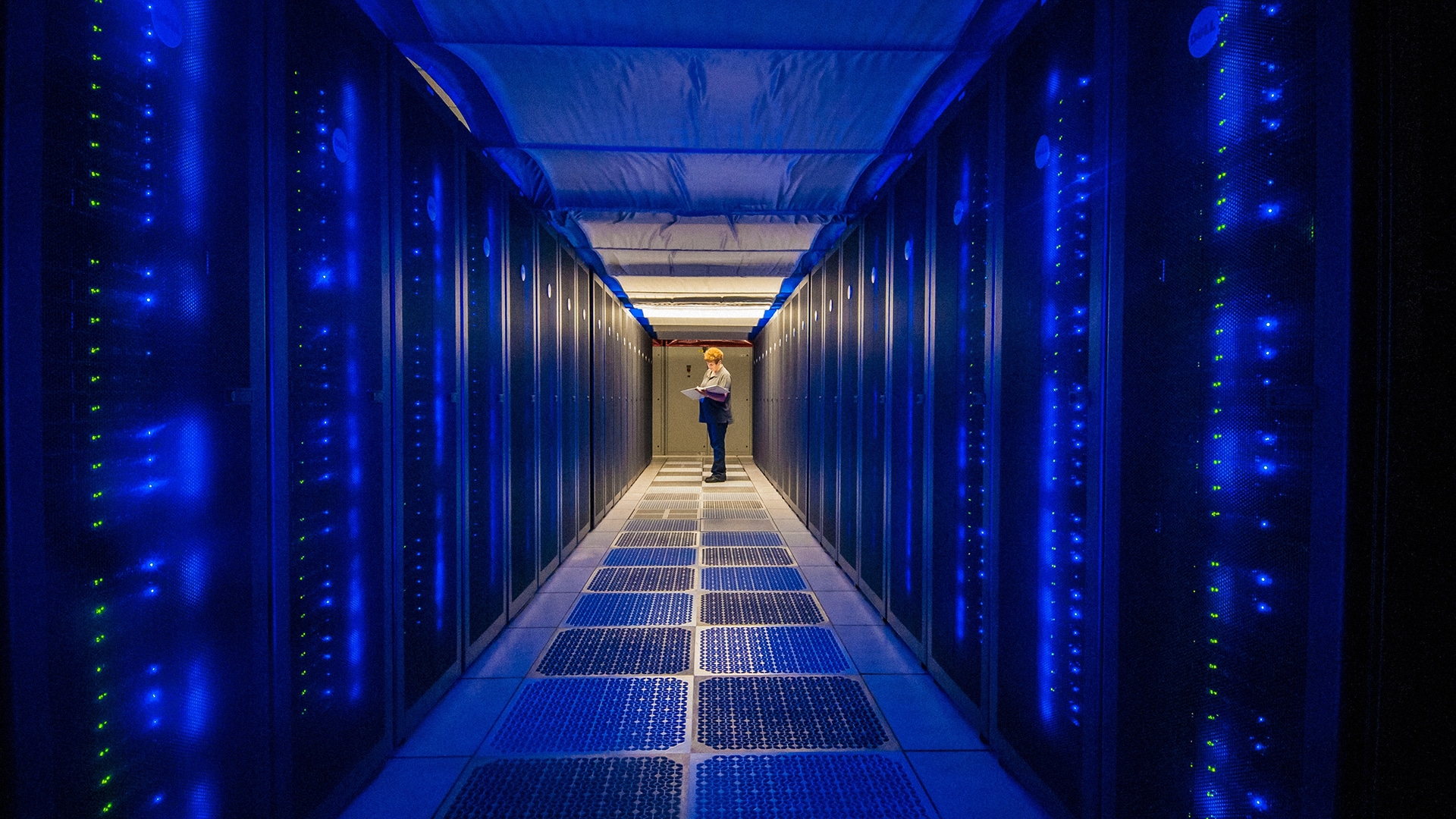
On Nov. 2, South Korea launched Hangang, the sixth computer in its national supercomputing series, succeeding Nurion, the fifth system introduced in 2018, the country’s Ministry of Science and ICT said in a press release.
According to the statement, Hangang combines 8,496 GPUs and 9,936 CPUs, and includes NVIDIA GH200 CPU-GPU integrated accelerators. It has a theoretical peak performance of 614 petaflops, with measured performance estimated at 300-400 petaflops. The system also offers 205 petabytes of storage and network performance exceeding 400 gigabits per second.
The supercomputer is housed at the Korea Institute of Science and Technology Information (KISTI) headquarters in Daejeon. It will support large-scale scientific computing, data analysis and AI-based scientific research, while continuing to handle traditional supercomputing workloads such as weather forecasting. Hangang’s computing resources will be allocated across three programs: National Strategy (30%), R&D Innovation (55%) and Industrial Innovation (15%), the latter aimed at expanding access for businesses, particularly small and medium-sized enterprises (SMEs) and startups.
The pilot service opened in October, with official service scheduled to begin in December. The ministry also expects Hangang to rank among the world’s top 10 supercomputers in the next TOP500 list, due to be announced at the SC2026 conference. China’s LineShine supercomputer in Shenzhen topped the June 2026 with measured High Performance Linpack (HPL) performance of 2,198.40 petaflops.
Separately, Kazakhstan’s Alem.Cloud ranked 104th in the June 2026 TOP500 list, recording a measured performance of 20.48 petaflops on the HPL benchmark.
