


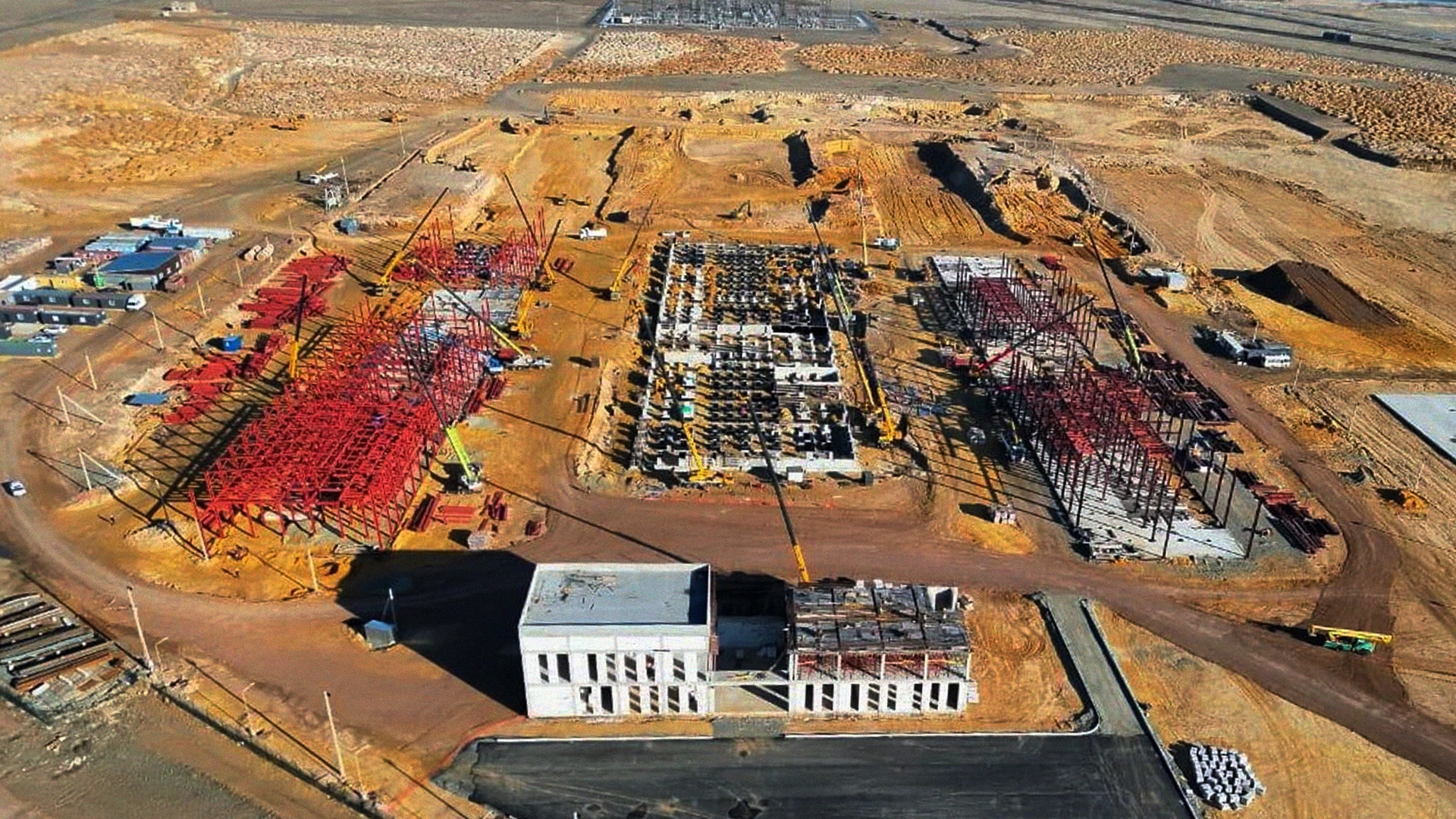
The Development Bank of Kazakhstan (DBK) has approved 50 billion tenge in financing for Kazakhtelecom’s Data Center Valley project in Ekibastuz, according to the bank’s website.
The project’s total cost is estimated at 236.8 billion tenge, with the DBK providing 50 billion tenge (about $110 million) in financing to Kazakhtelecom.
The loan’s specific terms have not been disclosed, although the bank says the funds have been fully disbursed. The borrower is KT-Telecom, a Kazakhtelecom subsidiary responsible for implementing the project.
Plans for a 1-gigawatt data center hub
The Kazakh government has previously announced plans to build a Data Center Valley in Ekibastuz with a total capacity of 1 gigawatt (GW). The electricity needed to power the facilities is expected to come from coal-fired generation, using coal extracted from open-pit mines in the Ekibastuz area.
In September, Bagdat Mussin, chairman of Kazakhtelecom’s management board, told Reuters that the company intended to raise billions of dollars for the project through bond issuances, the DBK and international financial institutions.
Kazakhtelecom plans to issue bonds through the Astana International Financial Centre (AIFC) and is also seeking financing from international banks. The company has already held talks with several Chinese and U.S. financial institutions.
Read also: How Kazakhstan is building data center industry from scratch.

$10 billion AI infrastructure agreements
Kazakhstan has also signed a package of agreements worth $10 billion with U.S.-based Firebird and NVIDIA covering cooperation in artificial intelligence and digital infrastructure. The broader Data Center Valley initiative is intended to attract investment in the country’s computing infrastructure. The facilities are expected to use servers equipped with NVIDIA graphics processing units (GPUs).
Read also: What you need to know about Kazakhstan’s new $16B AI strategy.
The project envisages data centers with an initial combined capacity of at least 300 megawatts (MW), with the potential to expand to 1 GW.
In early October, Mussin estimated that electricity demand from existing and planned data centers across Kazakhstan could reach 5 GW. He stressed that demand would extend beyond the Data Center Valley project in the Ekibastuz region.
«It’s not just one specific location where we are establishing our data centers. Our entire territory [Kazakhstan] could become one large ‘Data Center Valley.’ Naturally, we must address challenges such as power generation; however, looking at our energy production roadmap, we will exceed the 5 GW threshold of additional power that can be utilized for such computing infrastructure,» he said at the AI & Digital Bridge forum in October.
Kazakhstan’s role in global computing infrastructure
Mussin has argued that once the 1-GW Data Center Valley is operational, Kazakhstan could become more than a provider of computing capacity, serving also as a link between space exploration and Earth.
He has also said that, in developing a domestic regulatory framework for artificial intelligence, Kazakhstan should draw on the experience of leading industry players. In his view, companies that enter the local market early stand to benefit most from this process.

Mussin has pointed to the launch of the fiber-optic cable across the Caspian Sea, alongside other international connectivity routes, as a way to narrow the gap between Kazakhstan and competing economies. He has described international connectivity as an even more important factor for data center development than access to low-cost electricity.
