


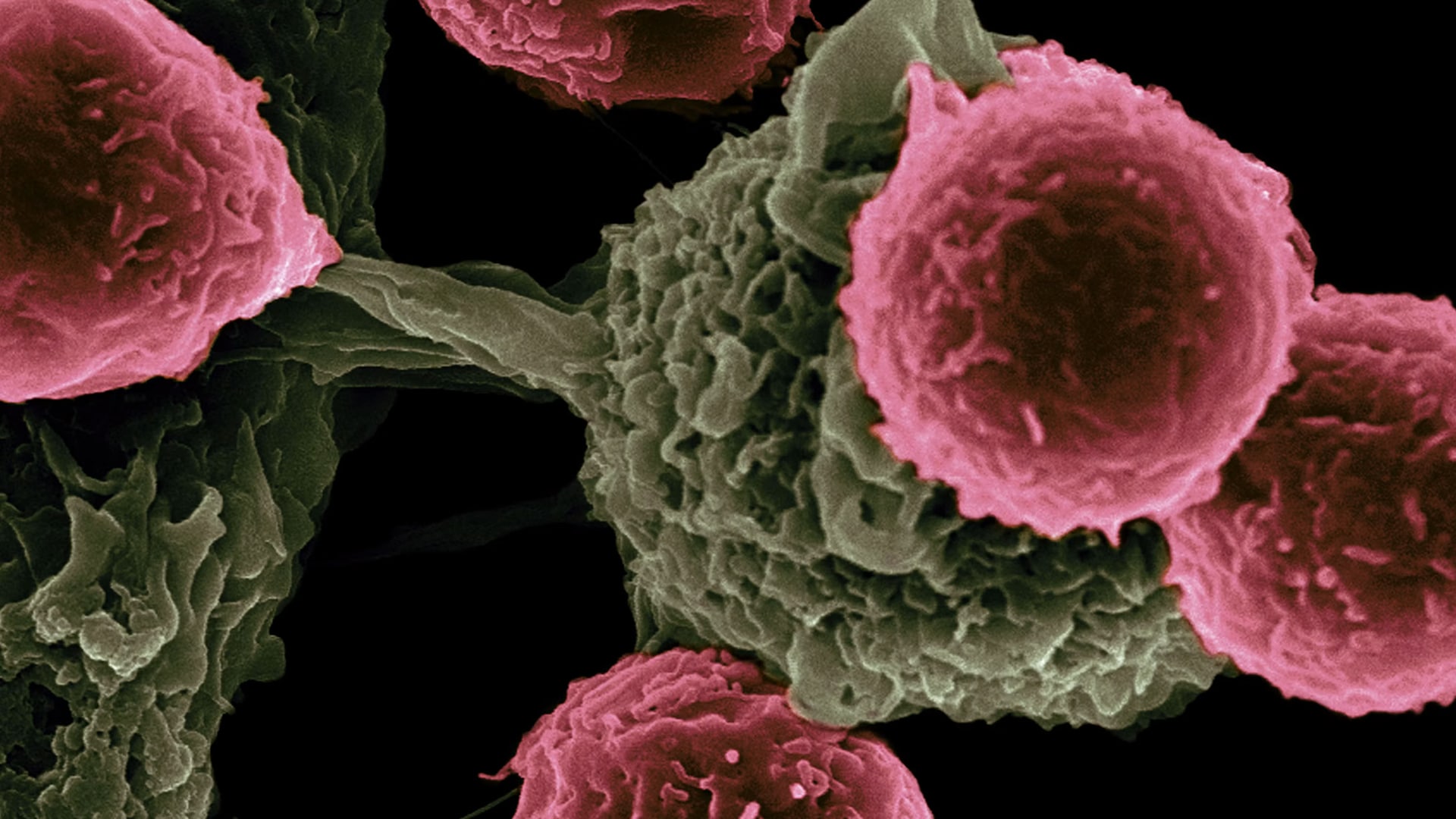
Scientists at the National Research Oncology Center (NROC) and Nazarbayev University are investigating why bladder cancer cells stop responding to chemotherapy. The specialists are testing whether blocking TAM receptors, which protect the tumor from chemotherapy drugs, can help overcome this resistance in laboratory models developed from biomaterial samples from 60 patients.
To examine the disease’s peculiarities, Kazakhstani researchers use modern laboratory methods, growing three-dimensional cancer cell models from tumor tissue samples.
Using these models, scientists observe cancer cell behavior, test how the cells respond to medications and seek ways to overcome the tumor’s resistance to therapy.
Kazakhstan’s Ministry of Healthcare said that the scientists are focusing on the TAM receptor protein family. These proteins are believed to help cancer cells build protective mechanisms. Preliminary data indicate a link between the levels of certain TAM proteins, the aggressiveness of the cancer and tumor resistance to chemotherapy.

Scientists are currently testing whether these proteins can be blocked to enhance the effectiveness of standard therapy in the future.
According to NROC oncourologist Zhankuat Kubeyev, it is still too early to introduce this approach into clinical practice. The project is currently at the preclinical research stage, involving biological samples and laboratory models, and its effectiveness in patients has yet to be evaluated.
In addition, scientists are investigating whether urine testing can determine a tumor’s biological characteristics without collecting tumor tissue samples.
