
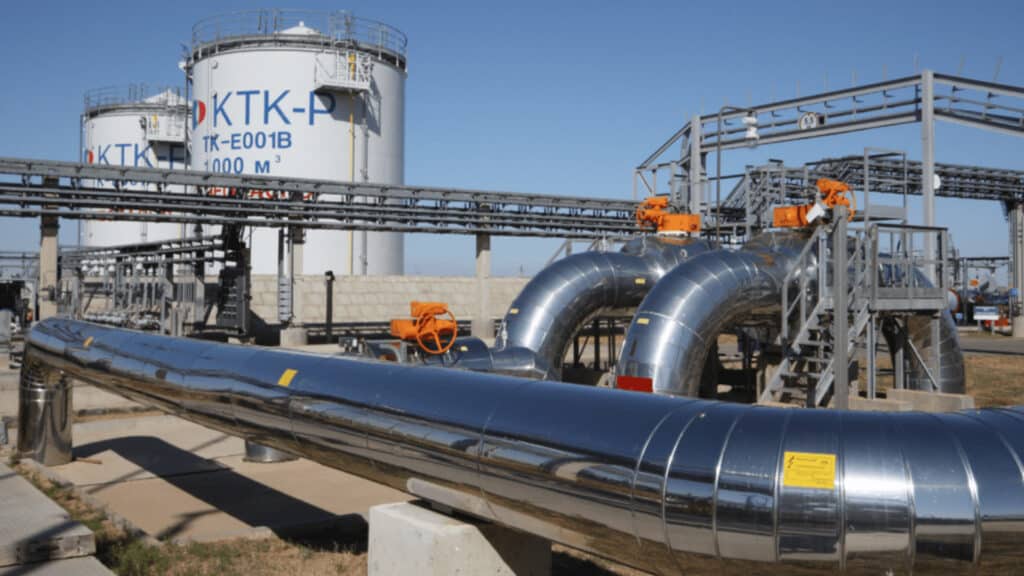
The latest attack on the Caspian Pipeline Consortium (CPC) by Ukrainian naval drones — and the resulting partial shutdown of its terminal in the Russian port of Novorossiysk, which carries more than 80% of Kazakhstan’s oil exports — underscores how vulnerable Kazakhstan’s oil exports are due to the country’s systemic reliance on a single route.
CPC has become a near-monopoly corridor through which Kazakh oil producers expand output and generate revenue.
Why do oil companies favor CPC
Nurlan Zhumagulov, the author of the Energy Monitor Telegram channel, noted that oil companies have long favored CPC because its tariffs are lower than those of alternative routes.
«CPC is three times cheaper for Kazakh shippers than the Baku-Tbilisi-Ceyhan (BTC) route. It’s not the government but the shippers who choose the most optimal route for themselves — you can’t force them to use an expensive corridor,» he explained.
CPC’s profitability and strategic role
The expert noted that the CPC pipeline is an international project governed by English law and is not Russian-owned. It has become one of the world’s most profitable pipelines, generating $1 billion in annual dividends for shareholders and paying around $100 million in taxes in Kazakhstan.
By comparison, he said the BTC pipeline has still not broken even.
The uncertain path toward new routes
A working group of eight companies has spent the past year studying an additional export route to Baku — either an Atyrau-Aktau pipeline followed by tanker shipments or a subsea pipeline across the Caspian.
Shareholders are still reviewing the project; even if approved, the new corridor would have a capacity of about 20 million tons — far less than CPC’s roughly 70 million tons annually. Zhumagulov suggested oil company shareholders may delay the project’s progress, as happened with the Karachaganak gas processing plant.