
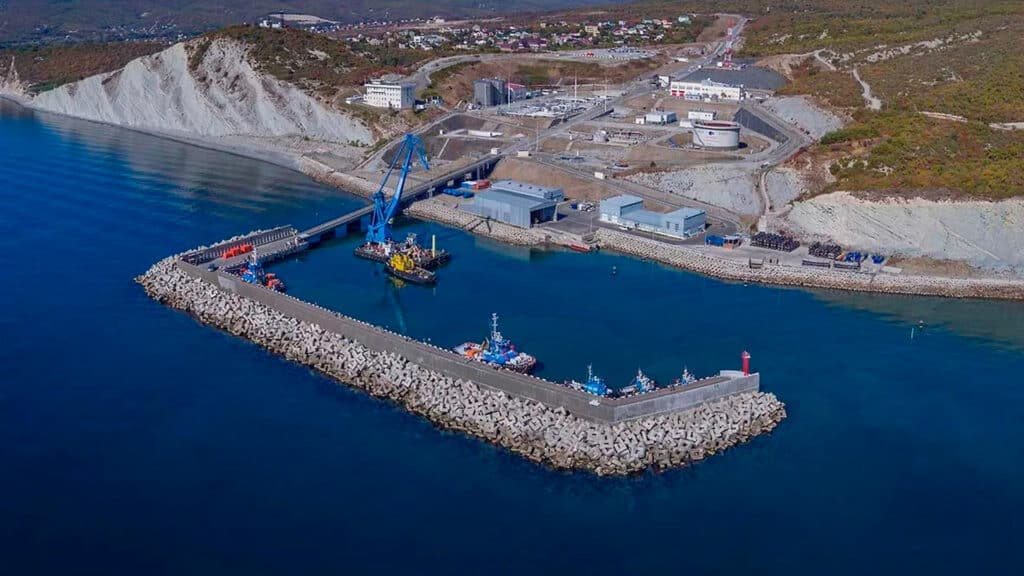
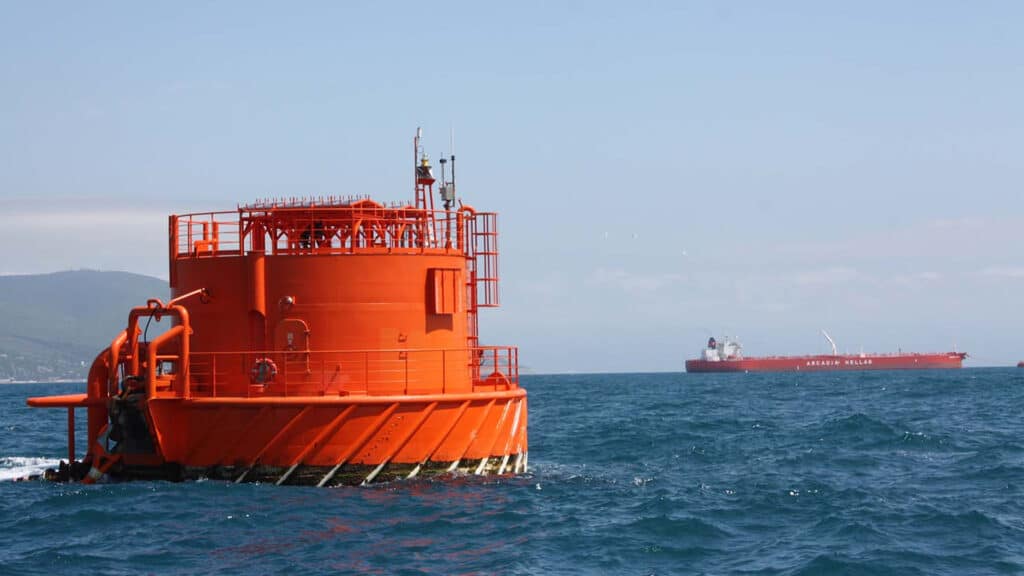
The partial shutdown of the Caspian Pipeline Consortium (CPC) terminal in Novorossiysk, Russia, after a Nov. 29 attack by Ukrainian naval drones, highlights Kazakhstan’s ongoing export vulnerabilities. The terminal, which handles over 80% of Kazakhstan’s oil exports, now has its Offshore Mooring Terminal-3 (OMT-3) out of service, while OMT-2 has been under repair for two weeks.
Abzal Narymbetov, author of the Energy Analytics Telegram channel, wrote that the country is now likely operating only through OMT-1. He explained that this immediately creates risks for shipping and production.
Growing reliance on a single export corridor
Narymbetov argues that the latest incident at CPC shows Kazakhstan’s ongoing reliance on this export route, rather than being just a one-time issue. In 2013, CPC carried 40% of Kazakhstan’s oil exports. This rose to 66% in 2016, 76% in 2019, and 81% in 2021.
As a result, CPC has become a near-monopoly corridor through which Kazakh oil producers expand output and generate revenue. The expert highlighted that over the past three to three and a half years, there has been no significant progress developing alternative export routes, such as through the Caspian Sea or via Baku or China.
Currency pressure and budget losses
Oil analyst Olzhas Baidildinov said an attack on CPC and a resulting drop in exports could trigger a depreciation of the tenge.
«The first quarter of 2026 will see a return to the 540-550 tenge per U.S. dollar level, and a return to 600-610 by the end of 2026, as forecast by Halyk Finance,» he wrote.
Baidildinov noted that Tengizchevroil — operator of the Tengiz field — is the country’s largest taxpayer, meaning any disruption affecting it also affects Kazakhstan’s budget.
«Tax revenues and payments to the National Fund for December through June could fall by roughly $1 billion,» he said.
Impact on CPC throughput
Between Jan. 1 and Nov. 21, 2025, oil shipments via CPC increased by 13% to reach 65.5 million tons. According to Baidildinov, about 90% of this volume was Kazakh oil.
This volume equals about 5.3 million tons per month, or about 40 million barrels, worth $2.4 billion. If 20% of that volume is lost, monthly losses could total $470 million, including some offset from the other OMTs if they run at full capacity and some rerouting. If problems at CPC persist and are not fixed quickly, oil production and export losses could reach at least $1.5 billion.