
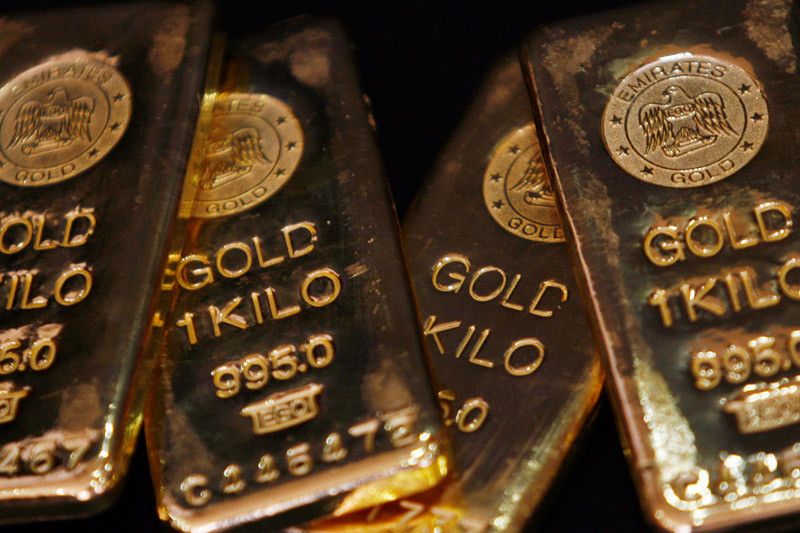
Gold’s inflation-adjusted returns over time are notoriously hard to predict. Still, gold remains a preferred hedge during periods of inflation and currency instability. In recent years, countries’ gold strategies have diverged sharply, reflecting each nation’s economic priorities.
Nurasyl Abdrazakuly, a Kazakh data scientist and a frequent collaborator on our infographics, visualized how countries have increased or decreased their gold reserves over the past five years.

His analysis, based on data from the International Monetary Fund, shows that from 2019 to 2024 countries shifted toward more defensive reserve strategies. The distribution of gains and losses was highly uneven, and only a small group of nations meaningfully expanded their gold holdings.
Who bought the most gold?
A few countries posted substantial growth — including Czechia, Hungary and Ghana. Others, such as the U.S., Italy and France, made no major adjustments.
Several states reduced their reserves, with Kazakhstan, Venezuela and Sri Lanka seeing the sharpest declines.
Percentage increases were most dramatic in countries that started with very small reserves; Czechia’s jump from 8 tons to 51 tons is the clearest example.
Emerging markets
Most increases occurred in emerging markets — including Qatar, the United Arab Emirates and Iraq — while declines were more common in Latin America and South Asia, particularly in Bolivia, Colombia and Sri Lanka.