Why Uzbekistan doesn’t need ‘decolonial critique’

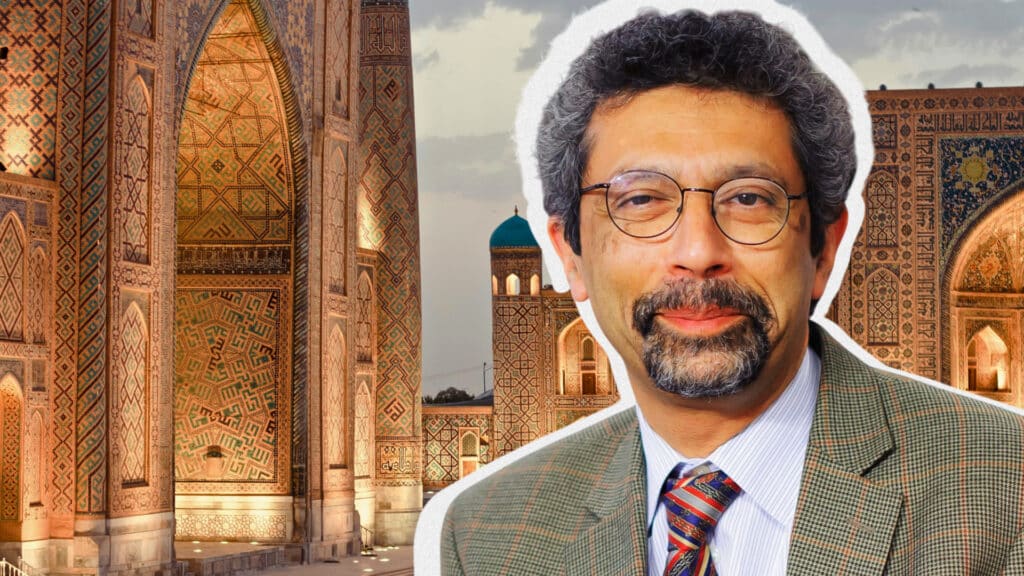
If discussions of Uzbekistan’s colonial past are viewed from inside the country rather than from the West, the «problem of decolonial critique» largely disappears, according to Uzbek digital creator Javokhir Nematov.
In a recent social media post, Nematov highlighted an article by prominent historian Adeeb Khalid, who offered a brief overview of the state of Central Asian studies in 2025.
Decolonial discourse in Uzbekistan
Among other points, Khalid writes that, unlike in Kazakhstan and Kyrgyzstan, «scholars in Uzbekistan and Tajikistan seem far less interested in a decolonial critique of their history.» Indeed, Nematov notes, decolonial discourse has not become widespread in Uzbekistan. With the exception of a few isolated artistic initiatives, neither academia nor the broader public sphere tends to use this language.
According to Nematov, the most obvious reasons are the relatively weak integration of Uzbek scholars into Western academia and the political climate before 2016, the year Uzbekistan’s long-serving first president, Islam Karimov, died. These factors limited the extent to which external discourses could permeate local intellectual and public life.
However, he argues, seen from within Uzbekistan, the «problem» largely disappears. If decolonial critique is understood not as importing South American theories into a foreign context but as paying attention to what local scholars have been writing in Uzbek for the past 35 years, then decolonization in Uzbekistan has long been underway — and quite successfully.
Relevance of Western theories
Only an outside observer who does not speak Uzbek and relies on Russian-speaking circles might conclude otherwise. For such observers, «decolonial critique» tends to mean the introduction of high-level theory imported from Western universities — whether Duke or Linköping — while anything outside that framework remains invisible.
Worse, Nematov says, some external theorists, lacking access to Uzbek, attempt to label as «decolonial subjects» people for whom Uzbek is at best a second language and who have not reflected on privileges inherited from empire.
Uzbekistan, he argues, does not need a decolonial critique imposed from outside because its internal resources are substantial. Since the early 1990s, school textbooks, media, literature and art have gradually undergone decolonization, if by that term we mean efforts to recover the cultural experience that existed before imperial intervention. Uzbekistan’s literary and cultural elite — including the opposition — has long been working within that logic.
Challenging far right
The challenge lies elsewhere. As Khalid wrote:
«Aspirations of ‘decolonizing the mind’ can easily slide into assertions of a national or civilizational authenticity, as something that has to be reconstituted. This is all deeply problematic, for claims to reclaim or resurrect authenticity can be and have been appropriated by intellectual currents on the far right that have anything but a liberatory, inclusive agenda.»
In the post-Soviet context, this dynamic has often meant rejecting the Soviet left-wing project and producing, instead, a right-leaning, nationalist form of «decolonization,» where anti-imperial sentiment frequently ends in cultural conservatism.
Nematov acknowledges that one can argue endlessly that this is «the wrong kind of decolonization.» But that raises a difficult question: Does such a critique deny local voices their agency, or does it attempt to impose an external interpretation on people who arguably have a greater right to define their own history?