Volkswagen launches public road test for autonomous vehicle lacking wheel and pedals

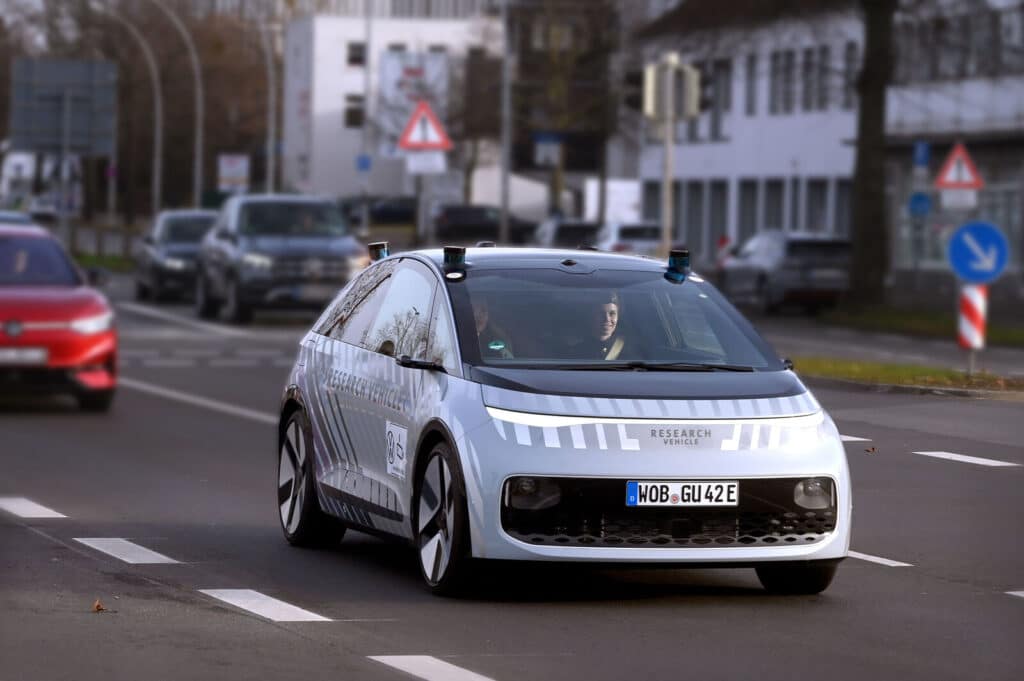
Volkswagen Group has kicked off real-world trials for its Gen.Urban self-driving vehicle. The tests are taking place on public roads in the city of Wolfsburg under real-world conditions, including intersections, junctions and traffic jams.
The route covers almost 10 kilometers, with one ride taking 20 minutes. Notably, the vehicle is designed to have neither a steering wheel nor foot pedals, lacking conventional controls.
What Volkswagen is testing
Contrary to expectations, the emphasis is placed on people rather than autopilot technology. The Volkswagen Group Innovation team is studying:
- How people spend their time in a self-driving vehicle;
- How passengers experience riding in a self-driving vehicle without a traditional steering wheel or pedals;
- How the interaction between the vehicle and passengers should be designed.
The particular focus is on children and older people.
Customization before the ride starts
Gen.Urban aims to make a good impression prior to movement. The passenger can adjust climate and ambient lighting inside beforehand using the app or directly in the vehicle. After sitting down, the seat automatically adjusts to the person, and the digital interior is customizable according to the passenger’s preferences, powered by artificial intelligence.
Why the human driver is still present
Despite being entirely autonomous, a driver is still present. They sit in the passenger seat and can step in via a special panel with a joystick.
Volkswagen’s goal
According to the Head of Volkswagen Group Innovation, Dr. Nikolai Ardey, the key objective is to build trust in autonomous transportation.
«The technology for autonomous driving is making rapid progress. With our Gen.Urban research vehicle, we want to understand exactly how passengers experience autonomous driving. Because the key to a positive customer experience is to build trust — through meaningful interaction, a relaxed atmosphere, and intelligent assistance systems that respond precisely to the needs of passengers. Ultimately, technology should fit people, not the other way around,» Ardey emphasized.
In other words, autopilot should adapt to people, not vice versa. It is this experience that will form the basis for future serial interiors and UX solutions for the concern’s brands.
Separately, a self-driving taxi operated by Waymo, a U.S.-based commercial robotaxi service provider, was recently involved in a hazardous situation in which it passed through a police high-risk stop, failing to respond to officers’ instructions and visual signals while passengers were on board.