

We use elevators every day—at home, at work and in shopping or office buildings. Yet many people remain unaware of basic elevator etiquette, which can help prevent awkward moments, conflicts and misunderstandings.
Kursiv LifeStyle answers the most common questions to make everyday elevator rides more comfortable for everyone.
Who enters and exits first?
An elevator is not the same as a doorway to a café; it follows its own set of rules.
Many people grow up learning that men should allow women to go first. In elevators, however, practicality usually takes priority. In busy settings, the general rule is simple: the person closest to the doors enters first. This helps reduce crowding and keeps traffic moving smoothly.
The same principle applies when exiting — those nearest the doors should step out first.
Safety note: Emergency responders and rescue workers follow different protocols. Under safety regulations, men typically enter first, followed by women and children, to help ensure orderly movement in confined spaces.
How to behave in a crowded elevator
When an elevator is full, courtesy and personal space become especially important.

Best practices include:
- Avoid standing too close to others or leaning against them.
- Do not stare at fellow passengers, which can make people uncomfortable.
- Keep phone conversations brief and quiet.
- Do not play videos or music without headphones.
- Keep the elevator clean and avoid bringing food with strong odors.
In a small, shared space, discretion is key.
Riding with a dog
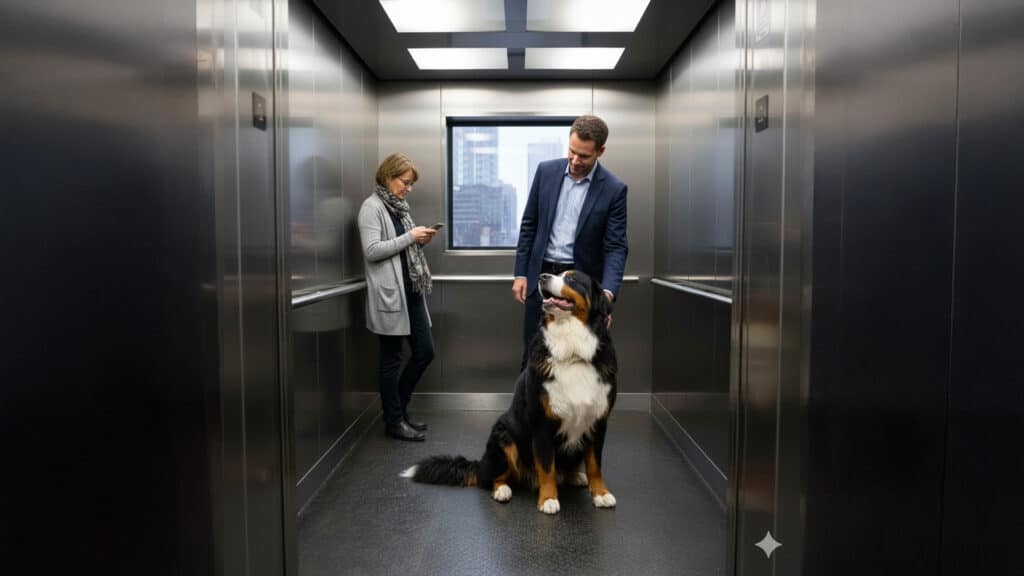
Yes, pets are allowed in elevators — but etiquette matters.
If you have a large dog, ask other passengers for permission before entering or wait for an empty elevator. Large dogs should be on a short leash and, where required, muzzled. In these cases, the owner should enter and exit first, allowing the dog to follow calmly without disturbing others.
For small dogs, it is best to carry them. This helps keep the animal calm and reduces anxiety for other passengers.
Stand strategically
If you are traveling only one or two floors, stand near the doors. This makes it easier to exit and prevents other passengers from having to shift or step aside.
The bottom line
An elevator is just a few square feet of shared space, and how comfortable it feels depends on mutual respect. When everyone follows simple rules of conduct, the ride between floors becomes calm, predictable and pleasant for all.