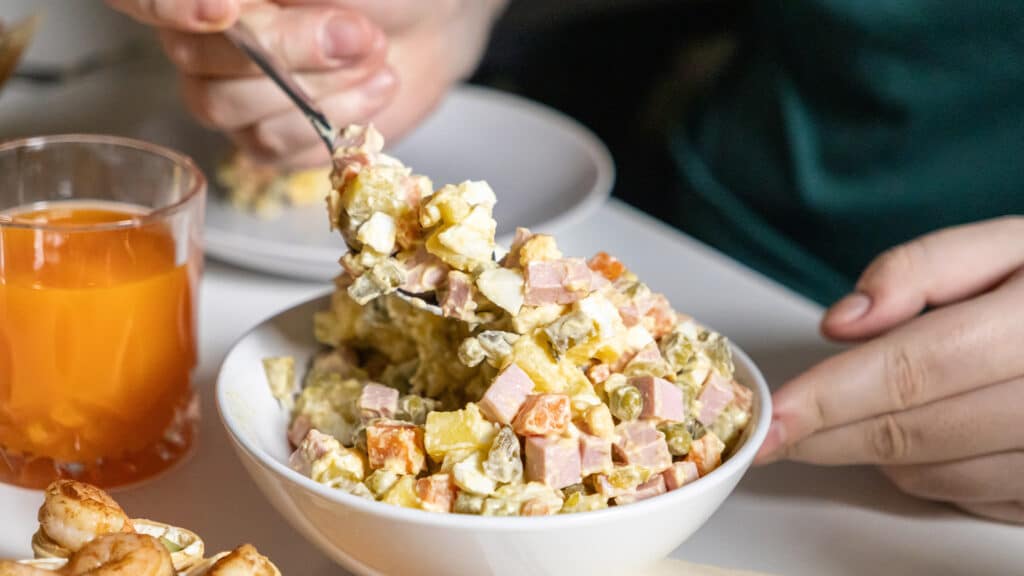
Social media is again abuzz with discussion of Olivier salad, one of the most recognizable dishes across the former Soviet Union. The renewed interest was sparked by a food blogger who posted a video recreating what is believed to be the original 1860s version of the dish served at the Hermitage restaurant in Moscow.
A far cry from the modern holiday staple
The original Olivier salad bore little resemblance to the familiar version made today with boiled sausage, potatoes, and carrots. Food historians widely attribute the dish to Lucien Olivier, a French chef who created it in the mid-19th century for wealthy patrons. While the exact recipe was closely guarded, later reconstructions have relied on accounts from contemporaries who dined at the restaurant.
Ingredients fit for the elite
Reconstructed accounts paint a picture of a decadent 19th-century Olivier, brimming with lavish and rare ingredients. Hazel grouse or partridge, velvety veal tongue, plump boiled langoustines or crayfish, sharp gherkins, tangy capers, delicate quail or chicken eggs, and glossy black caviar as garnish dazzled the senses. All were dressed with a silky Provencal sauce — an early form of mayonnaise — whipped from rich egg yolks and golden olive oil.
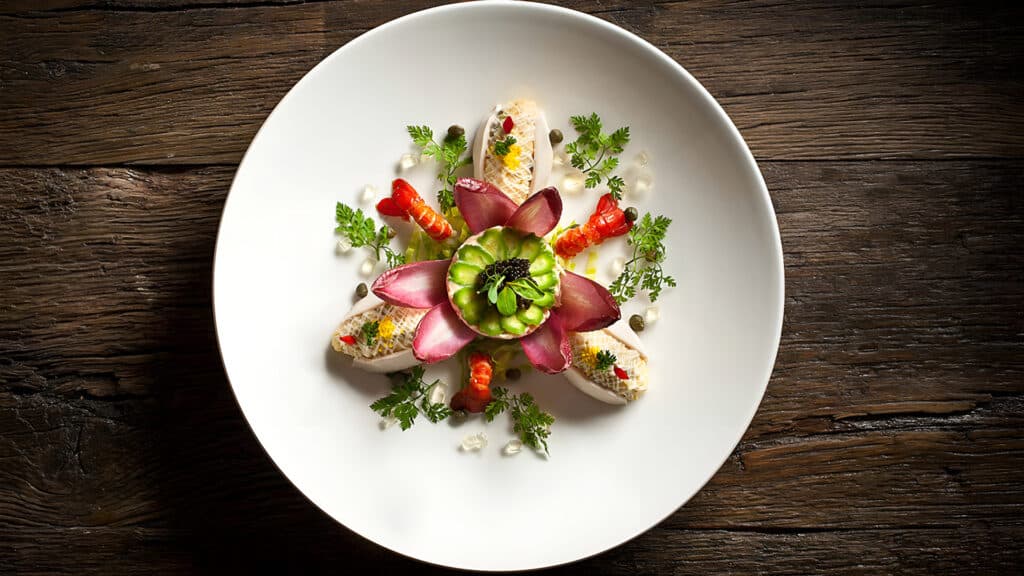
Notably absent from the 19th-century recipe were potatoes and carrots, which were added to the salad only in a much later, simplified Soviet-era adaptation.
Presentation emphasized status
In contrast to the mixed version seen today, the original Olivier was meticulously arranged. Ingredients were layered or placed around the sauce, often in a circular pattern. The dressing appeared separately or in the center, highlighting the dish’s fine-dining roots and its air of luxury.
A luxury dish, not a folk salad
When the cost of the original ingredients is calculated using average prices in Kazakhstan, the total reaches roughly $100, excluding restaurant preparation and presentation. That price tag reinforces the idea that Olivier was never meant to be an everyday dish.
Beginning in the Soviet era, the recipe was simplified and made more affordable. It then became a centerpiece of New Year’s celebrations across the region. Still, the original 19th-century version continues to fascinate food enthusiasts, offering a glimpse into the culinary tastes and excesses of that period.