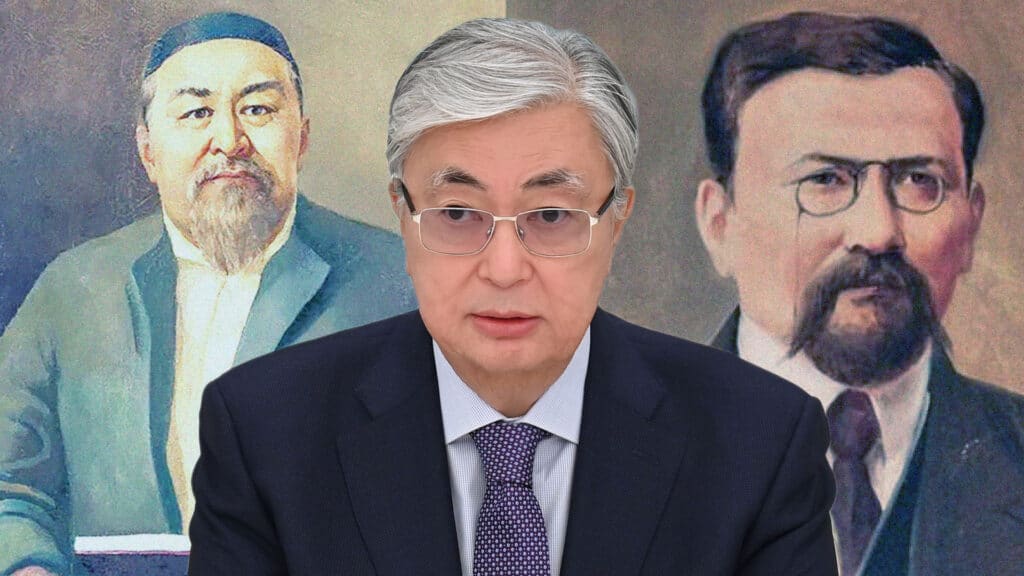
Virtuous sayings preserved in collective memory are widely used not only in literature and everyday communication, including colloquial speech, but also in political discourse. Notably, Kazakhstan’s President Kassym-Jomart Tokayev frequently refers to quotations from Abai, the prominent Kazakh poet and philosopher, as well as to folk wisdom expressed through proverbs — particularly those emphasizing unity and solidarity. This practice can be observed in his addresses to both the nation and the international community.
To identify which authors the President quotes most frequently and which proverbs he most often uses to support and reinforce his views, we analyzed his speeches delivered at domestic and international events over the past five years (December 2019-December 2025). In addition to annual state-of-the-nation addresses, the dataset included official messages and speeches delivered at political, business, ceremonial, and other events. In total, 117 speeches published on the Akorda website were examined.
Notable authors
The analysis shows that president Tokayev most frequently quotes the following authors:
— Abai (quotes related to knowledge, scholarship, humanity, and integrity; 18 entries identified across speeches from different years). Examples include:
«A human being should distinguish himself by virtue of his reason, knowledge, will, conscience and goodness. Only a fool thinks he can gain distinction by other means»;
«An upright man should earn his bread honestly»;
«Only he that can hold his heart and his thought in the vise of will shall attain real heights.» (Tr. by D. Rottenberg)
— Akhmet Baitursynuly, a prominent Kazakh intellectual (quotes on education, teaching, and the pursuit of civilization; 3 instances). Examples include:
«The teacher is the soul of the school»;
«To be knowledgeable, one needs to study. To be wealthy, one needs a trade. To be strong, one needs unity. One must work towards these needs.»
— Alikhan Bokeikhan, Kazakh politician and statesman (quotes on unity, national service, and the press; 3 instances). Examples include:
«The only path to freedom is national unity»;
«Service to the nation is a matter of character, not just knowledge.»
— Bauyrzhan Momyshuly, Kazakh-Soviet military officer and writer (quotes on patriotism and defending the homeland; 3 instances). Examples include:
«No heroic deeds are possible without love for one’s country»;
«There is no nation without discipline, and no one who submits to discipline is a slave.»
Kazakh and foreign authors
Although cited less frequently, President Tokayev also occasionally refers to the following domestic and international figures when relevant:
— Shakarim, Kazakh poet and philosopher («There is light in a young soul,» from a speech delivered at the National Academy of Sciences).
— Abish Kekilbayev, Kazakh writer («Only those who learn from the past and believe in the future can move forward»).
— Dag Hammarskjöld, former Secretary-General of the United Nations («The United Nations was not created in order to bring us to heaven, but in order to save us from hell»).
— Mikhail Sholokhov, Russian novelist («When I walk along the Don, I am a Cossack; when I come to the Ural, I am a Kazakh»).
Proverbs
Approximately 50 examples of folk wisdom and proverbs were identified in the analyzed speeches.

The proverbs cited by Tokayev closely align with the themes emphasized by the aforementioned figures and can be grouped into the following categories:
— Unity and solidarity:
«Where there is unity, there is life»;
«Shared labor lightens the burden»;
«Prosperity begins with unity» (described as a guiding national principle in a speech at the session of the Assembly of the People of Kazakhstan).
— Labor and responsibility:
«As the labor, so the fruit»;
«Labor is the source of prosperity» (used in the context of building a society that values working professionals).
— Homeland and patriotism:
«The homeland begins with the family»;
«Raise your flag on your native land» (used during a ceremony honoring graduates of military educational institutions).
— Education and upbringing:
«Education begins in the cradle»;
«A country’s future starts from the cradle» (lit. «If you want to be a nation, start by fixing the cradle» — emphasizing the importance of early childhood education and access to kindergarten).
— Prudence and diligence:
«Even water has value»;
«Stretch your legs according to your quilt» («Live within your means» — used to highlight the need for prudent management of public finances).