1912 electric car goes up for auction

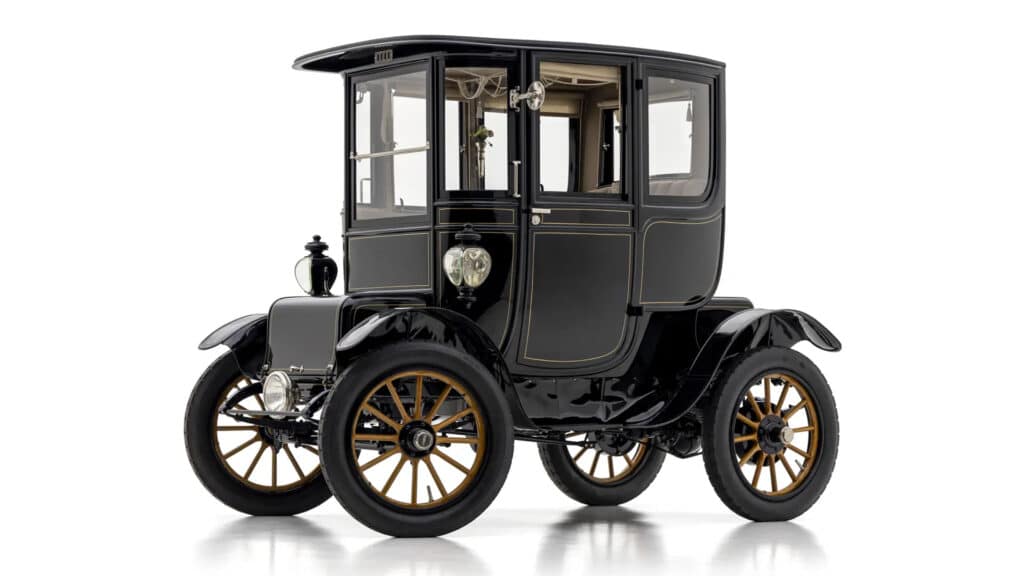
While modern electric vehicles continue to prove their reliability and compete on cruising range, history offers an interesting contrast. RM Sotheby’s auction house has listed a 1912 Baker Electric Model V, valued at $400,000 to $500,000, which is not a museum mock-up but a fully functional serial electric car.
When electric cars were a status symbol
At the beginning of the 20th century, Baker was considered the pinnacle of engineering, and the company itself described its vehicles as «The Aristocrat of Motordom.» In those years, electric cars competed on equal terms with gasoline cars and were not on the sidelines of progress.
What makes the Baker Electric Model V unique
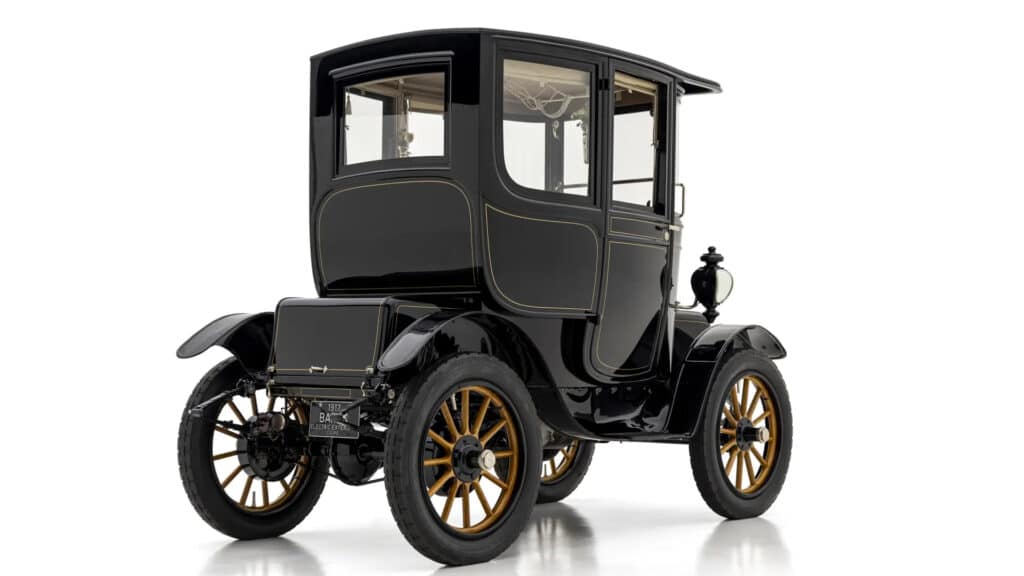
The listed specimen — Model V Special Extension Coupe — is a four-passenger version with lightweight aluminum bodywork. Such cars were considered top-tier; however, this design was discontinued in 1912. The Model V is built on a light chassis, with semi-elliptical leaf springs and a solid rear axle.
No gas, no noise
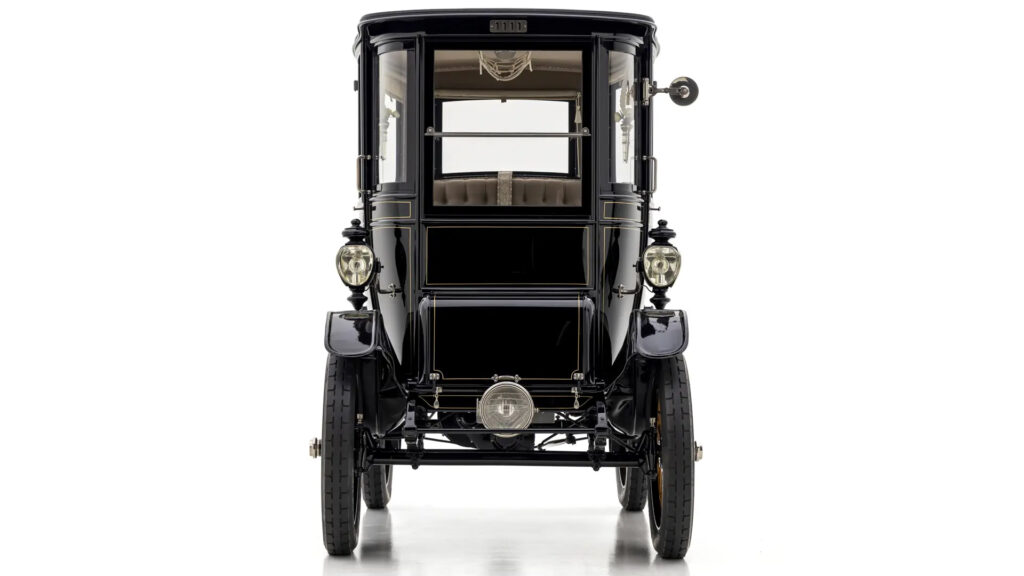
The vehicle is powered by a General Electric high-speed motor, driven through a five-speed rotary controller connected to a 60-volt battery. By the standards of the time, this was a thoughtful decision, ensuring strong thrust and a smooth ride on city roads — all without fuel, vibration or exhaust — 113 years ago.
Museum-tier restoration
Age is not the only factor contributing to the price. This car underwent a complete and exceptionally high-quality restoration. The work was carried out by prominent restorer Bill Auerbach, with Mark Larder recreating the interior by hand using fabrics as close to the original as possible. The leather elements were restored by Amish craftsmen.
History of ownership as part of the value
The car was in the collections of James Cousens and Terry Adderley, who are considered crucial figures in the vintage electric vehicle scene. At the same time, the car remains in excellent condition, with its authentic appearance preserved.
The paradox emerges as a result: the cars were silent, expensive status symbols more than 100 years ago, and collectors today are willing to pay half a million dollars for an electric vehicle without touchscreens, smart assistants or over-the-air updates. This case serves as a reminder that electric vehicles are not a recent trend, but a forgotten chapter in automotive history.