Picking winners, not losers: The radical shift in Kazakhstan’s industrial policy

Kazakhstan is transitioning to a proactive economic growth policy (PEG) that assigns the public sector a leading role in attracting and allocating investment. The shift reflects a broader global trend toward a more active state role in economic policy rather than a uniquely Kazakh initiative.
The central risk of the PEG lies in the potential entrenchment of inefficiencies, particularly where economic objectives must be balanced against social obligations.
Policy overview and timeline
The concept of the proactive economic growth policy was introduced in October 2025 by Deputy Prime Minister and Economy Minister Serik Zhumangarin. He outlined the policy’s broad framework during a meeting with the U.S. Chamber of Commerce in Washington on Oct. 15.
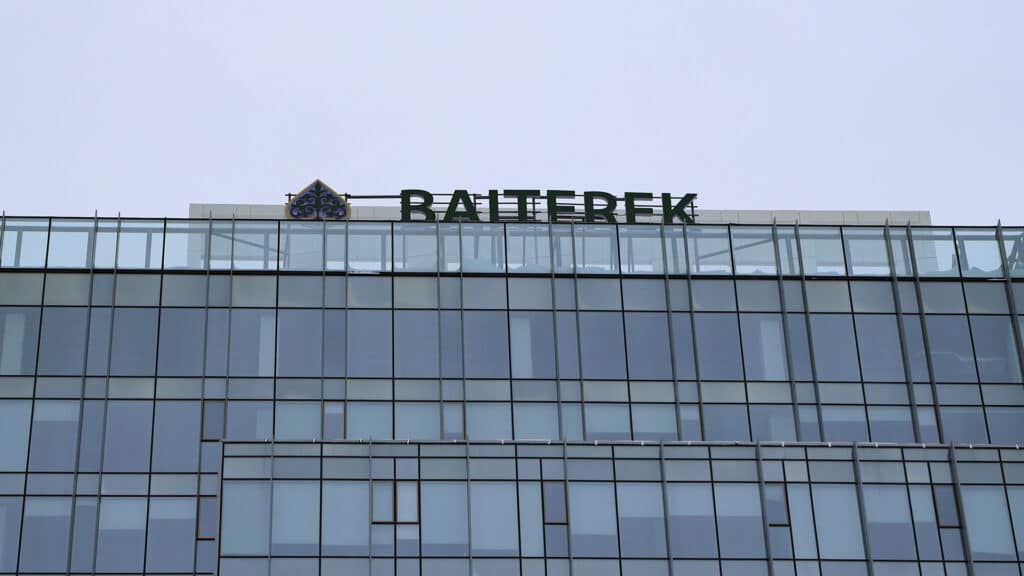
More detailed elements of the PEG were publicly presented on Oct. 24 in Astana at a meeting with the leadership of Baiterek National Managing Holding, a state-owned development institution and one of the largest financial holdings in Kazakhstan.
Economic rationale behind the shift
The PEG is driven by the government’s goal of doubling Kazakhstan’s gross domestic product by 2029, as well as by structural changes in the country’s investment cycle. Major oil and gas projects — including the launch of commercial production at the Kashagan field and the future expansion project at Tengiz — are nearing completion.
As a result, foreign investment momentum has weakened. Gross foreign direct investment (FDI) inflows in the first half of 2025 were close to zero. The mining sector, which typically accounts for up to 40% of total FDI due to oil and gas projects, recorded a 58% decline. Total accumulated FDI at the start of the third quarter of 2025 fell by 3%.
State-led investment strategy
Under the PEG, the government is signaling that it no longer expects large private investors to initiate new projects independently. Instead, the state plans to create what officials describe as an «investment order.»
This approach involves identifying undercapitalized sectors, defining project parameters in advance and offering businesses structured opportunities with state participation, whether through financing, guarantees or equity involvement.
Transformation of Baiterek Holding
A central pillar of the PEG is the overhaul of Baiterek, which is being restructured from a national managing entity into a national investment holding.
The government plans to increase Baiterek’s capitalization by 1 trillion tenge (about $2 billion) annually. In parallel, the holding is expected to attract up to 8 trillion tenge in domestic and external borrowing.
Sector-focused investment boards
Seven industry-specific investment boards — described as investment services — are being established within Baiterek. These units will focus on metallurgy, mechanical engineering, the agro-industrial sector, chemicals and other high-productivity industries.
Their mandate is to support projects throughout the full lifecycle, from initial concept development to entry into export markets. Additionally, a National Digital Investment Platform is being launched to streamline project selection and monitoring.
Investment targets and outlook
The government expects that this concentration of financial and institutional resources will raise fixed capital investment to 21% of GDP by 2028. By comparison, fixed capital investment accounted for 14.2% of GDP at the end of 2024.
Global experience with industrial policy
The approach adopted by Kazakhstan’s authorities aligns closely with mainstream global economic thinking. Kursiv Research has previously documented a shift among economists at leading international institutions toward a more favorable view of industrial policy.
This reassessment began with the rise of the green agenda — state-driven expansion of renewable energy and electric vehicles — and accelerated during the COVID-19 pandemic, which exposed vulnerabilities in transnational supply chains. The escalation of geopolitical tensions further reinforced the case for more active government involvement in strategic sectors.
IMF findings on state support
International Monetary Fund analysts, who surveyed 58 countries between 2009 and 2021, found that both advanced and developing economies actively use subsidies and preferential policies to boost productivity in targeted sectors or reduce dependence on imports.
Among subsidy instruments, the most commonly used are trade finance, more prevalent in developed economies, followed by concessional loans and loan guarantees.
Differences are more pronounced in direct support measures. Developed countries rely more heavily on grant financing, while in developing economies grants and tax incentives are used in roughly equal measure, together accounting for about two-thirds of direct support tools.
IMF experts do not advocate abandoning industrial policy in favor of structural reforms alone, although they note that structural reforms tend to be more cost-effective and efficient. Instead, they recommend combining reforms with industrial policy while preserving market discipline.
Risks of direct state support
Kazakhstan’s new economic growth model carries several risks, the most apparent being the reinforcement of economic paternalism — where project efficiency is sacrificed in favor of social stability.
The need to sustain low-margin or even unprofitable business models, often justified as necessary to preserve social cohesion, has long delayed critical reforms. These include market-based pricing in energy markets and regulated services.
Asset redistribution and inefficiency
Another risk inherent in a paternalistic approach is the potential misuse of accumulated state investment. Rather than financing new construction or capacity expansion, public funds could be directed toward transactions that merely transfer ownership of large, Kazakhstan-registered assets from one entrepreneur to another.
Such outcomes would limit the policy’s contribution to real economic growth and productivity gains.
The risk of picking losers
Faced with the dual mandate of maximizing productivity while also creating jobs, the government may favor labor-intensive projects over more efficient alternatives. This trade-off can lead to suboptimal investment decisions.
Even beyond employment considerations, public managers are not immune to errors in choosing technologies or products. In international industrial policy practice, this risk is commonly described as «picking losers.»
As public administrators assume a more active role in steering the national economy amid weak private-sector initiative, they face a difficult balancing act. They must move quickly to manage credit and social risks while avoiding misallocation of capital and crowding out smaller private firms operating alongside state-backed projects.