In a parliamentary inquiry, the Ak Zhol faction claimed that the government is unprepared for complex international disputes surrounding the country’s largest oil and gas projects. Prime Minister Olzhas Bektenov responded to the claim.
What is the gist of the complaint?
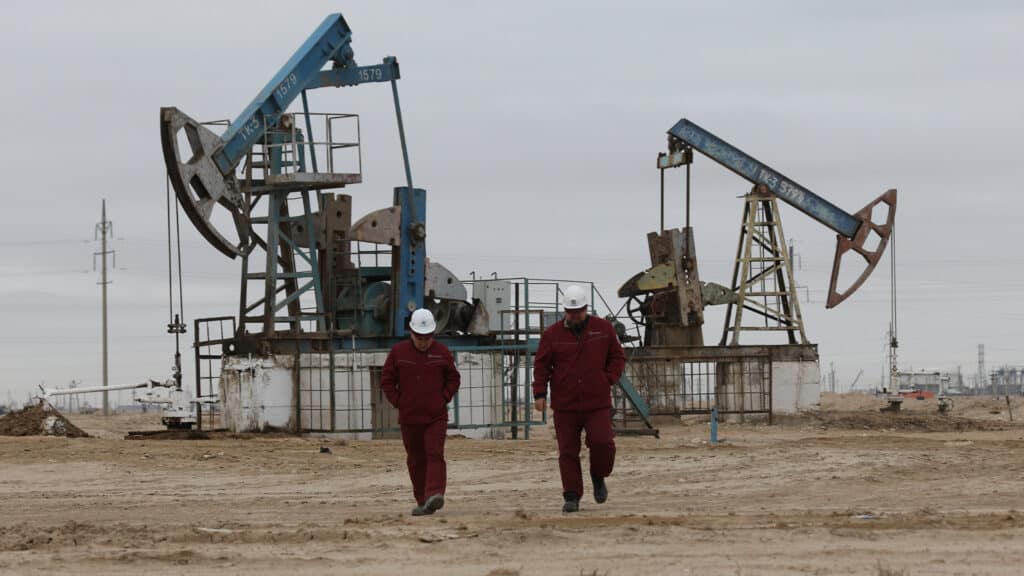
According to the party’s estimates, the country is losing trillions of tenge, which directly affects the budget and national interests. This is the result of production-sharing agreements (PSAs) the country signed in the 1990s. At the time, the government had little leverage and the agreements were focused primarily on the interests of foreign investors.
In 2023, Kazakhstan accused foreign companies of violating tender procedures and contractual obligations, estimating its losses at $13 billion for the Kashagan project and $3.5 billion for Karachaganak (according to Bloomberg).
The country then filed lawsuits against NCOC and Karachaganak Petroleum Operating BV in international arbitration, citing missed deadlines, public damages and violations of the terms of the agreements.
Additionally, in March 2023, Kazakhstan demanded that NCOC pay an environmental fine of 2.3 trillion tenge ($4.4 billion) for violations of standards for the storage of hazardous chemicals and other environmental regulations.
«However, following two years of legal proceedings, the case was lost and the fine has still not been collected. Moreover, according to expert estimates, due to changes in the tenge–dollar exchange rate between 2023 and 2025, the fine amount in dollar terms decreased by approximately $1 billion. In other words, the two-year delay in the process has led to a substantial reduction in the real value of Kazakhstan’s foreign-currency claims. This is beneficial for foreign companies but extremely detrimental to the public interest. In fact, we lost approximately $1 billion out of $5.1 billion on this alone,» the parliamentary inquiry states.
MPs believe that imposing fines in tenge benefits foreign companies and harms Kazakhstan, since exporters’ income is calculated in dollars and lengthy legal proceedings devalue the claims. They also noted that foreign companies play no role in supplying the domestic oil market or controlling fuel prices, while reaping excess profits from national resources.
They called on the cabinet to analyze the causes of the losses in international arbitration and to develop an effective strategy to protect national economic interests.
What did the cabinet say in response?
According to the prime minister’s response, environmental fines in Kazakhstan are imposed exclusively in the national currency and converting them into foreign currency is inconsistent with the legal nature of such penalties.
Environmental violations at NCOC were indeed identified in 2022, and some of the fines were paid. In 2025, however, a court ruled that certain orders issued by the Department of Ecology were unlawful on procedural grounds, after which the violations were corrected and the administrative cases were reopened.
Regarding the Kashagan and Karachaganak disputes, the cabinet emphasized that they are commercial arbitration proceedings, inherently lengthy and multi-stage. To protect state interests, international consultants and technical experts are being engaged, operations are being audited, and an evidence base is being developed.
In December, Energy Minister Yerlan Akkenzhenov announced that arbitration involving major foreign companies over Kashagan, Kazakhstan’s largest offshore field in the Caspian Sea, would begin in the second half of 2026 or in 2027.
He also said that a decision in the case involving the international consortium developing another major field, Karachaganak, was expected by the end of 2025. However, no update has been reported so far.
In August 2025, it was reported that the oil companies developing the Kashagan field had won a 2.3 trillion tenge ($4.4 billion) dispute over an environmental fine in the Astana Court of Appeals. The Department of Ecology of the Atyrau region, however, has filed a similar lawsuit again.