As in the case of U.S. President Donald Trump last year, numerous signals — both official and informal — that someone is being actively promoted for the Nobel Peace Prize do not guarantee that the award will be granted.
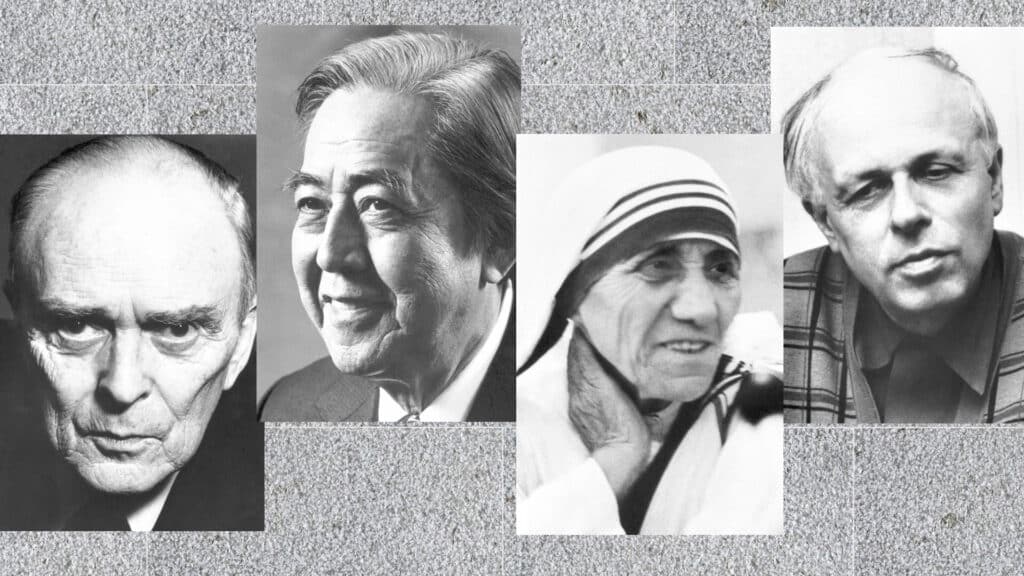
In 1974, the leading nominees by number of nominations were Brazilian Catholic Bishop Helder Camara, an advocate of nonviolence in the pursuit of peace and social justice, and Soviet physicist and human rights activist Andrei Sakharov. Neither received the Peace Prize that year. Sakharov was awarded the Nobel Peace Prize the following year.
Human rights and nonproliferation
The 1974 Nobel Peace Prize was shared by Seán MacBride of Ireland for his efforts to secure and advance human rights worldwide, and Eisaku Sato of Japan for his contribution to stabilizing conditions in the Pacific Rim and for signing the Nuclear Nonproliferation Treaty.
Both laureates came from countries that had not previously produced Nobel Peace Prize winners. In fact, Sato was the first Asian recipient of the award.
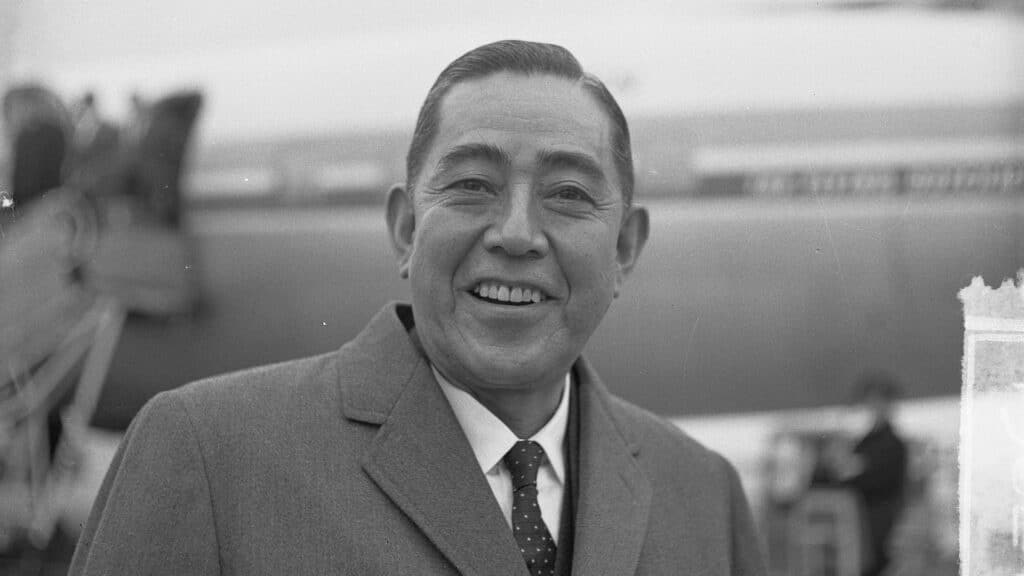
In a nomination letter to the Nobel Peace Prize Committee dated Jan. 31, 1974, Kakuei Tanaka and several Japanese politicians noted that during Sato’s tenure as Japan’s prime minister from 1964 to 1972 — the longest in the country’s history since the Meiji era — Japan’s economy grew into the third largest in the world. They added that, contrary to the historical pattern in which wealthy nations often turn into military powers, Japan, under Sato’s leadership, never wavered in its commitment to renounce the use of force.
MacBride emphasized the fundamental link between peace and human rights. He played a key role in founding the Council of Europe and in drafting the 1950 European Convention on Human Rights. He also helped found Amnesty International, which was awarded the Nobel Peace Prize in 1977.
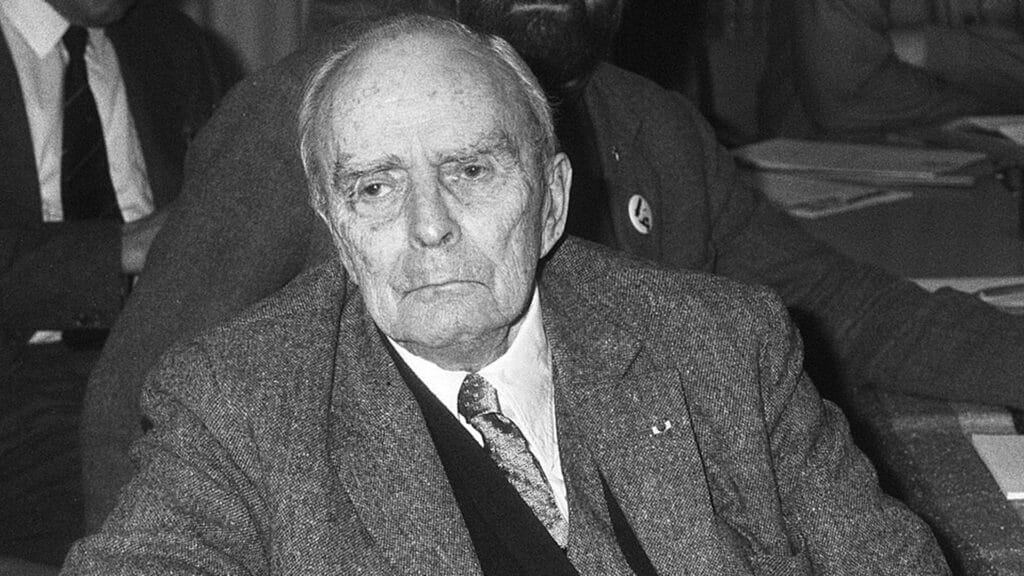
In 1961, MacBride was elected chairman of Amnesty International and for many years served as its forceful and outspoken leader, traveling extensively to advocate on behalf of persecuted men and women around the world.
Winners were not front-runners
Notably, neither MacBride nor Sato was considered a front-runner in 1974, judging by the number of nominations each received. Only one nomination was submitted for each. MacBride was nominated by David Thornley, a member of the Irish Parliament.
The Norwegian Nobel Committee does not disclose how nominees are shortlisted or the criteria used to select the laureate. However, an archive of nominations — accessible to authorized researchers — provides insight into the pool from which the laureate or laureates were chosen.
A recent study of previously unpublished documents related to the 1974 Nobel Peace Prize sheds new light on the leading nominees by number of nominations who ultimately did not receive the prestigious award.
Prominent nominees in 1974
According to archival records of the Norwegian Nobel Committee, 105 nominations were submitted for the Nobel Peace Prize in 1974. The most active nominating countries that year were the U.S., the UK, Norway, Canada and Germany. In most cases, the nominators were members of national parliaments.
Because a single nomination may include more than one individual — or an individual and an organization — analysis of the archival data shows that a total of 110 candidates were nominated that year.
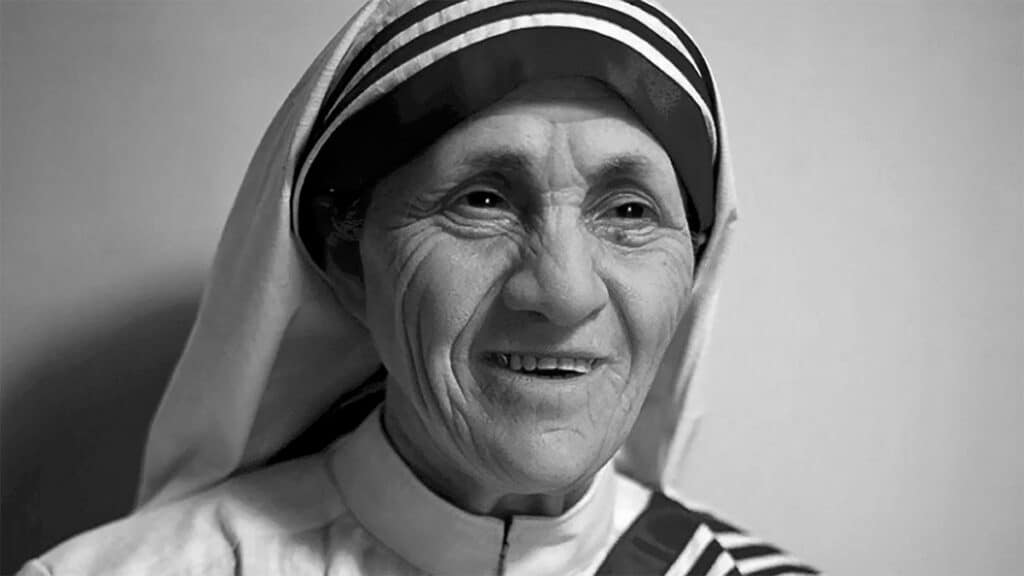
In addition to Camara, who received 18 nominations, and Sakharov, who received 16, other leading contenders included writer and humanist Elie Wiesel, who received eight nominations and was awarded the Peace Prize in 1986, and Catholic nun Mother Teresa, who received six nominations and won the prize in 1979.
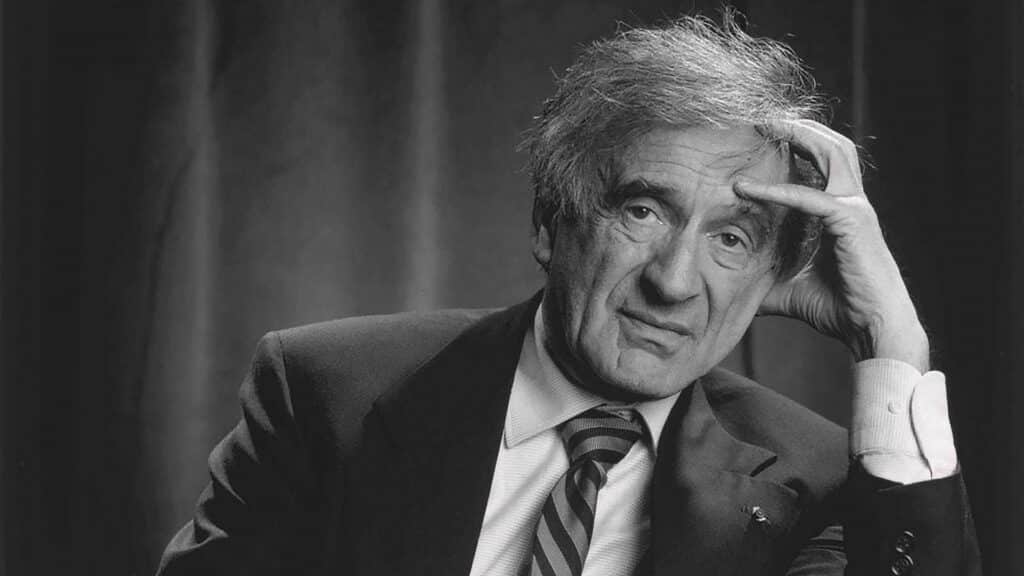
One of Wiesel’s nominators was Rep. Ogden R. Reid, who, in a January 1974 letter to the Nobel Committee, wrote that Wiesel — having endured imprisonment in Nazi concentration camps — devoted his life’s work towards the freedom of mankind.
One of Mother Teresa’s nominators was Canadian Member of Parliament T.C. Douglas, who, in a December 1973 letter to the Norwegian Nobel Committee, argued that peace cannot be achieved without addressing basic human suffering.
«While this honor has usually been bestowed upon world statesmen, I think a good case can be made for believing that the alleviation of poverty, hunger and disease is an indispensable prerequisite to world peace,» Douglas wrote. «Through her eminent charity towards the destitute people of the world, Mother Teresa has made an outstanding contribution to peace.»
Individuals vs. organizations
Leading advocates of pacifism and peace include not only prominent individuals but also institutions that remain faithful to the ideals of peace outlined in Alfred Nobel’s will.
The organizations nominated for the Nobel Peace Prize in 1974 included the Committee for Human Rights in the USSR, the International Press Institute, the Fulbright Program, Rotary International, and the Universal Postal Union.
Among all nominated organizations, the Academy of International Law in the Netherlands (Académie de Droit international de la Haye) received the most nominations. The Academy was nominated four times by the following individuals: René Cassin of France (who nominated both the Academy and Andrei Sakharov), Edvard Hambro (Norway), Philip C. Jessup (U.S.), and Denise Bindschedler-Robert (Switzerland).
Judge Jessup first proposed awarding the Nobel Peace Prize to the Academy of International Law in 1972 and renewed that nomination in December 1973. In his letter, Jessup wrote that the Academy fulfills its mission of promoting the spirit of peace through law in the international community. He added that, «those who labor in the vineyard make a vital contribution to the eventual harvest of the fruits of peace,» emphasizing that the Academy exemplifies that tradition.
Editorial note:
Under the rules of the Norwegian Nobel Committee, access to its Nomination Archive may be granted only after 50 years have passed from the date of the relevant decision.
In early January 2026, a member of Kursiv.media’s editorial team was granted access by the Norwegian Nobel Institute to archival materials related to the 1974 and 1975 nominations for the Nobel Peace Prize.
The archival materials cited in the publication are used courtesy of the Norwegian Nobel Committee Archives, the Norwegian Nobel Institute, Oslo. We thank the Committee and the Institute for granting access to the records.