
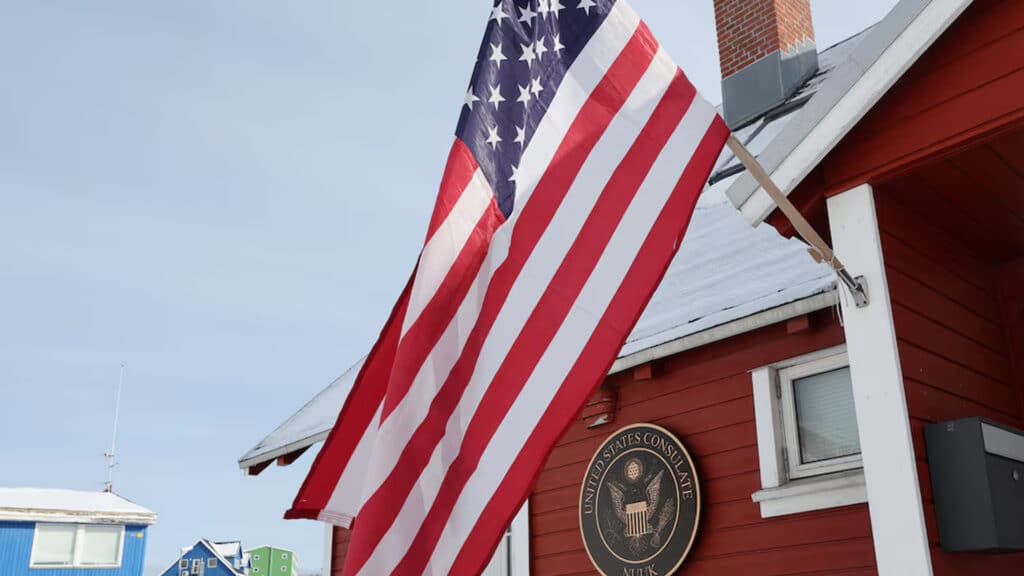
Donald Trump’s claim that Greenland’s entire defense consists of «two dog sleds» is not entirely baseless. Paradoxically, it echoes a real — if largely forgotten — chapter of World War II history, when such a defense was not only symbolic but operational.
As historian Pavel Ershov notes in a recent article published by Novaya Gazeta Europe, Greenland’s strategic importance emerged in the early 1940s, when global powers converged on the North Atlantic. At the time, however, the main threat in the region was neither Russia nor China, but Nazi Germany.
From Viking settlement to Danish rule
Greenland was first discovered by Norwegian Vikings in the 10th century and gradually settled by Scandinavian colonists over the next five centuries. Eventually, a cooling climate, food shortages and epidemics severed contact with Europe altogether. It was not until the 18th century that Denmark — then united with Norway — attempted to reestablish control over the island.
After Denmark’s defeat in the Napoleonic Wars, Norway was ceded to Sweden, but Greenland remained under Danish rule. By the early 20th century, other powers began to show interest. Following expeditions by American explorer Robert Peary into previously uncharted regions of Greenland in the late 19th and early 20th centuries, the U.S. made its first claim to the island.
Early U.S. interest in Greenland
Much like today, Ershov writes, U.S. claims were justified by arguments that Denmark had effectively mothballed Greenland and hindered its development. Despite these assertions, Denmark retained sovereignty over the territory.
That balance shifted dramatically in 1940, when Germany swiftly occupied Denmark and Norway — both of which had historical claims to Greenland — leaving the island largely isolated.
Nazi operations and weather warfare
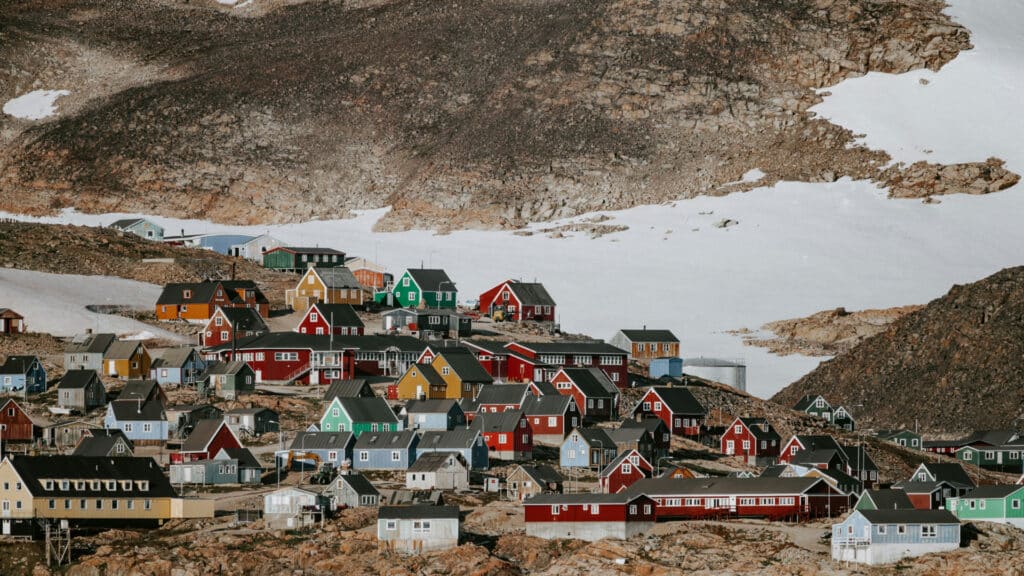
Recognizing the strategic value of Arctic weather data, and unable to challenge British naval dominance directly, German military planners turned to covert operations. Disguised as fishing vessels, German expeditions attempted to secretly establish weather stations along Greenland’s remote east coast.
Accurate weather forecasting was critical to wartime planning, particularly for naval and air operations. Denying the Allies access to this information became a key German objective.
Greenland turns to Washington
German secrecy was necessary because Greenland’s local administration refused to recognize the Nazi-backed collaborationist government in Denmark. By declaring loyalty to King Christian X, Greenland effectively placed itself under U.S. protection.
On May 3, 1940, Greenland’s parliament adopted two declarations: one affirming allegiance to the Danish king, and another recognizing the U.S. right to defend the island. This amounted to an official request for American protection. By the end of World War II, a substantial U.S. military force was stationed on Greenland.
The problem of the empty east coast
Even after the U.S. established its presence, defending Greenland’s deserted east coast remained a challenge. There were no Inuit settlements in the region, and German weather stations continued to pose a threat.
Coast Guard ships struggled with heavy drift ice and a short navigation season, while aircraft were unable to conduct surveillance during the long Arctic polar night.
The dog sled patrol
The solution came from U.S. Coast Guard Cmdr. Edward «Iceberg» Smith, a seasoned oceanographer, working alongside Greenland Gov. Eske Brun. Together, they created the North-East Greenland Sledge Patrol — effectively Greenland’s first indigenous military unit, which still exists today.
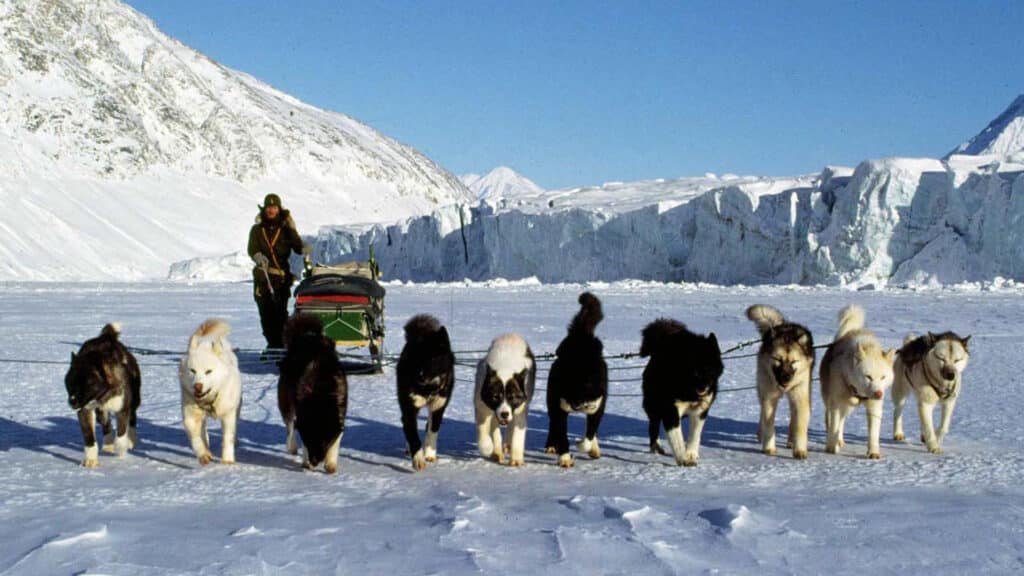
The patrol relied on dog sleds, a traditional Arctic mode of transportation. Greenland huskies, known for their endurance, strength, sharp senses and resilience, proved ideal for long patrols across the ice.
Final clash with the Nazis
The patrol’s last encounter with German forces occurred in April 1944, when six patrol members attacked the Bassgeiger weather station on Shannon Island. During the raid, a German officer was killed, and the remaining personnel were forced to evacuate.
From wartime outpost to modern base
After the war, Gov. Brun relinquished emergency powers, and Greenland returned to direct administration from Copenhagen. The U.S. military presence gradually diminished until the original defense arrangement was replaced by a bilateral base agreement in 1951.
Today, the U.S. maintains a single military installation on the island — Pituffik Space Base, formerly Thule Air Base — with a personnel contingent of up to 150 people.