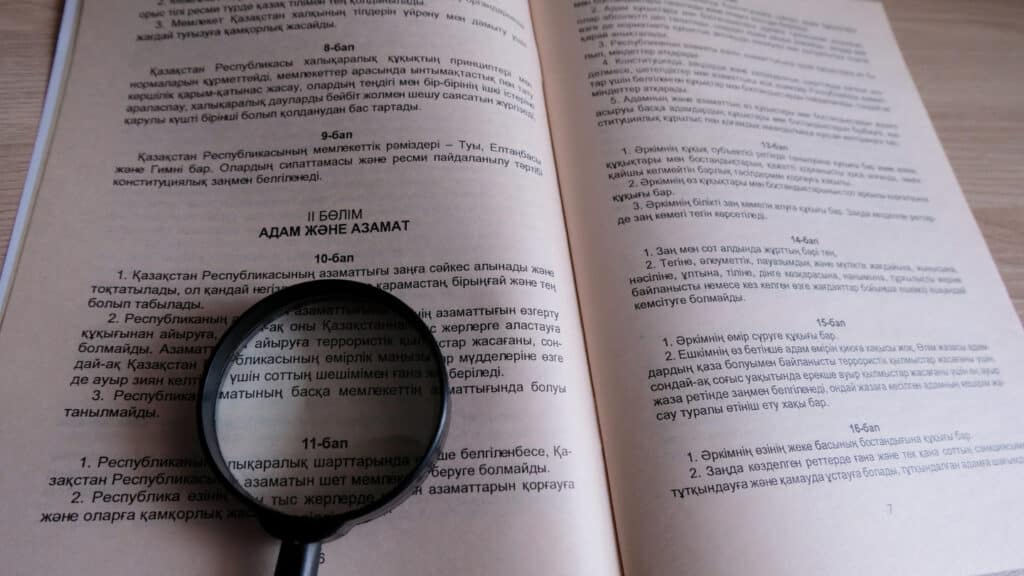
The draft of Kazakhstan’s new Constitution should clearly distinguish between human rights and citizens’ rights, according to Professor Viktor Malinovsky, a member of the Constitutional Commission. He said such a distinction would eliminate legal ambiguity and clarify which guarantees are granted at birth and which arise only with Kazakh citizenship.
Malinovsky, a professor at Narxoz University, proposed revising the wording of Clause 3 of Article 14 in the draft Constitution. He said the document should explicitly state that the rights and obligations of citizens of the Republic of Kazakhstan arise from the fact of citizenship itself.
In practical terms, the proposal draws a clear line between two levels of guarantees: those every person possesses from birth and those granted only to citizens.
«Human rights are absolute, inalienable and universal. They belong to everyone from birth and are independent of citizenship, legal status, place of residence or other conditions. They are the highest constitutional value and determine the meaning, content and application of all law,» the professor said. «Civil rights, by contrast, belong to an individual solely by virtue of citizenship and reflect that person’s special legal status as a member of the state’s political community.»
The expert added that citizenship shapes not only additional opportunities but also responsibilities. Citizens may be subject to specific constitutional obligations that do not apply to foreigners or stateless persons.