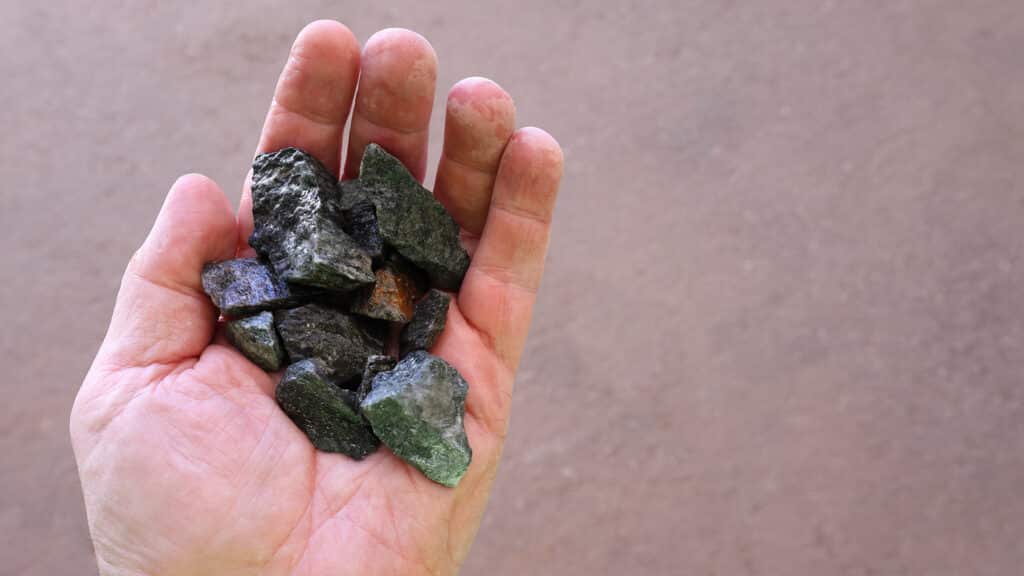
Kazakh company Severniy Katpar, a subsidiary of Tau-Ken Samruk (TKS), presented a mining project at a public hearing on Feb. 10 for development of the North Katpar deposit in the Shet district of the Karaganda region.
According to the presentation, total revenue from the sale of tungsten trioxide, molybdenum, copper and bismuth is expected to exceed 1 trillion tenge (approximately $2 billion) between 2030 and 2048.
Joint development with a U.S. partner
In early November 2025, Samruk-Kazyna, Kazakhstan’s sovereign wealth fund and Tau-Ken Samruk’s parent company, announced that its subsidiary and U.S.-based Cove Capital would jointly develop the North Katpar and Upper Kairakty deposits in the Karaganda region, among the largest undeveloped tungsten deposits in the world. The deal was signed on the sidelines of the C5+1 summit in Washington.
Read also: New mineral frontier: Kazakhstan ready to fill the China-sized gap in US supply.
According to Reuters, the partners agreed to establish a joint venture in which Cove Capital will hold a 70% stake and Tau-Ken Samruk will hold a 30% stake. The total investment in the project is estimated at $1.1 billion, including $900 million in pledges from the Export-Import Bank of the United States.
Planned production timeline
Mining operations are scheduled to begin in 2030, with planned extraction of 300,000 tons of tungsten-bearing ore. Output is projected to rise to 1 million tons in 2031 and 2 million tons in 2032.
From 2033 through 2047, annual production is expected to reach 3 million tons before declining to 1.5 million tons in the final year of operations, 2048.