
In early 2026, Kazakhstan’s media landscape once again witnessed an attack on Freedom Holding and its founder, Timur Turlov. Since the beginning of the year, 3,200 instances of disinformation have been recorded. In 2025 alone, there were more than 72,000 such pieces of so-called «news.»
Kursiv.media examined data provided by Freedom Holding Corp. for January and early February 2026 and analyzed a large body of dark PR materials. The outlet also spoke with experts to better understand who is behind the creation of this «information tornado» in Kazakhstan, how these campaigns operate and how much they cost. One conclusion is clear: a large-scale, organized negative PR industry exists in the country.
Their message: From accusations of «Ponzi schemes» to absurd claims on Telegram
Those behind the attacks on Freedom Holding and Timur Turlov have consistently recycled the same narrative. Their key allegations include claims that the company operates a «Ponzi scheme,» siphons funds offshore and «evades international sanctions.» Moreover, virtually any transaction involving Freedom is portrayed as criminal.
For example, the company’s purchase of Transtelecom has been framed as “the scam of the century,” while a criminal case involving the KazTAG news agency — accused of disseminating false information — has been used as a pretext for numerous additional claims and negative «news» stories about Freedom.
Telegram seeding clearly illustrates how these dark PR campaigns operate. Kursiv.media has access to the full list of such seedings. Thousands of links lead to a network of Telegram channels originally created in Russia to discredit public figures, including Moscow Mayor Sergey Sobyanin. In this case, the perpetrators simply rent «black» bot farms that are willing to repost virtually any content for profit.
After purchasing bulk placements within these bot networks, contractors fill the channels with junk «news» generated by artificial intelligence. Notably, statements or comments from Freedom Holding Corp. or Timur Turlov are never included. Instead, the disinformation narratives are often the result of arbitrary, fragmented compilations. What emerges is little more than a simulacrum — a hollow imitation of something that does not actually exist.
The continuous flow of tens of thousands of messages offers no meaningful information to readers. Its sole purpose is to flood search engine results with negative keywords. This suggests that black-hat campaign operators are misleading their own clients by producing massive volumes of content that is essentially meaningless, aside from its negative framing. Generating a random compilation of defamatory material about Freedom Holding Corp. using ChatGPT takes only seconds — yet clients are charged astronomical sums for this work.
The scale of the attack and the economics of dark PR
The figures illustrating the intensity of the information campaign against Freedom Holding Corp. and Timur Turlov are unprecedented for Kazakhstan’s media market. In Kazakhstan, most attacks against an individual last weeks, or in rare cases, months. The campaign aimed at discrediting Freedom Holding Corp. began seven years ago and has only gained momentum since then.
According to Freedom Holding, the overwhelming majority of these publications are concentrated in the Russian-language segment of the internet. In 2025 alone, the company recorded 72,000 instances of disinformation, including 55,000 on Telegram and 17,000 in traditional media.
The peak of the hysteria surrounding Freedom Holding Corp. and Timur Turlov occurred in May 2025, when there was an extraordinary surge of so-called «black news» totaling approximately 12,000 pieces of disinformation. This spike coincided with an attack by KazTAG. Overall, the company faced an average of 250 disinformation items per day. This volume is staggering — it is comparable to the output of a full-fledged news agency operating around the clock in three shifts. In this case, however, that editorial capacity was devoted exclusively to producing negative content.
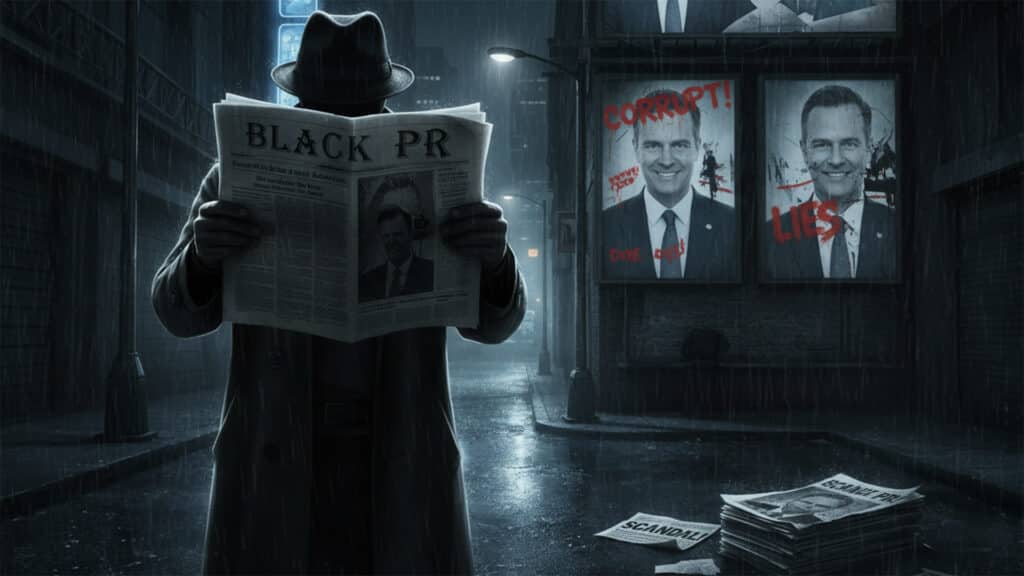
Kursiv.media obtained an analytical report reviewing approximately 200,000 KazTAG publications over the past three years and comparing the frequency with which public figures were mentioned. Timur Turlov appeared roughly 11 times as often as other prominent businesspeople, such as Mikhail Lomtadze, Timur Kulibayev or Bulat Utemuratov. This indicates that the authors of the negative coverage deliberately targeted Turlov.
«Freedom is mentioned approximately four times more often than Kaspi Bank and Halyk Bank, and 20 to 40 times more often than Bank CenterCredit and ForteBank. At the same time, banking is not a core area of focus for KazTAG: no systematic criticism of the banking sector was identified, while the information attack was selectively directed at Turlov and Freedom,» the report states.
How search engines and algorithms work
The primary objective of these mass publications was never to persuade attentive readers, but to suppress the brand in search engines and AI systems through algorithmic manipulation.
The mechanism functions like an assembly line: a fake or manipulative story is first published on an obscure website, then rapidly replicated across dozens of mirror sites and thousands of Telegram channels with only a handful of subscribers. These «articles» reuse identical talking points, similar headlines and AI-generated images designed to resemble real photographs.
«This is now affecting not only search engines but artificial intelligence as well,» Alexey Bendz, a well-known PR specialist and founder of 2B AGENCY, told Kursiv.media. «A critical mass is created. The search engine detects interest in a brand associated with this content and promotes it to the front page. The problem is that 80% of readers look only at the headline and image. Once they see it, it sticks. After being told 20 times that a company or individual is bad, their perception is already formed.»
However, Alexander Likhtman, founder and CEO of the PR agency ITCOMMS, emphasizes a clear distinction between organic negativity and orchestrated attacks. «Attacks are marked by a single topic suddenly gaining traction without a credible source. It may begin in a public group with three people, then trigger a wave of reposts. We need to separate the wheat from the chaff,» he said.
How much does an attack cost?
In 2026, pressure on Freedom Holding Corp. and Timur Turlov continued. In January and the first ten days of February alone, monitoring systems recorded 3,191 negative mentions. Most of these posts appeared on Telegram channels. Those commissioning dark PR campaigns continue to waste enormous budgets by pointlessly flooding the internet with negative content.
The market for paid negative publicity has its own price lists. According to Bendz, the cost of a single publication in traditional media starts at 1 million tenge (approximately $2,000), while a Telegram post costs around 500,000 tenge ($1,000). Moreover, prices can be two to three times higher due to the «shadow» nature of such placements.
«Considering that this is done anonymously and without official records, the price may be higher. In addition to the publications themselves, there are people who organize all of this and receive salaries. This is a very large-scale and multifaceted campaign,» Bendz emphasized.
Likhtman also believes that operations of this scale must be extremely costly.
«We are talking about millions of dollars — the cost of producing 72,000 publications. So, follow the money.»
Even a conservative estimate suggests the cost of the public attack on Freedom Holding Corp. and Timur Turlov may range from $20 million to $50 million over the past seven years. At the peak of the campaign in 2025, this would amount to approximately $11 million to $12 million per year, or roughly $1 million per month. By the standards of Kazakhstan’s media market, this level of spending is comparable not to individual PR campaigns, but to a full-fledged, long-term communications program for a large corporation. Such sums are unaffordable even for medium-sized businesses.
These calculations are based on 72,000 pieces of disinformation recorded in 2025 (55,000 on Telegram and 17,000 on websites). In SEO reputation management, the following budget distribution is common: 2% for high-cost «anchor» posts, 8% for mid-tier sites and 90% for mass-circulation sites. At average market prices, placements alone would cost around $8 million, plus an additional 40% to 50% for operational expenses, including content creation, botnet management, hosting and proxy services. As a result, the total reaches approximately $11 million to $12 million per year.
The final estimate of $20 million to $50 million over the past seven years reflects the campaign’s dynamics: it began on a smaller scale and intensified by 2026. This calculation is based on confirmed volumes and projected rates across a wide range of services in the dark PR market, experts said. It is important to note that this estimate is not limited to Kazakhstan’s dark PR market, as such campaigns are typically global, targeting a company’s reputation in multiple languages and across international audiences.
«Is it too much to spend $20 million over seven years? In reality, it was likely much more, because this figure does not take into account repeated attempts to hack systems, access employees’ personal accounts, discredit their contacts and carry out numerous other destructive actions,» said Alexander Kamendorovskiy, a lawyer for Freedom Finance.
That amount of money would have been sufficient to build several shopping centers, construct three new schools, or purchase a luxury private jet or yacht. Instead, these funds were spent to damage the reputation of Freedom Holding Corp. and Timur Turlov personally. Who, then, possesses such resources in Kazakhstan?
Who may be behind the campaign?
All experts agree that the attacks were deliberate and that the reason lies in Freedom Holding Corp.’s aggressive business expansion.
«Turlov stepped on a lot of toes. People were doing just fine until he arrived, started competing with his product and aggressive marketing, and began taking market share,» Bendz said. «You can look at the moment when Freedom began acquiring a bank and expanding into telecom, media and fintech to see how much share he has taken in each sector. There is a systemic attack against Freedom from many sides. Any management misstep is seen as an opportunity to attack Turlov and no expense is spared.»
Likhtman agrees, noting that the perpetrators could be those whom Turlov «has crossed — or might cross — in business.»
Political scientist Marat Shibutov points to additional vulnerabilities that make the businessman an easy target.
«First, he became wealthy too quickly. Second, for a long time, his biography was little known— he grew up elsewhere, so almost any fiction about him is readily believed. A newcomer who moved from Russia and bought a lot of assets inevitably upsets many people in our small market,» Shibutov said. “I’ve seen him. He’s a fairly decent person. At the very least, he is non-confrontational.”
Lawyers for Freedom Finance also believe that the long-running attack on the company was orchestrated by competitors who continue to view Timur Turlov as a threat to their market dominance. These competitors, they say, initiated a smear campaign to damage Freedom Finance’s reputation as they watched the holding evolve.
According to Media System Group Board Chair Maira Salykova, if a company can document a seven-year-long attack and credibly link it to a single entity, it indicates a strong analytical foundation. Estimating the approximate cost of such a campaign is technologically feasible, especially with the use of artificial intelligence tools, she said.
«Attributing all negative coverage to a single adversary is strategically risky. What matters here is not the hypothesis, but the mechanics: who is shaping the agenda, how, through which channels and for what purpose. If the attack has continued since 2019, two scenarios are possible: either there are numerous unresolved systemic issues, or the company is under targeted pressure. The goal of such an attack is to weaken the company’s position, push it out of the market, or force it to make certain business decisions. If the player knows who is attacking them, the question of ‘why’ becomes redundant,» she said.
Reputation is not an emotion — it is a system, and you must manage it systematically, the expert emphasized.
Blackmail or a war of annihilation?
In classic crisis-management PR, one option for stopping the flow of negativity is to pay network administrators to halt publications — essentially a form of information racketeering. In this case, however, experts see no signs of extortion.
«If this were blackmail, there would eventually be a call to action — something like, ‘Pay us and we’ll stop,’ or ‘Hand over the asset.’ If no such demand exists, calling it blackmail doesn’t make sense. That means Turlov’s reputation is interfering with someone’s business interests,» Likhtman said.
Bendz agrees that the campaign’s goal is to exert pressure through reputation.
«In this case, PR is tool of competition. They’re playing dirty. The goal is to destroy reputation, drive away clients and partners. Dozens of people are working nonstop with a single objective: what can we do today to damage the reputation? This is not a story that will end quickly.»
The attack that has been going on for seven years
According to Timur Turlov, the information pressure on the holding — and on him personally— has been ongoing since 2019. Only players with a colossal margin of safety could sustain such an attack for seven years.
«I always ask myself: ‘Who can do this month after month since 2019? During this time, almost all heads of government agencies have changed. We’ve had a new president since then. All the security agencies have changed, and they are all quite powerful. Meanwhile, someone has the necessary budgets and entire divisions responsible for this,» Turlov said.
However, the businessman believes that responding symmetrically in an information war would be a mistake.
«If you respond to violence with violence, the entire environment will degrade. If that happens, we would be living in a completely different society, a completely different country from the one we want to live in. Therefore, what we are trying to do now is use legal methods of defense, at least in the most blatant cases,» he said.
Amid a seven-year information attack, Timur Turlov continues to communicate openly, appearing on platforms such as the Financial Times, Digital Bridge, ITS Ideas and the Congress of Financiers of Kazakhstan, among many others. He has also given dozens of interviews on YouTube. The businessman regularly meets with journalists, and when audiences see a real person openly discussing plans and personally responding to complaints, it becomes extremely difficult for anonymous Telegram channels to sustain their negative narratives.
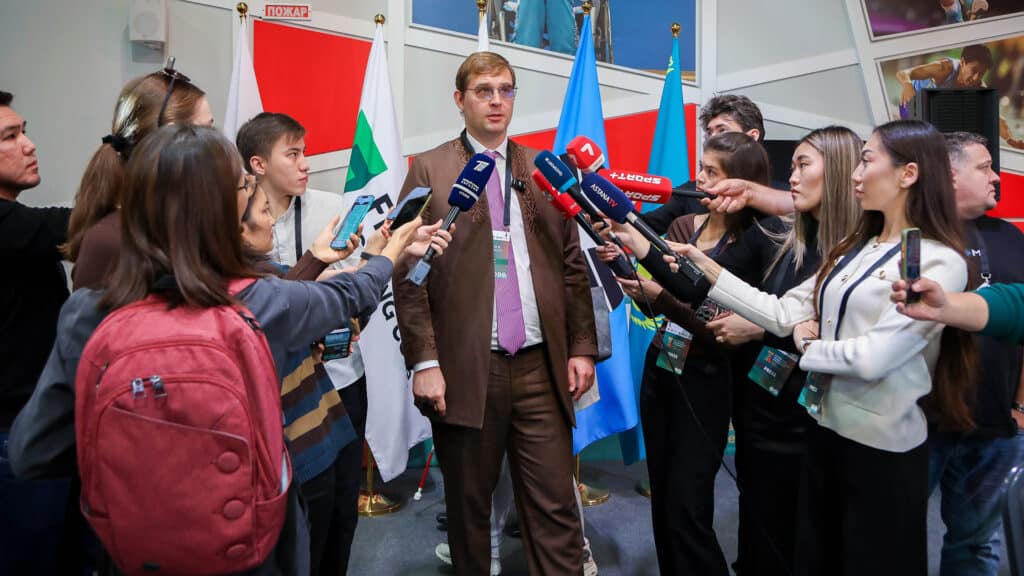
Products from Freedom Holding Corp.’s ecosystem have become part of the daily lives of millions of Kazakhstanis. It is difficult to convince people that a business is a sham when their personal user experience proves otherwise.
According to Shibutov, identifying the true sponsors of the attack is extremely difficult due to the long chain of intermediaries. Courts, therefore, remain the primary tool.
«We have precedents. All of this can be addressed through legal proceedings. Malicious intent must be proven, which is not always possible, though» he said.
In November 2025, Kazakhstan’s State Counsellor Erlan Karin stated that the government would not encourage «inforacketeering» through concessions, rewards, or contracts. In an op-ed, he wrote that bloggers and pseudo-social activists had turned such practices into tools of extortion. According to Karin, this phenomenon has developed in recent years amid a «policy of indulgence» toward destructive elements, resulting in a group of people who use information pressure as a source of income.
Karin emphasized that the «inforacket» scheme is simple: artificially inflate attention around specific topics and then offer to remove the publications in exchange for payment. He described this as neither journalism nor civic activism, but a semi-criminal model based on blackmail. The authorities, he said, intend to promote a new digital ethic — a culture of responsible information dissemination — because the flood of superficial and manipulative content undermines the quality of public discourse and distorts perceptions of genuinely important issues.
Courts as a legal means of defense
KazTAG has published 259 negative articles, videos and posts about Freedom Holding Corp. and Timur Turlov across its website, as well as its Telegram and YouTube channels. Turlov has previously commented on these publications, stating that the information they contain is untrue.
Against this backdrop, the situation surrounding Freedom Holding raises broader questions about the ethics of competition in Kazakhstan. The company’s lawyers have described what is happening as a «planned attack,» noting that activity on Telegram intensified toward the end of 2025.
Kursiv previously reported that public harassment began shifting from traditional media to social networks and Telegram as early as 2021, confirming a long-term trend in the platforms used for information warfare.