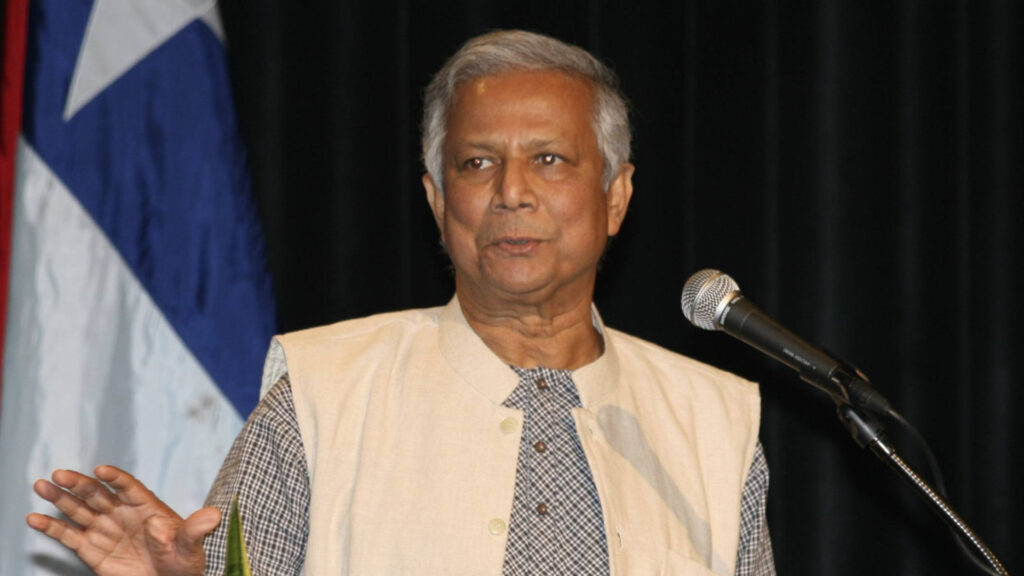
In a farewell speech delivered on Monday, Bangladesh’s interim leader Muhammad Yunus asserted that his 18-month tenure had helped restore the nation’s sovereignty, protect its national priorities, and rebuild its sense of dignity, The Week reported.
Yunus took charge after a student-driven movement in 2024 forced Prime Minister Sheikh Hasina from office. His remarks were made shortly before Tarique Rahman, head of the Bangladesh Nationalist Party and winner of the general election held nearly two years after the political upheaval, was scheduled to be sworn in.
Read also: World Cup fury: Moroccan streets erupt in protests over lavish spending.
Yunus said the country had moved away from a compliant foreign policy and was no longer dependent on guidance or direction from external powers — an observation many interpreted as an indirect reference to strained relations with New Delhi.
He also highlighted the strong prospects for regional collaboration with neighboring states, noting that Bangladesh’s maritime access should be viewed not merely as a boundary but as a pathway to global trade. Pointing to opportunities involving Nepal, Bhutan, and the northeastern region commonly called the «Seven Sisters,» he argued that economic zones, commercial partnerships, and tariff-free access to markets could position Bangladesh as an international manufacturing center.
Read also: Narendra Modi turns 75: What is the powerful leader’s net worth?
His mention of the «Seven Sisters» without directly naming India drew particular attention, with observers suggesting it underscored the area’s independent economic significance.
Yunus had voiced a comparable idea the previous year during a visit to China, when he remarked that the seven eastern Indian states lack direct sea access and that Bangladesh effectively serves as the region’s primary maritime gateway.