In the 19th century, Kazakh girls owned not only dolls but also doll furniture — and not only the wealthiest families. To provide a daughter with a new toy, parents needed craft skills rather than money, and this was never a problem in the Kazakh steppe.
«When playing with dolls, children also used accompanying toy imitations — beds with bedding, furniture models, small felt rugs, simple felt pieces and embroidered curtains,» reads the description of a rare exhibit (a toy crib from the Akmola region’s Petropavlovsk district) on the Kunstkamera’s website.
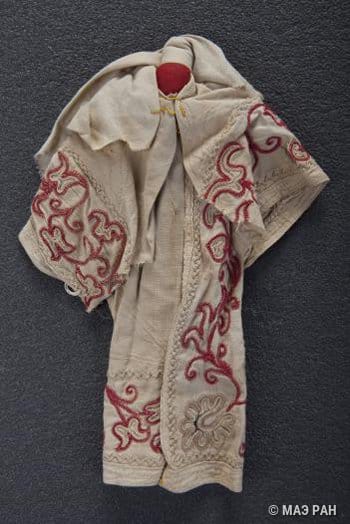
Most surviving antique Kazakh play dolls — not ritual ones, an important distinction — along with doll furniture are preserved today in museum collections, e.g. in the Russian Museum of Ethnography. All were made using a simple traditional method common to many cultures: a frame or crosspiece wrapped in fabric, a cotton-stuffed head attached, and sewn-on arms. Male dolls — which did exist — also had sewn legs.
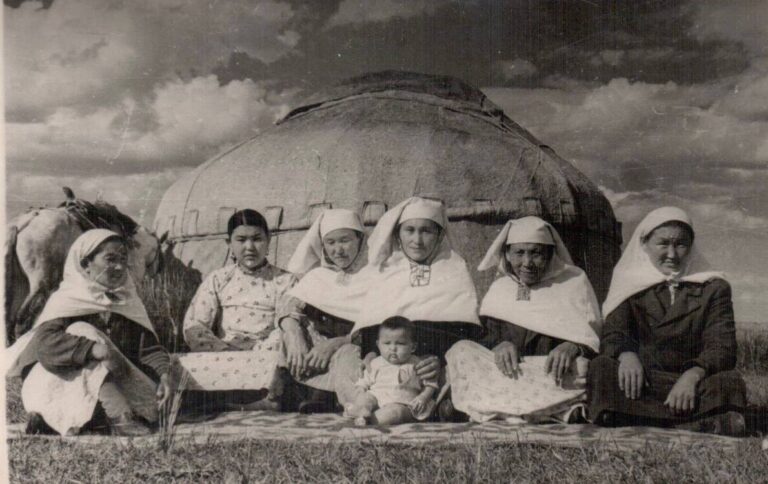
Read also: Don’t сall it a hijab: The history of the kimeshek, the white wimple of the steppe.
While parents prepared toys for very young children, older girls began making their own. As one museum description notes,
«The dolls were made by the girls themselves, sometimes under the guidance of older sisters, mothers or grandmothers. Thus, from an early age, girls were introduced to household crafts through play.»
Early museum collections
Kunstkamera’s collection contains 49 dolls, the first brought there in 1898 by Konstantin de Lazari, an official, researcher and photographer. At the end of the 19th century, de Lazari served as governor of the Lepsinsky district in the Semirechye region, from which he transported the first Kazakh doll in the collection to St. Petersburg.
The catalog describes it as a «woman doll (qatyn quyrshak)» wearing a hem-embroidered dress, a headscarf over a kimeshek — the headdress of a married woman.
This highlights a distinctive feature of Kazakh dolls: clothing details, down to the smallest embellishments, were crafted with great care. Even today, without museum annotations, viewers can identify whether a figure represents a bride, groom or grandmother, and often the region as well. The faces, however, usually remain blank.
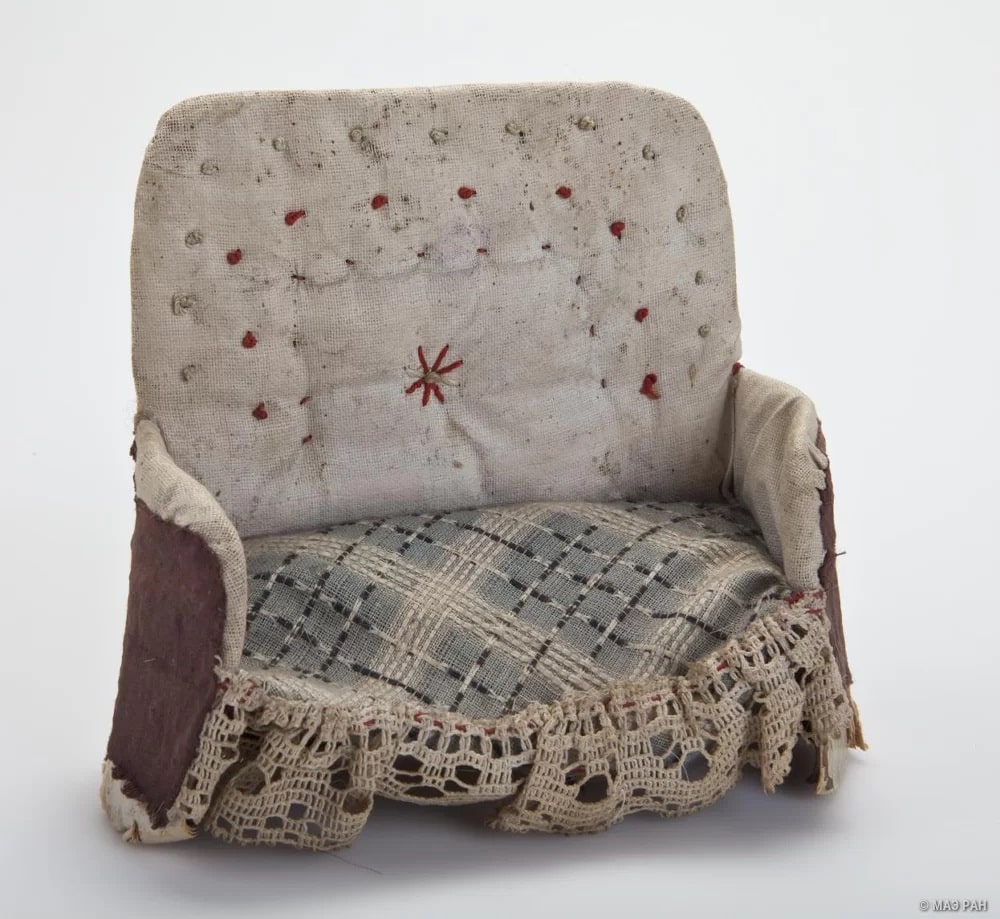
Another notable detail is the doll’s base, often made from sand reed (shi), allowing the toy to bend and be seated easily — for example, on a miniature sofa like those preserved in museum collections.
Miniature yurts and household life
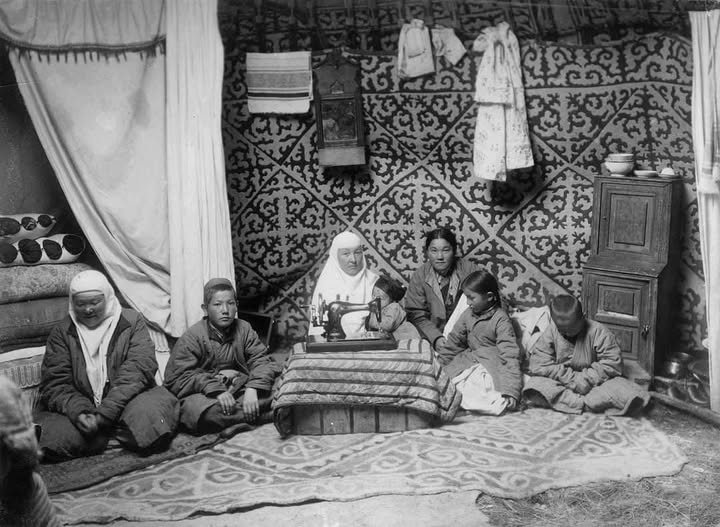
Collectors also preserved doll furniture, including a toy sofa and the furnishings of a miniature yurt — effectively a Kazakh dollhouse. Exhibits include small felt tekemet rugs, curtains suggesting a married household, embroidered bedspreads, feather beds, pillows and a wooden crib measuring about 7 inches long and 2 inches high.
The crib is an exact replica of a traditional Kazakh bed once found inside yurts. Scale models of yurts themselves also survive in museum collections. In this sense, Kazakh girls of the late 19th and early 20th centuries had their own version of dollhouses — though often more meaningful, since each handmade toy yurt and its furnishings were unique.
Read also: How Dimash ‘met’ Kusama: Inside a special tour of the Almaty Museum of Arts.
Some sets even depicted entire families. One example includes five dolls: a woman in a kimeshek, a bride, a girl and two male figures. Child dolls also appear, represented as swaddled infants.
Learning through play
The games played by girls in the Kazakh steppe ultimately mirrored those played around the world. Through dolls, they reenacted daily life, rituals and customs — in effect, their future adult roles.