Tajikistan’s GDP grew 8.4% in 2025, driven by high gold prices — the country’s key export — major infrastructure spending, primarily on the Rogun Hydropower Station, and increased remittances from migrant workers that boosted domestic demand.
Against this backdrop, the government maintained a budget surplus, strengthening its position to secure concessional loans from international financial institutions to complete what officials call the country’s «project of the century.»
GDP and its components
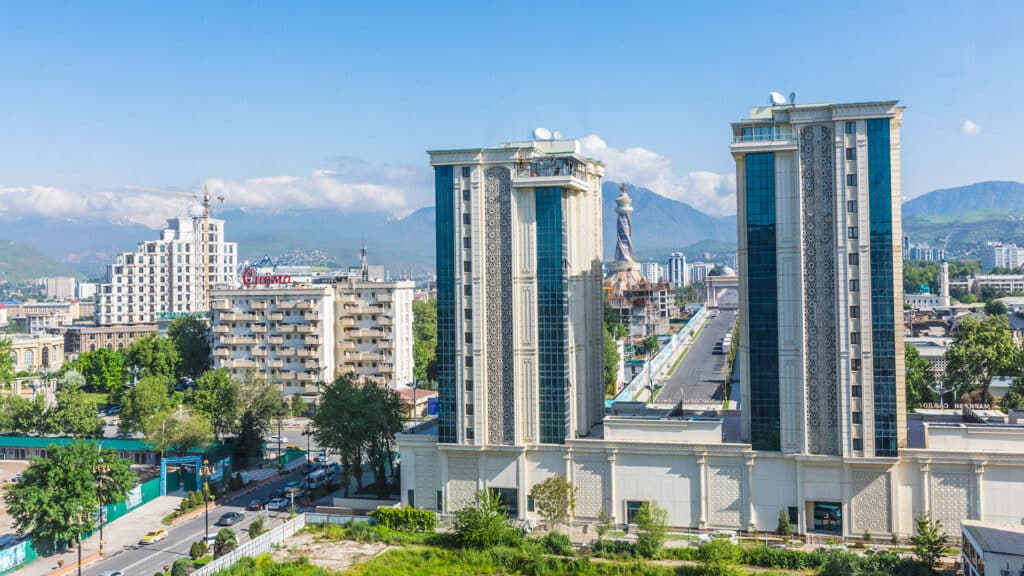
Tajikistan posted one of the fastest growth rates in Central Asia in 2025, second only to Kyrgyzstan. For the second consecutive year, the economy expanded by 8.4%. By year-end, GDP reached 176.9 billion somoni (about $18 billion). Over the past five years, growth was higher only in the post-crisis rebound of 2021, when the economy expanded 9.4%.
All three core sectors — which together account for nearly 70% of the economy — posted strong gains: agriculture (23% of GDP), manufacturing (22%) and trade (14%).
According to Prime Minister Kokhir Rasulzoda, 400 new industrial enterprises were commissioned in 2025, increasing the total number of such businesses by roughly 10%. That marks solid progress for a country pursuing an «accelerated industrialization» strategy since 2019, aimed at transforming the economy from agro-industrial to industrial-agrarian by 2030.
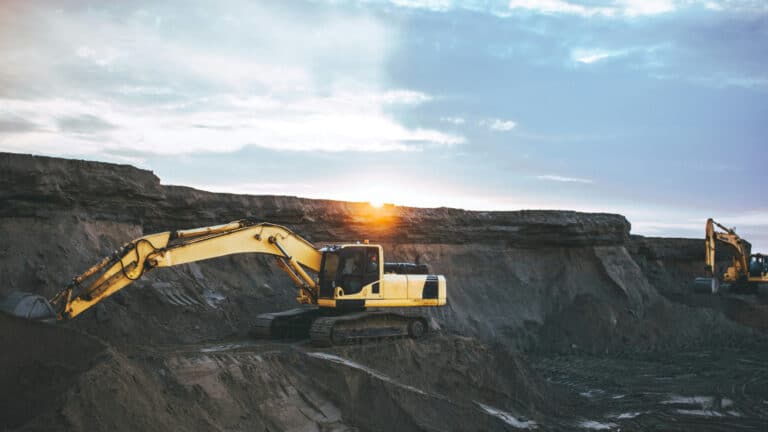
Mining led industrial growth, rising 36.2%, largely on the back of a 36% increase in metal ore production. While Tajikistan’s statistics agency does not publish a detailed breakdown of mining output, gold is widely viewed as the primary driver. Supported by Chinese investment, the country’s gold sector has expanded by roughly 450% over the past decade (2013-2023).
Fixed capital investment
Fixed capital investment totaled 28.7 billion somoni in 2025, up 21% year-on-year. Investment remains highly concentrated. About one-third — 10.6 billion somoni — went to nonproduction facilities, likely including social infrastructure and housing. Spending in this category rose 38.5%.
The increase parallels growth in private housing construction, which climbed 22.3% to 2.1 million square meters. Combined, these two segments account for roughly 70% of total fixed capital investment.
Still, the country’s largest project remains the Rogun Hydropower Station, with planned capacity of 3,600 megawatts. As of January 2026, construction was estimated at 60% completion. The third of six generating units is scheduled to come online in September 2027, a milestone expected to eliminate seasonal power shortages and lift related consumption limits.
Read also: Tajikistan’s economic growth outpaces all expectations.
Tajikistan also plans to export about 70% of Rogun’s future electricity output. For example, Kazakhstan is considering a long-term import agreement to address shortages in its southern regions.
The government aims to fully commission the Rogun plant by 2035. The remaining investment required is estimated at $6.3 billion — roughly one-third of current GDP and about three times the country’s annual capital investment level.
The project has strong backing from international financial institutions. The World Bank has already provided $350 million through a grant from the International Development Association and has signaled readiness to finance up to half of the total project cost as part of a broader consortium. Other potential partners include the Asian Development Bank, the Asian Infrastructure Investment Bank, the European Bank for Reconstruction and Development, the European Investment Bank and the Islamic Development Bank.
If international financing is secured as planned, the energy sector is likely to remain Tajikistan’s largest investment destination for years to come.
State budget
Available data for the first 11 months of 2025 indicate that Tajikistan’s budget system remains stable. Revenue totaled 53.3 billion somoni, up 28.9% year-on-year and 10% above the revised target. Expenditures reached 49.3 billion somoni, 18.2% below the planned level. As a result, the budget surplus widened by 86.6%.
The surplus partly reflects underexecution of planned spending. Although state budget expenditures for the period rose 26.3% from a year earlier, the government fulfilled only 82.8% of its spending plan. No major budget category reached full execution.
Of the three largest sectoral categories — education, fuel and energy, and social protection — which together account for about half of total spending, only social protection came close to its target, with roughly 90% of planned funds disbursed. Spending on education increased 29.7% to 9.8 billion somoni, fuel and energy spending rose 50.5% to 9.2 billion somoni, and social protection expenditures climbed 21% to 6.3 billion somoni.
Analysts at international institutions say Tajik authorities are pursuing fiscal consolidation rather than expansion. In its Tajikistan Economic Update published in summer 2025, the World Bank noted that the government reduced spending in 2024.
The policy backdrop shifted last year as Tajikistan joined the International Monetary Fund’s Policy Coordination Instrument program in February. While the program does not provide direct IMF financing, meeting quantitative targets and reform benchmarks helps unlock external funding from other international financial institutions. The government entered the program in part to secure concessional financing for completion of the Rogun plant.
Monetary policy
The National Bank of Tajikistan pursued a moderately accommodative stance in 2025. Inflation held between 3.3% and 3.5%, near the lower end of the bank’s target range of 5%, plus or minus 2 percentage points. That allowed policymakers to gradually reduce the refinancing rate from 9% at the start of the year to 7.5% in December.
The somoni appreciated 15%, strengthening from 10.94 per U.S. dollar in January to 9.27 by year-end. The gain was driven by a surge in remittances from migrant workers, which remain well above pre-2022 levels amid strong demand for foreign labor, primarily in Russia.
During the first three quarters of 2025, remittance inflows rose 50% to $5.2 billion, equivalent to 41.2% of GDP, according to Kursiv Research estimates.
Another key indicator of macro-financial stability was the buildup of international reserves, which reached $5.6 billion by November 2025, up from $4.5 billion at the beginning of the year.
Plans for 2026
In an address to parliament, the Majlisi Oli, in December 2025, President Emomali Rahmon presented the Medium-Term Development Program for 2026–2030, the third phase of the country’s National Development Strategy through 2030.
The program targets annual economic growth of at least 8%. To support that goal, authorities plan a series of infrastructure projects over the next five years, including expansion of the Rogun, Nurek and Kayrakkum hydropower plants, as well as the launch of alternative energy facilities with combined capacity of 1,500 megawatts.
The government also aims to modernize transport infrastructure, including construction of new rail lines to provide access to the Indian Ocean via Afghanistan to Pakistan and Iran. Industrial development plans include modernization of the Tajik Aluminum Company, along with the launch of five textile complexes, mineral processing facilities and electric vehicle production.
Seven cities are slated to introduce Smart City systems. The authorities expect the private sector to play a larger role in financing these initiatives, with private capital investment projected to rise from 6% to 25% of GDP.
In the near term, the government forecasts stable growth, projecting 8.5% in 2026 and 8.3% in 2027. International institutions are more cautious. The World Bank estimates Tajikistan’s 2025 growth at 8%, 0.4 percentage point below the official figure, and projects a slowdown to 6.2% in 2026 and 4.7% in 2027. The IMF forecasts a similar trajectory: 7.5% in 2025, 5.5% in 2026 and 4.8% in 2027.