Ramadan is no longer observed only as a religious month of fasting and prayer. The ninth month of the Islamic lunar calendar has also become a peak season for global retail. British media have coined the term Ramadan Rush, and luxury executives say the weeks leading up to Eid al-Fitr now rival Christmas or Lunar New Year in commercial importance.
Read also: Fast smart: How to keep your energy up this Ramadan.
Here’s how Ramadan has evolved into a major driver of global trade.
The economy of Ramadan
The scale of the market is significant. In June 2024, the Pew Research Center reported that the global Muslim population has surpassed 2 billion and continues to grow, expanding what some analysts call the Ramadan audience.
The impact is particularly visible in e-commerce. In April 2025, AppsFlyer, a global marketing measurement and analytics platform, reported that its research confirmed a Ramadan effect, with mobile app revenue in the Middle East exceeding $1.7 billion — an 18.6% increase year-on-year.
According to the company’s data, shopping apps recorded their strongest growth in the first half of Ramadan, rising 111% compared with the same period in 2024.
Read also: Avoid the duds: How to pick the freshest dates for Iftar 2026.
Overall retail performance has also been strong. During Ramadan 2025, consumer spending before and during the holy month reached about $10 billion in the United Arab Emirates, while sales in Saudi Arabia increased by roughly 35%, according to industry estimates. Luxury houses have increasingly used the season to launch special collections and marketing campaigns. Dedicated Ramadan sections on brand websites and themed displays in boutiques have become standard practice.
Fashion adapts to the holy month
The 2026 season is no exception. From Louis Vuitton and Loro Piana to Sandro and H&M, European brands continue to embrace Ramadan-inspired aesthetics.
Sandro has remained consistent in its Ramadan offering. The brand’s new collection promotes elegance in every moment, focusing on flowing silhouettes, lace, pleats and muted tones. The main distinction from its standard line is longer skirt lengths. Unlike many competitors, Sandro also offers a men’s capsule collection, largely in darker shades.
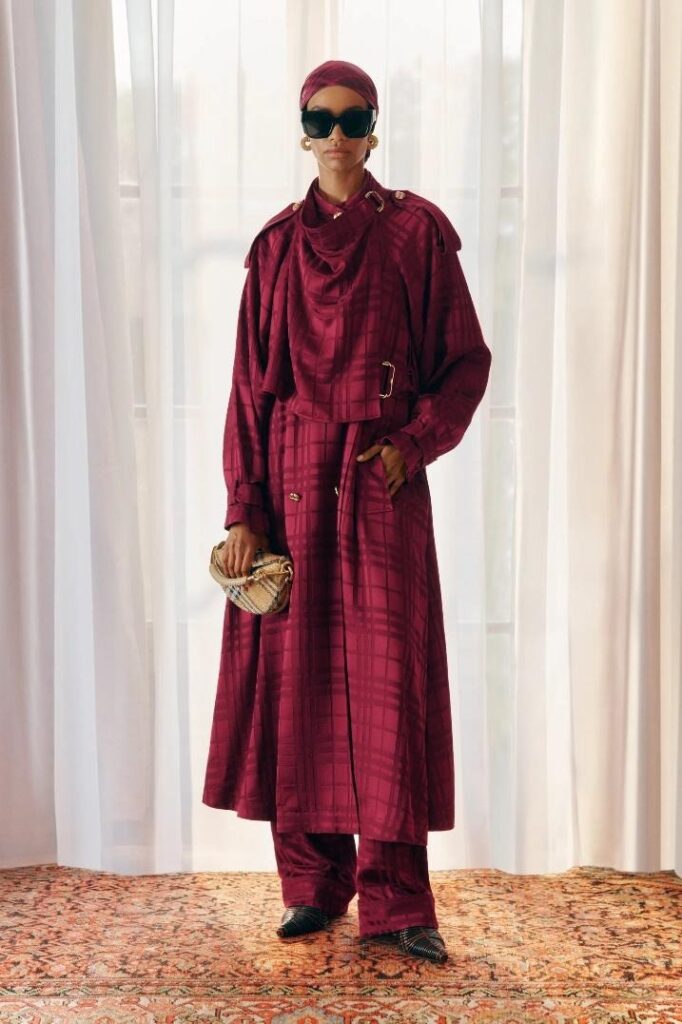
Burberry’s seasonal line reflects the understated tone of the month. The brand has reimagined its signature trench coat in extended cuts and deeper hues, including burgundy shades that align with the refined mood associated with Ramadan.
Color trends are also shifting. Vogue Arabia has noted that while brands previously relied heavily on shimmer and emerald green — long associated with Ramadan fashion — luxury labels are moving beyond stereotypes. Designers are favoring more sophisticated, understated glamour rather than overtly sparkling details.
Read also: From pilgrimage to the runway: Saudia Airlines launches its own fashion collection.
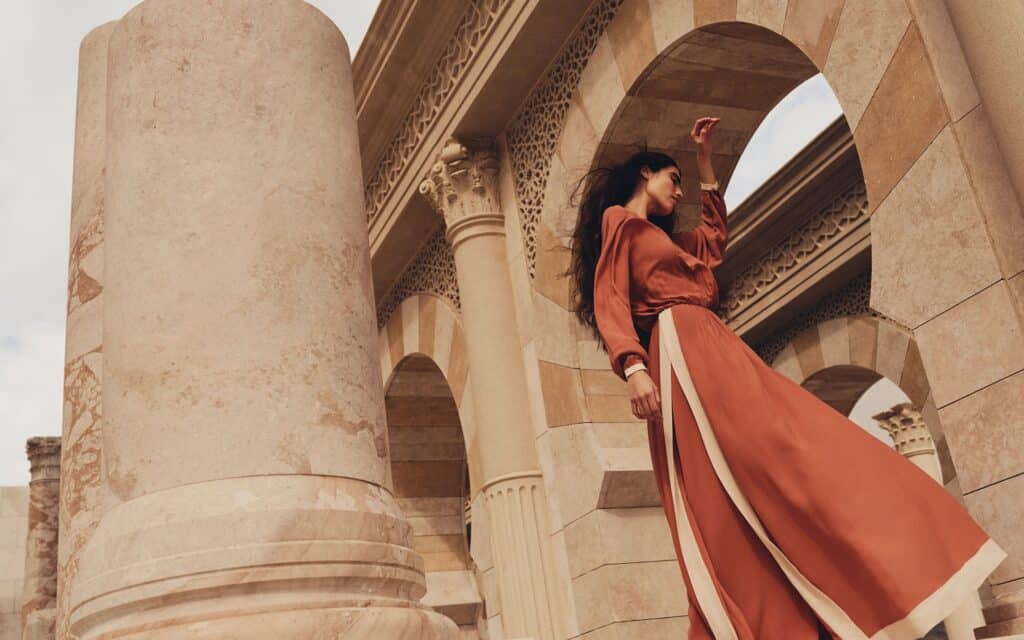
Loro Piana’s Ramadan 2026 capsule collection emphasizes timeless elegance. The lineup features long, loose dresses, lightweight coats in desert tones and black, babouches and sandals, sunglasses and understated jewelry — pieces designed for modest styling and warm climates.
H&M has similarly incorporated flowing silhouettes and neutral palettes, while adding bolder elements such as leopard print to stand out in the mass market.
A strategic shift in global markets
As sales slow in Europe and the U.S., global fashion houses are increasingly focusing on Southeast Asia and the Persian Gulf. Analysts at Chalhoub Group say luxury sales in Gulf Cooperation Council countries continue to grow despite the broader global slowdown.
In this environment, brands are paying closer attention to cultural calendars. Holidays — from Lunar New Year to Eid al-Fitr — are becoming predictable periods of sustained demand and key pillars in annual retail strategy.