
«The whole community is fasting. People, whose palates are dry from days of fasting and whose lips are parched, wait impatiently for sunset,» wrote Zhussipbek Aimauytuly, a prominent Kazakh writer, describing life in a Kazakh village at the start of the 20th century in his short story «Azhdaha» («Dragon»).
Read also: Fast smart: How to keep your energy up this Ramadan.
Much has changed in Kazakhstan’s villages and cities since then. But the movement of the sun has not. In the world’s ninth-largest country by land area, Muslims observing Ramadan experience different fasting hours depending on where they live. Some wait longer than others for sunset.
Regional differences in fasting hours
The map below illustrates regional differences in Ramadan fasting hours during winter. Compared with residents of southern regions, those living in northern Kazakhstan fast for shorter periods during this time of year.
The visual was created by Nurasyl Abdrazakuly, a Kazakh data scientist and a frequent collaborator on our infographics.
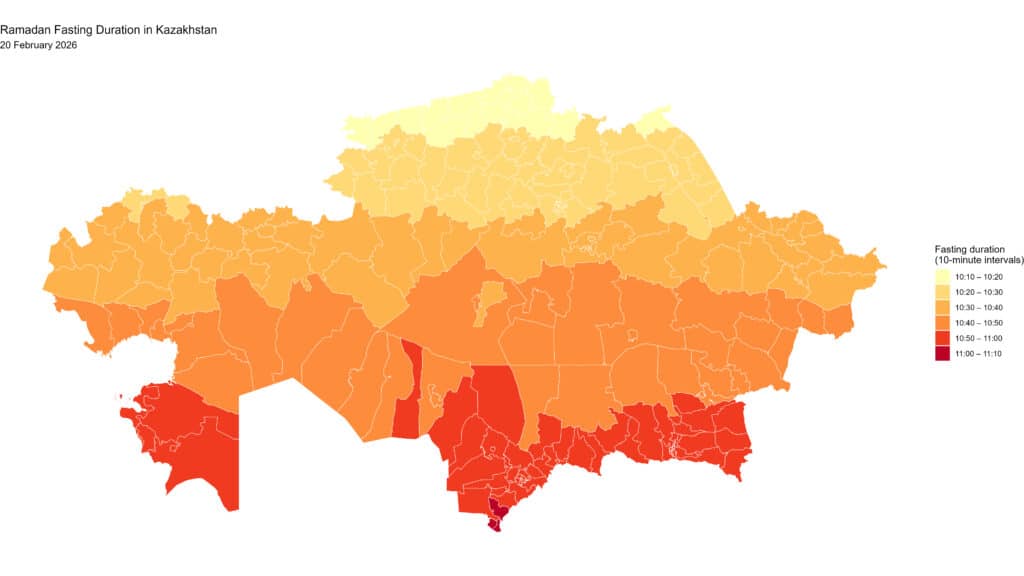
For consistency, the calculations are based on the period from 10 minutes before sunrise to sunset on Friday, Feb. 20, 2026, and are intended for illustrative purposes using a winter date.
According to the data, the northernmost regions — shaded light yellow — have fasting periods of about 10 hours and 10 to 20 minutes. Moving south, the colors deepen from yellow to orange. In the southernmost areas, shown in red, fasting lasts about 11 hours and 10 minutes.
In other words, people in southern Kazakhstan fast roughly an hour longer than those in the north during winter.
Geography and daylight
The variation is driven by latitude. Regions farther from the equator experience shorter daylight hours in winter and longer days in summer. Areas closer to the equator have comparatively longer winter days and shorter summer days.
If these observations continue through the end of Ramadan this year, the regional gap in fasting times will gradually narrow and disappear entirely by March 20, 2026.
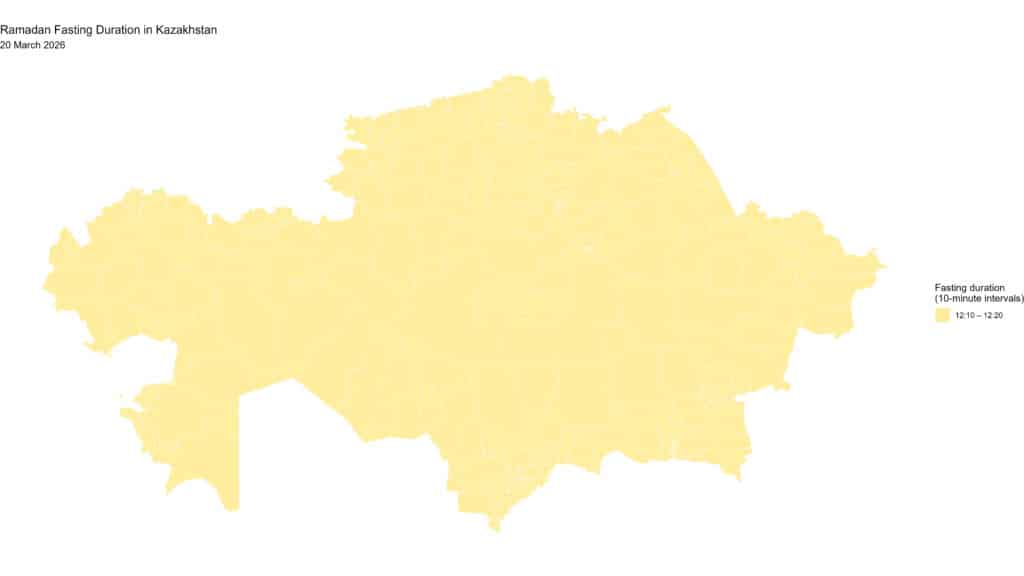
March 20 marks the spring equinox, when day and night are nearly equal in length. On that date, daylight hours — and therefore fasting times — are effectively the same across all regions of Kazakhstan.